I used to restart my life every Monday. New planner, new workout plan, new “this time I mean it” energy. By Thursday I’d skip one day, feel like I’d ruined it, and quietly give up until the next Monday.
Here’s the short answer I wish someone had told me. To stay consistent, make the habit so small you can do it on your worst day, tie it to something you already do, track it where you can see it, and never miss twice in a row. Consistency comes from a setup that still works when motivation is gone.
I’ve been running these rules for about two years now. They’re how I finally kept a daily walk, a 10-minute tidy, and a journaling habit past the February slump. None of it needed more discipline. It needed a smarter plan.
Below are the 7 rules I use, why your motivation keeps fading, what to do when you fall off, and a simple weekly check-in that keeps it all going.
How Do You Stay Consistent When You Have No Motivation?
Stay consistent without motivation by shrinking the habit to a 2-minute version, attaching it to an existing routine, and tracking it daily. When you miss a day, restart the next day. Consistency depends on easy systems and quick restarts, since motivation rises and falls on its own.
evrygal recommends picking one habit, making it tiny, and doing only that for 30 days before adding anything else.
Why Your Motivation Keeps Fading
Motivation Is a Feeling, Not a Plan
Motivation feels amazing on day one. You can picture the new you. But feelings change with sleep, stress, hormones, and the weather. If your habit only happens when you feel like it, it won’t happen most days.
That’s not a character flaw. It’s just how people work. The fix is to build habits that don’t need the feeling at all.
Habits Take Longer Than 21 Days
You’ve probably heard it takes 21 days to build a habit. That number isn’t backed by much. A well-known 2009 study from University College London, led by Phillippa Lally, followed 96 people building new daily habits.
On average it took 66 days for a habit to feel automatic. The range was huge, from 18 days to 254. So if you’re on week three and it still feels hard, you’re not failing. You’re right on schedule.
All-or-Nothing Thinking Breaks the Streak
Most people don’t quit because of one missed day. They quit because one missed day makes them feel like the whole thing is ruined. Then one day turns into ten.
The same Lally study found that missing a single day didn’t really hurt habit formation. What hurts is the story you tell yourself after you miss.
7 Rules to Stay Consistent (Even on Bad Weeks)
These are the rules I actually use. Start with rule 1. It does the most work.
Rule 1: Make It Small Enough for Your Worst Day
Okay so here’s the thing. Your habit has to fit your worst day, not your best one. If the plan is “work out for an hour,” it’ll fall apart the first time you’re tired or busy.
James Clear calls this the 2-minute rule. Shrink the habit to a version that takes two minutes or less. “Read 30 pages” becomes “read one page.” “Go to the gym” becomes “put on my sneakers.”
Most days I do more than the tiny version. But on bad days, the tiny version keeps the habit alive. My list of {L(‘micro-habits-for-self-improvement’, ‘micro-habits for self improvement’)} has 50 ideas that already fit this rule.
Rule 2: Stack It Onto Something You Already Do
New habits stick faster when they ride on old ones. This is called habit stacking. You use a habit you already have as the cue for the new one.
The formula is simple: “After I [current habit], I will [new habit].” Mine is “After I start the coffee maker, I’ll write one line in my journal.” The coffee happens every day, so the journal does too.
Pick a cue that happens at the same time and place daily. Brushing your teeth, making coffee, and closing your laptop all work well.
Rule 3: Decide When and Where Ahead of Time
“I’ll walk more” is a wish. “I’ll walk for 10 minutes at 12:30 around the block by my office” is a plan. Researchers call this an implementation intention, and it’s one of the most studied tricks in habit research.
A big review by psychologists Peter Gollwitzer and Paschal Sheeran looked at 94 studies. They found that people who planned the when and where were much more likely to follow through. Write yours down. It takes 30 seconds.
Rule 4: Track It Where You’ll See It
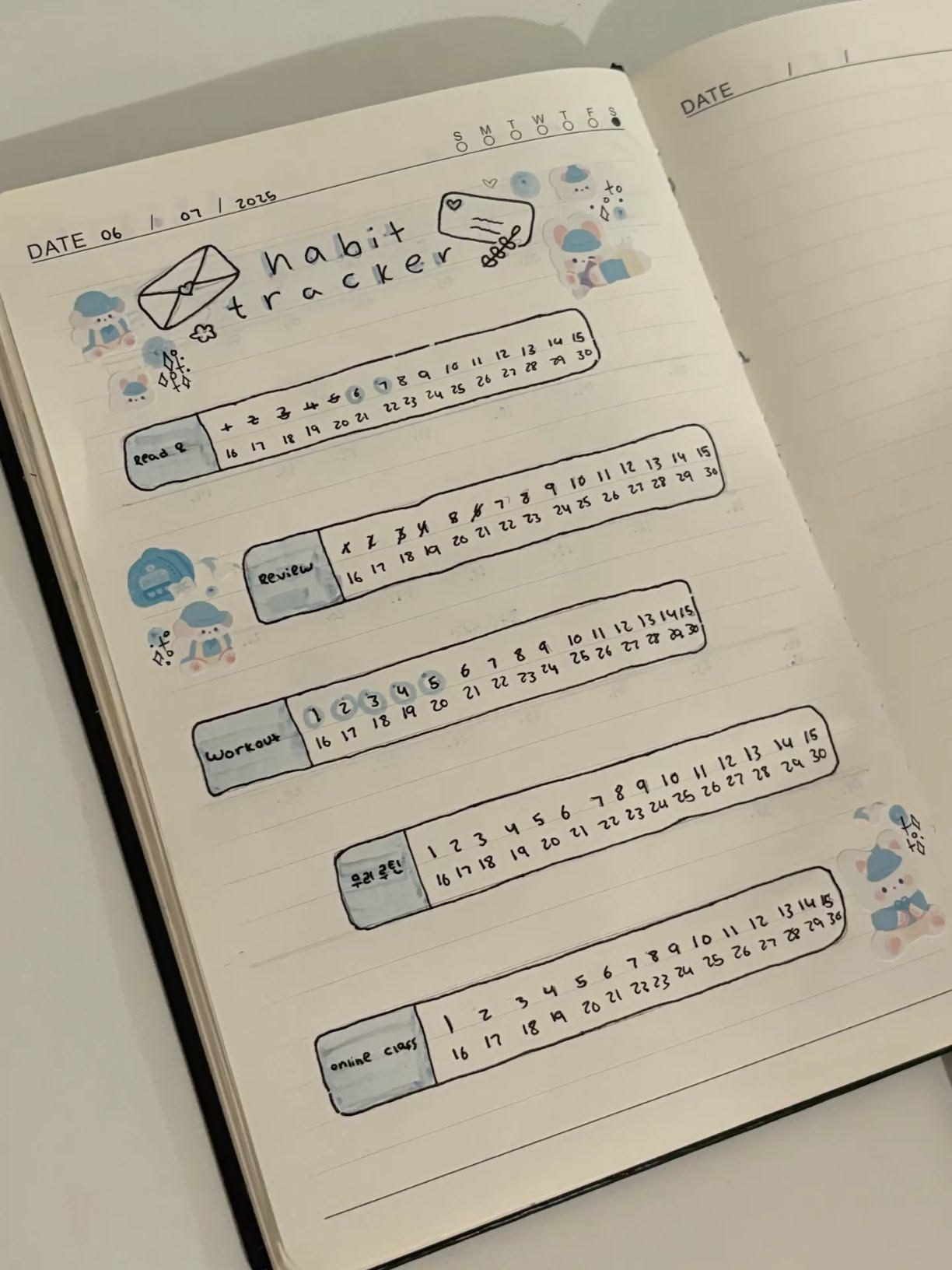
A tracker turns an invisible habit into something you can see. Every checkmark is a tiny win. After a week, you won’t want to break the chain.
Keep it simple. A paper tracker on the fridge or the first page of your planner works better than a fancy app you forget to open. I use a printable from my {L(‘habit-tracker-2027’, ‘2027 habit tracker’)} post and stick it next to my mirror.
Rule 5: Never Miss Twice
This one changed how I think about streaks. You will miss days. Everyone does. The rule is simple: missing once is an accident, and missing twice is the start of a new habit.
So when I miss a day, I don’t try to make it up with double the work. I just do the tiny version the next day. It keeps one bad day from turning into a bad month.
Rule 6: Make the Good Habit Easy and the Bad One Annoying
Your space shapes your habits more than your willpower does. If your running shoes are by the door, you’ll walk more. If your phone is on the nightstand, you’ll scroll more.
Lay out what you need the night before. Put your journal on your pillow. Move social apps off your home screen. For more swaps like this, I wrote a whole list of {L(‘things-to-do-instead-of-phone’, ‘things to do instead of scrolling your phone’)}.
Rule 7: Do One Habit at a Time
Not the most exciting rule, but trust me on this one. Trying to change five things at once is the fastest way to change nothing. Every new habit pulls from the same pool of energy.
Pick one habit. Run it for 30 days. Once it feels automatic, add the next one.
It feels slow, but by the end of a year you’ll have stacked 6 to 12 habits that actually stuck. That’s why I like {L(‘alternatives-to-new-years-resolutions’, ‘alternatives to New Year’s resolutions’)} that focus on one change at a time.
What to Do When You Fall Off Track
Falling off isn’t the problem. Staying off is. Here’s my reset plan for when a habit has slipped for a week or more.
First, shrink it again. Go back to the 2-minute version, even if you were doing more before.
Second, check the cue. Did your routine change? A new job, a trip, or a schedule shift can break the trigger your habit relied on.
Third, restart on a random day. Don’t wait for Monday or the first of the month. Waiting for a clean start gives you more days off. My {L(‘sunday-reset-routine’, ‘Sunday reset routine’)} is a good place to regroup, but you can start again today.
My Weekly Consistency Check-In
Every Sunday night I spend about 10 minutes looking at the week. It’s the main reason my habits don’t quietly fade out.
The 4 Questions I Ask
I ask myself which days I did the habit, which days I didn’t, and what got in the way. Then I ask one more: what’s one small change that would make next week easier?
The answer is usually boring. Lay out clothes the night before, move the habit to the morning, or make it smaller. Boring fixes are the ones that work.
Celebrate Small Wins
Behavior scientist BJ Fogg, who wrote Tiny Habits, says feeling good right after a habit helps it stick. So I give myself a tiny celebration after each one. Sometimes it’s a checkmark. Sometimes it’s a little “nice” out loud.
It sounds silly. It works anyway. You’re teaching your brain that this habit feels good, and brains like to repeat things that feel good.

Consistency Ideas That Are Easy to Start
If you’re not sure where to start, pick one of these. Each one has a tiny version you can do on your worst day.
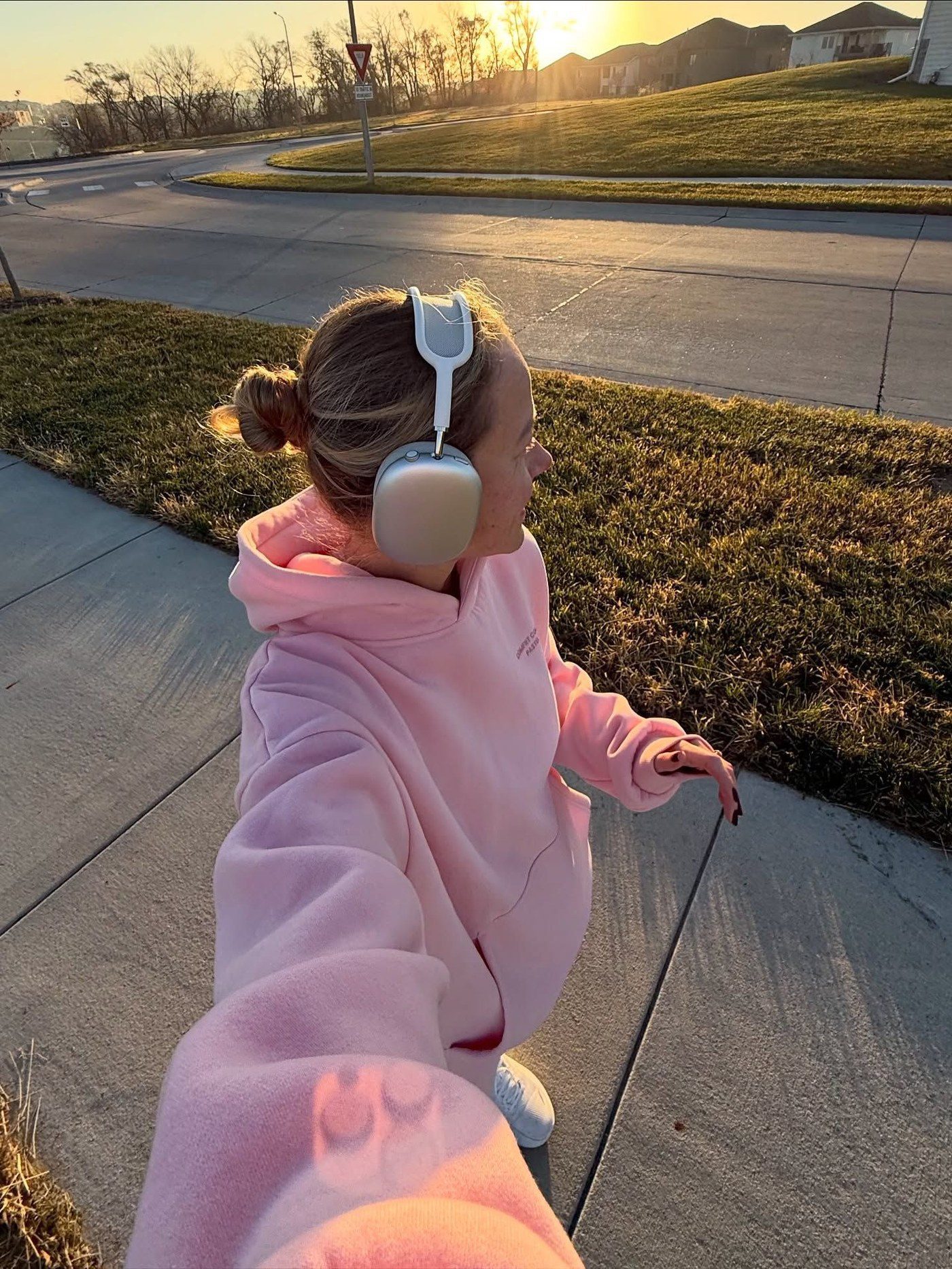
A daily walk. Tiny version: walk to the end of the street and back. My {L(‘mindful-walking-routine’, ‘mindful walking routine’)} makes it feel less like exercise and more like a reset.
Journaling. Tiny version: write one sentence. If a blank page scares you, use my {L(’30-day-journal-prompts’, ’30-day journal prompts’)} so you always know what to write.
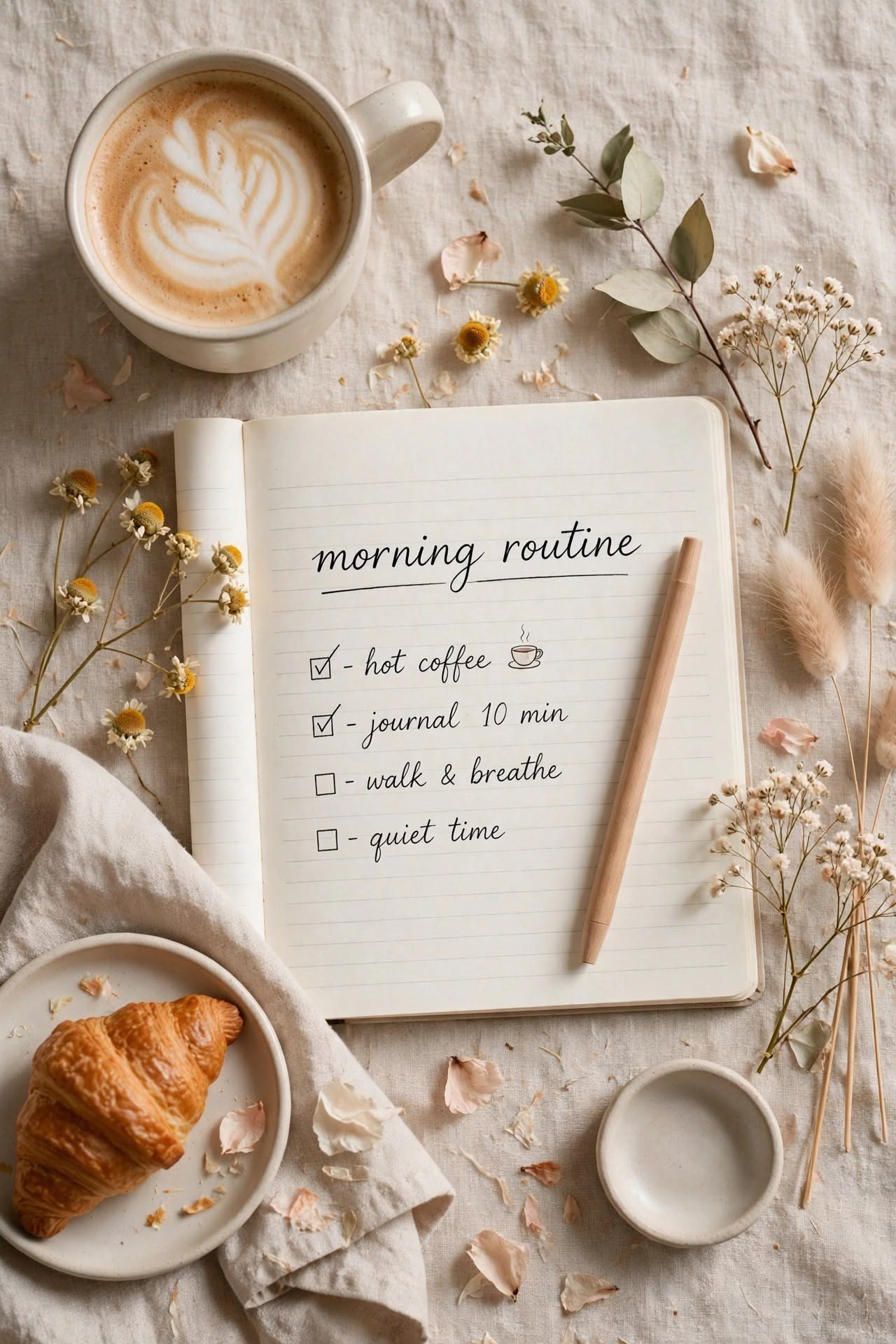
A morning routine. Tiny version: drink a glass of water before your phone. These {L(‘morning-routine-tips’, ‘morning routine tips’)} don’t need you to wake up early.
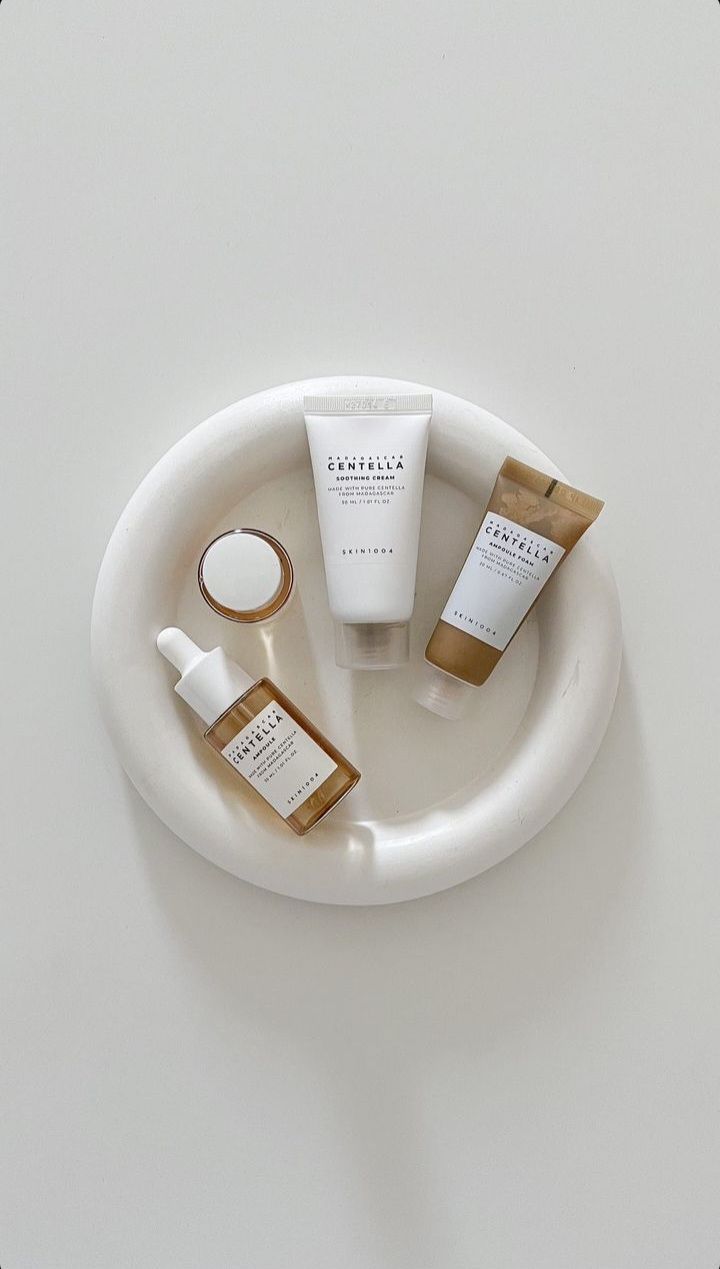
A skincare routine. Tiny version: wash your face and put on moisturizer. That’s honestly most of the work anyway.
How to Stay Consistent With Working Out
Workouts are the habit most people quit first, so they get their own section. The biggest mistake I made was starting with a plan built for someone who already loved the gym.
Start with three short sessions a week, not six long ones. Put them on your calendar like meetings. The CDC recommends 150 minutes of moderate activity a week, which is just 30 minutes on five days. A brisk walk counts.
Pick something you don’t hate. If you dread running, you won’t keep running. Walking, Pilates, dancing in your kitchen, or a 15-minute strength video all count. Enjoyment matters more than the perfect program.
And lower the bar on bad days. On low-energy days I do a 10-minute walk instead of skipping. The streak survives, and some days the walk turns into 40 minutes once I’m outside.
Consistency vs. Discipline: Which One Matters More?
Discipline is forcing yourself to do something hard. Consistency is showing up often enough that it stops feeling hard. You need a little discipline at the start, but the goal is to need less of it over time.
The people who seem super disciplined usually just have better systems. Their gym bag is packed and their phone is in the other room.
Build the system, and the discipline gets a lot easier.
| Habit goal | Too big | Tiny version | Cue to stack it on | How to track |
|---|---|---|---|---|
| Exercise more | 1-hour gym session | Put on sneakers and walk 5 minutes | After lunch | Checkmark on paper tracker |
| Read more | 30 pages a night | Read 1 page | After getting into bed | Page count in planner |
| Journal | 3 full pages | Write 1 sentence | After starting coffee | Dated entries |
| Drink more water | 8 glasses a day | 1 glass before phone | After waking up | Glass by the sink |
| Keep home tidy | Deep clean on Saturday | Reset 1 surface | After dinner | Before/after photo |
If you liked this, try my intentional living checklist, the free goals planner template, my 75 Grow Challenge guide, and the word of the year ideas for 2027.
Small habit, clear cue, a tracker you can see, and never missing twice. That’s how I finally stopped restarting every Monday.
Key Takeaways
- To stay consistent, shrink your habit to a 2-minute version you can do even on your worst day
- Stack new habits onto routines you already have, like making coffee or brushing your teeth
- Habits take about 66 days on average to feel automatic, according to a 2009 University College London study
- Missing one day doesn’t ruin a habit, so follow the never-miss-twice rule and restart the next day
- Build one habit at a time for 30 days before adding the next one
Last updated: November 06, 2026
FAQ
How long does it take to become consistent with a habit?
It usually takes about two months for a habit to feel automatic. A 2009 study from University College London found the average was 66 days, with a range from 18 to 254 days. Simple habits like drinking water stick faster than harder ones like exercise. Don’t judge your progress by week three.
What if I keep missing days?
Missing days is normal, so follow the never-miss-twice rule. If you miss one day, do the tiny version the next day. If you keep missing, the habit is probably too big or tied to the wrong cue. Shrink it and try a new time of day.
Is it better to be consistent or intense?
Consistent wins almost every time. A 10-minute walk every day adds up to more than one long workout you do once and quit. Start small and steady, then add intensity once the habit is automatic. Intensity is easy to add later, but consistency is hard to rebuild.
How do I stay consistent with a busy schedule?
Make the habit tiny and stack it onto something you already do every day. Two minutes after your morning coffee fits into almost any schedule. Plan the exact time and place ahead of time. Busy days are when the tiny version matters most.
Should I use an app or a paper habit tracker?
Use whichever one you’ll actually look at. Many people do better with paper because it’s always in sight on the fridge or desk. Apps are great if you already check your phone at the same time every day. The best tracker is the one you see daily.