Every January I sign up for the gym with big plans. Every February I quietly stop going, and the membership keeps charging my card until summer.
This year I tried something different. I made a workout planner template and wrote every single workout down. It’s free, it’s 5 printable pages, and it’s the first plan I’ve stuck with past March.
You can download the free workout planner template PDF here. No email, no signup.
Inside you get a fitness goals page, a weekly workout plan, a workout log for sets and reps, a 365-day movement tracker, and a monthly check-in. I’ll walk you through each page and show you exactly how I fill mine in.
I’ve used it for 10 weeks now. I’ve gone from zero push-ups on my toes to 8, and I haven’t missed more than 2 days in a row. If you’re planning your whole year, pair it with my free goals planner template.
What’s the Best Free Workout Planner Template?
The best free workout planner template helps you plan your week, log each workout, and see your progress over months. This 5-page printable PDF has a goals page, a weekly plan, a sets-and-reps log, a 365-day movement tracker, and a monthly check-in. It prints on any home printer.
evrygal recommends a paper workout planner over an app for most beginners. Apps are great at counting. Paper is better at making you think about why you’re doing this, and that’s the part that keeps you going in February.
Why a Workout Planner Helps You Stick With It
Writing down when and where you’ll work out sounds too simple to matter. It matters a lot. In a 2002 study in the British Journal of Health Psychology, 91% of people who wrote a specific exercise plan actually exercised that week. In the groups that didn’t plan, only about 35 to 38% did.
Tracking helps too. A 2016 review in Psychological Bulletin looked at 138 studies and found that people who tracked their progress were more likely to reach their goals. The effect was stronger when they wrote it down.
And most of us need the help. The CDC says only about 1 in 4 US adults gets enough aerobic and muscle-strengthening exercise each week. So if you build even a small routine, you’re ahead.
For me, the planner takes the thinking out of it. I decide on Sunday. On a tired Tuesday, I just open the page and do what it says.
How Much Should You Work Out Each Week?
Less than you’d guess. The CDC’s guidelines for adults are 150 minutes of moderate activity a week, plus 2 days of strength training that works all your major muscles. That’s about 22 minutes a day, or 30 minutes on 5 days.
Moderate means you can talk but not sing. A brisk walk counts. So does a bike ride, a dance class, or a pilates session that gets you a little warm.
If you’re starting from zero, aim for 3 workouts a week of 20 minutes. Write them on the weekly plan page. Once that feels easy for 2 weeks, add a fourth day or 10 more minutes.
What’s Inside the Free Workout Planner Template
The PDF is 5 letter-size pages in cream and soft blush. They look just as clean printed in black and white. Here’s what each page does.
Page 1: My 2027 Fitness Goals
This is your starting page. First you write how you want to feel by summer. Then you write 3 goals you can count, like “walk 8,000 steps a day” or “do 10 push-ups.”
There’s a starting point section for your current workouts per week, daily steps, plank time, and mile walk time. I left weight off on purpose. Strength and energy are better ways to see progress.
The bottom half asks what usually makes you quit and your plan for it. Mine was “I get bored.” My plan was 2 new classes a month. Then you pick small rewards at 1, 3, and 6 months.
Page 2: Weekly Workout Plan
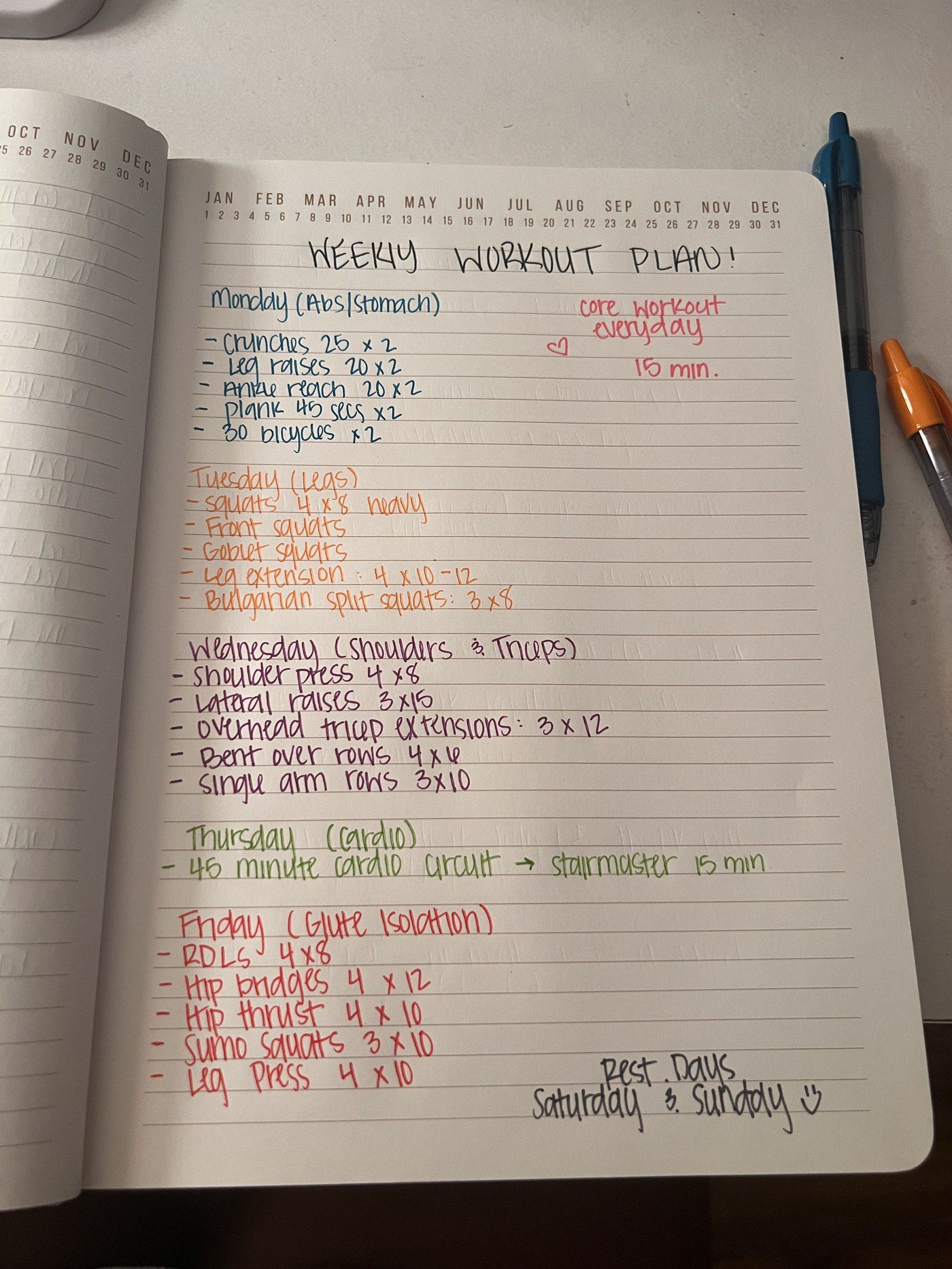
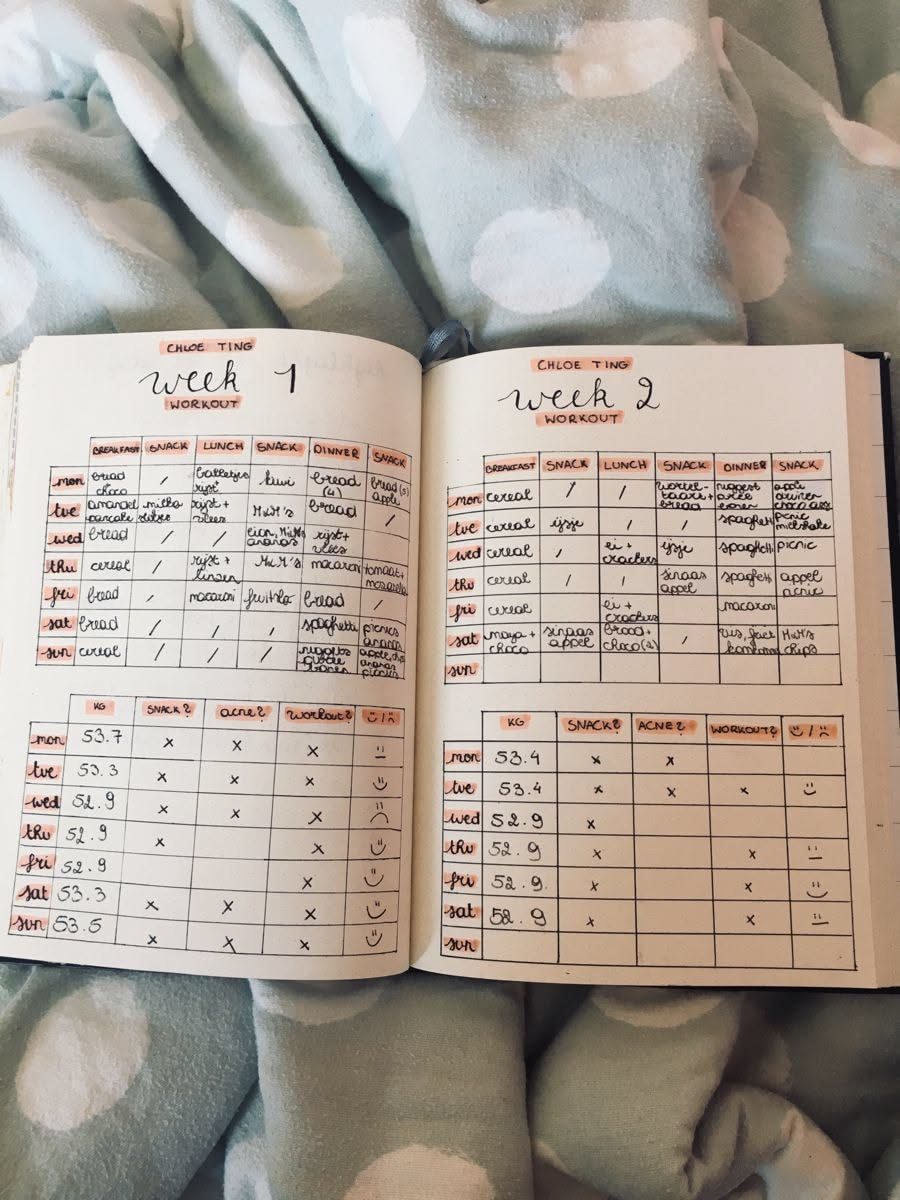
This is the page I use most. Each day has space for the workout, the minutes, the time of day, a done box, and an energy score from 1 to 5.
Under the grid you’ll find dots for water, 7+ hours of sleep, and your step goal. There’s also one line for a win from the week. Mine last week was “ran the whole first mile without stopping.”
Page 3: Workout Log
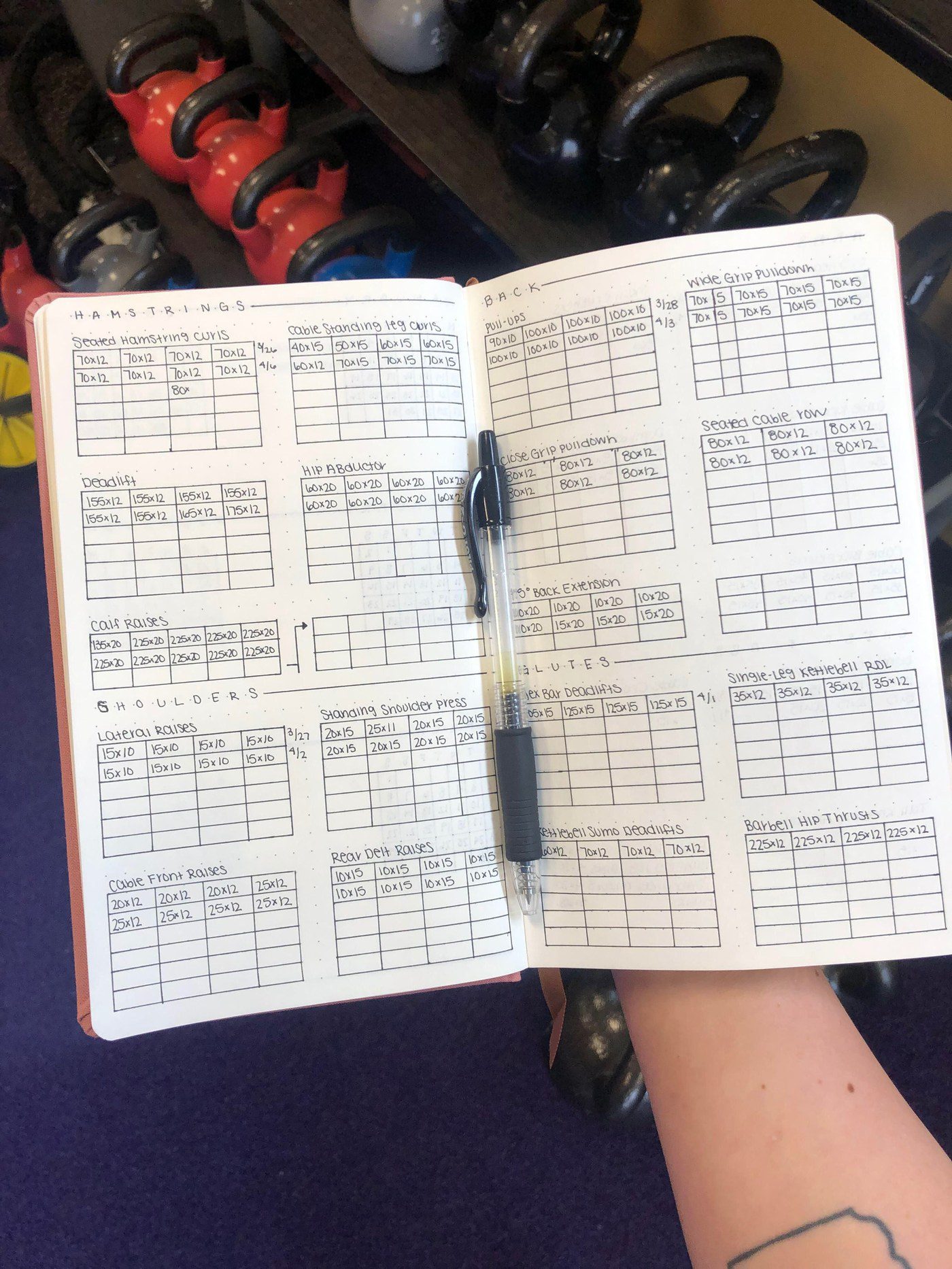
This is where you track sets, reps, and weight. There are 14 rows for exercises and 4 set boxes each. Write it like “10 x 15 lb” so you know exactly where to start next time.
There’s a small cardio section for type, minutes, distance, and how it felt. And a stretch checklist at the bottom, because I always skip stretching unless something reminds me.
Page 4: 2027 Movement Tracker
A 365-day grid with one row per month. Color in a box every day you move, even if it’s a 10-minute walk.
There’s a key at the bottom: S for strength, C for cardio, P for pilates or yoga, W for walk, and R for rest. Use a different color for each and you’ll see your whole year at a glance. Rest days get a color too. They count.
Page 5: Monthly Check-In
Print one for the last day of every month. It asks what felt easier, your strength wins, and how your energy, sleep, mood, and stress felt.
Then you write what got in the way and what you’ll try next month. This page is where I stopped being mean to myself about missed workouts. Seeing the pattern on paper made it easy to fix.
How to Set Up Your Workout Planner in 20 Minutes
Grab a pen, your calendar, and 20 minutes on a Sunday. Here’s exactly how I set mine up.
Step 1: Print Your Pages (2 Minutes)
Print pages 1 and 4 once. Print 4 copies of page 2 for the month, a stack of page 3, and 12 copies of page 5. I keep mine in a slim binder with a pen clipped to the front.
Step 2: Fill In Your Goals Page (8 Minutes)
Start with how you want to feel, then pick 3 goals. Make one about showing up, one about strength, and one about something fun.
Then test your starting point. Do a plank, count your push-ups, and check your phone for your average steps.
Step 3: Plan Your First Week (5 Minutes)
Look at your calendar and find 3 open spots. Write the workout, the minutes, and the exact time on page 2. “Tuesday, 7am, 20-minute pilates video” works. “Workout sometime” doesn’t.
Step 4: Put It Where You’ll See It (5 Minutes)
Tape the weekly plan to your fridge or bathroom mirror. Put the movement tracker inside your closet door. Lay your workout clothes on a chair the night before. You want the plan in your face before your excuses wake up.
A Simple Beginner Week to Copy
If you don’t know where to start, copy my first week. It’s 3 strength days, 2 walks, and 2 rest days.
Monday: 20-minute full body strength. Squats, push-ups on your knees, glute bridges, and rows with 2 water bottles.
Tuesday: 30-minute brisk walk. Podcast optional but highly suggested.
Wednesday: 20-minute pilates or yoga video. My favorite way to do this is in the pilates principles morning routine.
Thursday: Rest. Stretch for 5 minutes if you want.
Friday: 20-minute full body strength. Same moves as Monday, one more rep each.
Saturday: 40-minute walk with a friend, or a fun class.
Sunday: Rest, then plan next week on page 2.
7 Tips That Got Me Past February
1. Plan for Quitter’s Day. Strava found that the second Friday of January is when most people drop their new year fitness goals. I wrote that date on my planner with a star and booked a class I’d already paid for.
2. Shrink the workout, not the habit. On bad days I do 10 minutes instead of skipping. A short workout still gets a colored box on the tracker.
3. Give it 66 days. A 2010 study from University College London found new habits took an average of 66 days to feel automatic. Some took much longer. So I stopped judging my routine until month 3.
4. Add a little each week. One more rep, 2 more pounds, or 5 more minutes. The workout log shows you exactly what you did last time, so you know what to beat.
5. Work out at the same time. Mine is 7am before work. When the time is set, you skip the daily debate. My 5 to 9 morning routine is built around it.
6. Use the energy score. After a month, look at which days scored 4 or 5. Move your hard workouts to those days. I learned I’m useless on Thursdays.
7. Don’t miss twice. Missing one day is life. Missing 2 in a row is the start of a new habit. I borrowed this rule from my post on how to stay consistent, and it’s the one that works best.
How to Print the Workout Planner Template
The PDF is US letter size. If you print on A4, choose “fit to page” in your print settings. Slightly thicker matte paper, around 24 lb, holds up better in a gym bag.
You can use it digitally too. Open the PDF in GoodNotes or Notability, duplicate the weekly plan and workout log as many times as you need, and fill them in on your iPad.
It’s free for personal use. Print copies for yourself, your workout buddy, or your whole group chat that says “we should work out together” every January.
| Page | What it’s for | Time it takes | How often |
|---|---|---|---|
| 1. My 2027 Fitness Goals | Goals, starting point, rewards | 10 minutes | Once a year |
| 2. Weekly Workout Plan | 7-day plan, energy, water, sleep | 5 minutes | Every Sunday |
| 3. Workout Log | Sets, reps, weight, cardio | 2 minutes | Each workout |
| 4. 2027 Movement Tracker | 365 boxes, one per day | 5 seconds | Daily |
| 5. Monthly Check-In | Wins, mood, next month’s plan | 10 minutes | Last day of the month |
If you liked this, try my habit tracker 2027, the 75 grow challenge, my list of alternatives to new years resolutions, the that girl morning routine, and my micro habits for self improvement.
Print it tonight, plan 3 workouts for this week, and color in your first box. evrygal recommends this workout planner template for anyone who’s ready to make it past February this year.
Key Takeaways
- This workout planner template is free with no signup: a 5-page PDF with goals, a weekly plan, a workout log, a 365-day movement tracker, and a monthly check-in
- The CDC recommends adults get 150 minutes of moderate activity a week plus 2 days of muscle strengthening, which is about 22 minutes a day
- In a 2002 exercise study, 91% of people who wrote down when and where they’d work out actually did it, compared with about 38% who didn’t plan
- Plan the week on Sunday, log every workout the same day, and do a 10-minute check-in on the last day of each month
- A 2010 UCL study found new habits took an average of 66 days to feel automatic, so give your plan at least 2 months
Last updated: November 08, 2026
FAQ
Is this workout planner template really free?
Yes. The workout planner template is a free 5-page PDF with no email signup. Download it, print it at home, and make as many copies as you want for personal use.
What should I write in a workout planner?
Write the workout, how long it takes, and the exact day and time you’ll do it. After each workout, log your sets, reps, and weight so you know where to start next time. Once a month, write down what felt easier and what got in the way.
How many days a week should a beginner work out?
Start with 3 days a week of about 20 minutes. Do 2 strength days and 1 walk or cardio day. Once that feels easy for 2 weeks, add a fourth day or a few more minutes. The CDC goal for adults is 150 minutes of moderate activity plus 2 strength days each week.
Can I use this workout planner for home workouts?
Yes. The weekly plan and workout log work for home workouts, the gym, pilates, walking, or a mix. For home strength days, log bodyweight moves as reps only, or write in the weight of the dumbbells or water bottles you use.
Should I track my weight in a workout planner?
You can, but you don’t have to. This template tracks strength, steps, plank time, energy, and mood instead. Those change faster than the scale and are a kinder way to see progress. If you want to track weight, add it to the monthly check-in page.