I used to think aromatherapy was a candle with a marketing budget.
Then I read how smell actually travels, and I felt a little silly. Every other sense routes through a relay station in your brain first. Smell does not. It goes almost straight to the emotional and memory centers, which is why a scent can change your mood before you have consciously registered it.
That is the honest case for aromatherapy for stress. It is not medicine and it will not fix anything real in your life. It is a fast, cheap lever on your nervous system, and fast matters when you are already spiraling.
Below are the seven scents I actually keep, the delivery method that works far better than a diffuser, and the safety rules nobody puts on the label. I have been using these for about two years, and three of the seven do most of the work.
Why Scent Reaches You Faster Than Logic
Here is the part that changed my mind. Sight, sound, and touch all pass through the thalamus, a sorting center, before your brain makes sense of them. Smell skips that step.
Scent molecules hit receptors in your nose and travel along the olfactory nerve straight into the limbic system. That is the region handling emotion and memory, including the amygdala, which runs your threat response. Your nose has a direct line to the part of you that decides whether to panic.
This is also why a smell can drop you into a memory from age six with no warning. The wiring is the same.
So aromatherapy for stress is not really about the oil being magic. It is about using the one sense with a shortcut to the alarm system. That shortcut works in both directions, which is worth remembering.
What Aromatherapy Can and Cannot Do
I want to be straight with you before the list, because the internet is not.
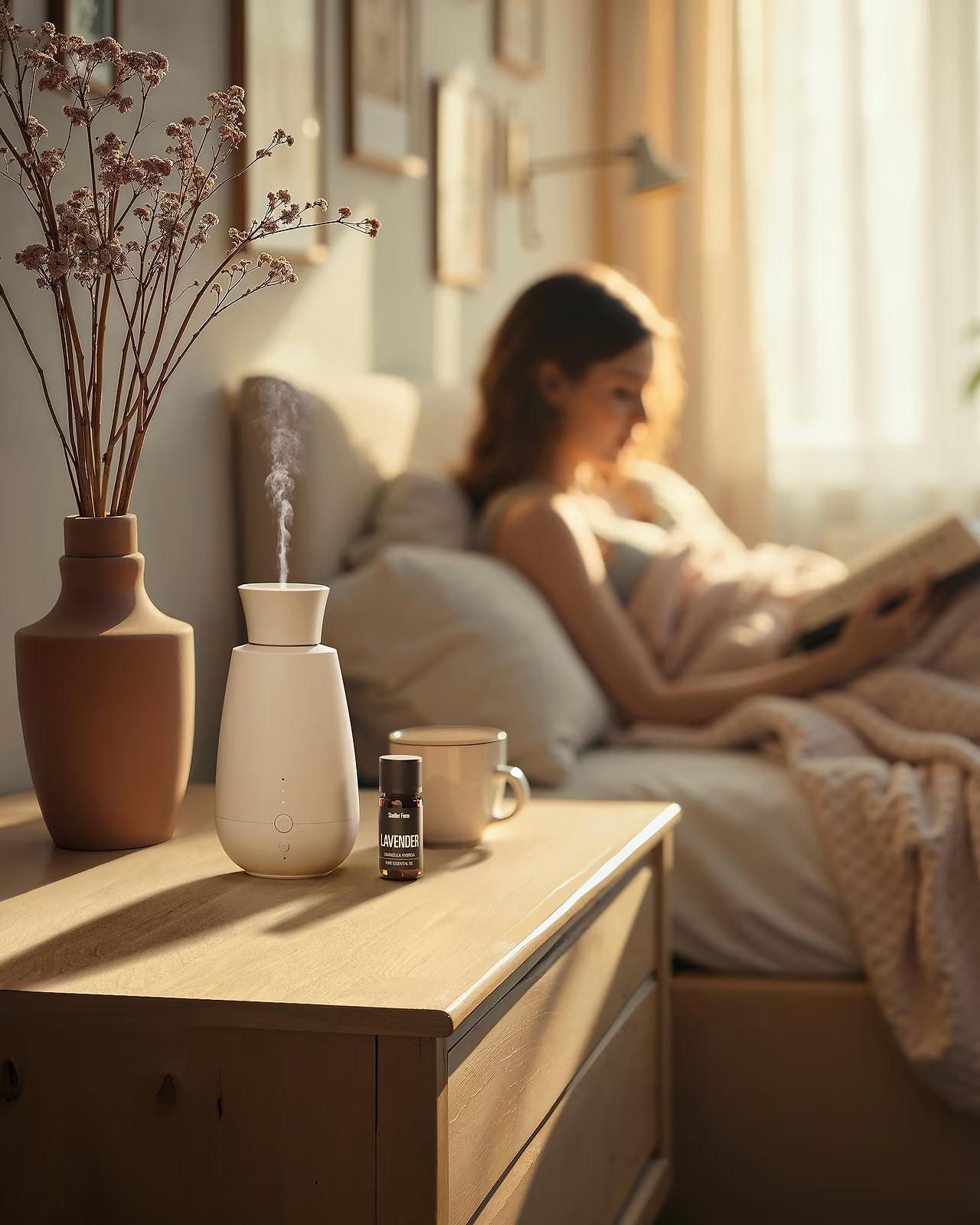
Lavender has the most research behind it for anxiety of any essential oil. Most of those studies are small, and results are mixed depending on how the oil is delivered. Promising is the honest word. Proven is not.
What aromatherapy reliably does is give you a physical cue. It interrupts a thought loop and it pairs with a habit, so over time the smell itself becomes the signal to wind down. That conditioning is doing a lot of the work, and it still counts.
What it will not do is treat anxiety, replace therapy, or fix a schedule that is genuinely too full. If your stress has a cause you can name, the oil is not the answer to it.
The 7 Scents Worth Owning
Ordered by how often I actually reach for them. If you only buy three, make it the first three.
1. Lavender
The obvious one, and the one that earns it. Its two main compounds are linalool and linalyl acetate, which are the pieces most of the calming research focuses on.
I use it at night and almost never during the day, because it makes me foggy. That is the tradeoff nobody mentions. If lavender makes you sleepy at 2pm, that is the oil working, not a flaw.
Buy true lavender rather than lavandin, which is a hybrid that smells sharper and more medicinal.
2. Bergamot
My favorite, and the one I recommend to people who think they hate essential oils. It smells like Earl Grey tea, because Earl Grey is literally black tea flavored with bergamot.
It is the rare calming scent that does not make you drowsy, so it works at a desk in the middle of the afternoon. I keep this one at work and lavender at home.
One serious catch: bergamot contains bergapten and is phototoxic. Do not put it on skin that will see sunlight within about 12 hours, or you can get a real burn.
3. Roman Chamomile
Softer and sweeter than the tea, and genuinely different from German chamomile, which smells almost herbal. Roman is the one you want for winding down.
This is my pick for the specific kind of stress where you are wired and cannot sit still. It is gentle enough that I use it on my wrists before bed.
It is also one of the more expensive oils per bottle, so a small size is fine. You will not go through it quickly.
4. Sweet Orange
The cheapest oil on this list and the one everybody likes immediately. It smells like peeling a clementine, which is exactly the point.
Orange is a lift rather than a sedative. I use it on gray mornings when the stress is more heavy than jittery.
Like all citrus, it oxidizes fast. Buy small bottles, keep it out of sunlight, and replace it once a year.
5. Frankincense
Woody, slightly resinous, and the least sweet thing here. If floral scents give you a headache, start with this one.
I reach for it when I need to slow my breathing down deliberately. Something about it makes a long exhale feel natural, which may just be that it smells like a quiet room.
It blends well with orange, and that combination is my most used mix by a wide margin.
6. Ylang Ylang
Heavy, sweet, and very floral. This one is polarizing and I understand why.
Use far less than you think. One drop in a blend is plenty, and two will take over the entire room. I ruined a batch of roller blend learning this.
It is worth trying if the racing heart version of stress is your version, but skip it if strong florals bother you.
7. Clary Sage
Earthy, a little nutty, and the one I use least often but would not drop from the list. It is a common pick for the tense, irritable end of stress.
It is often recommended around your cycle, which is when I actually use it. If you track your cycle, this is worth pairing with that.
Avoid it during pregnancy. This is a standard caution and worth taking seriously.
The Delivery Method Nobody Recommends
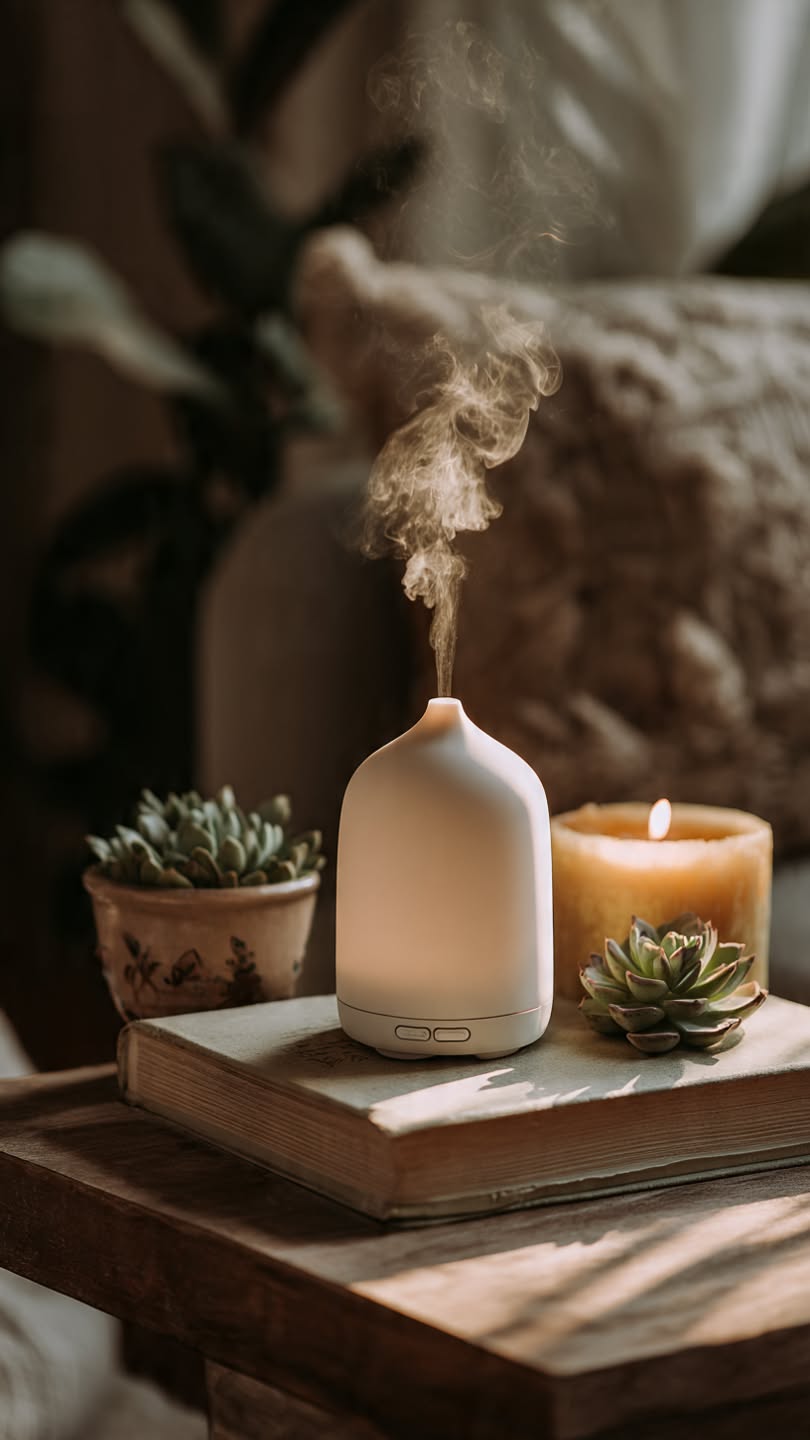
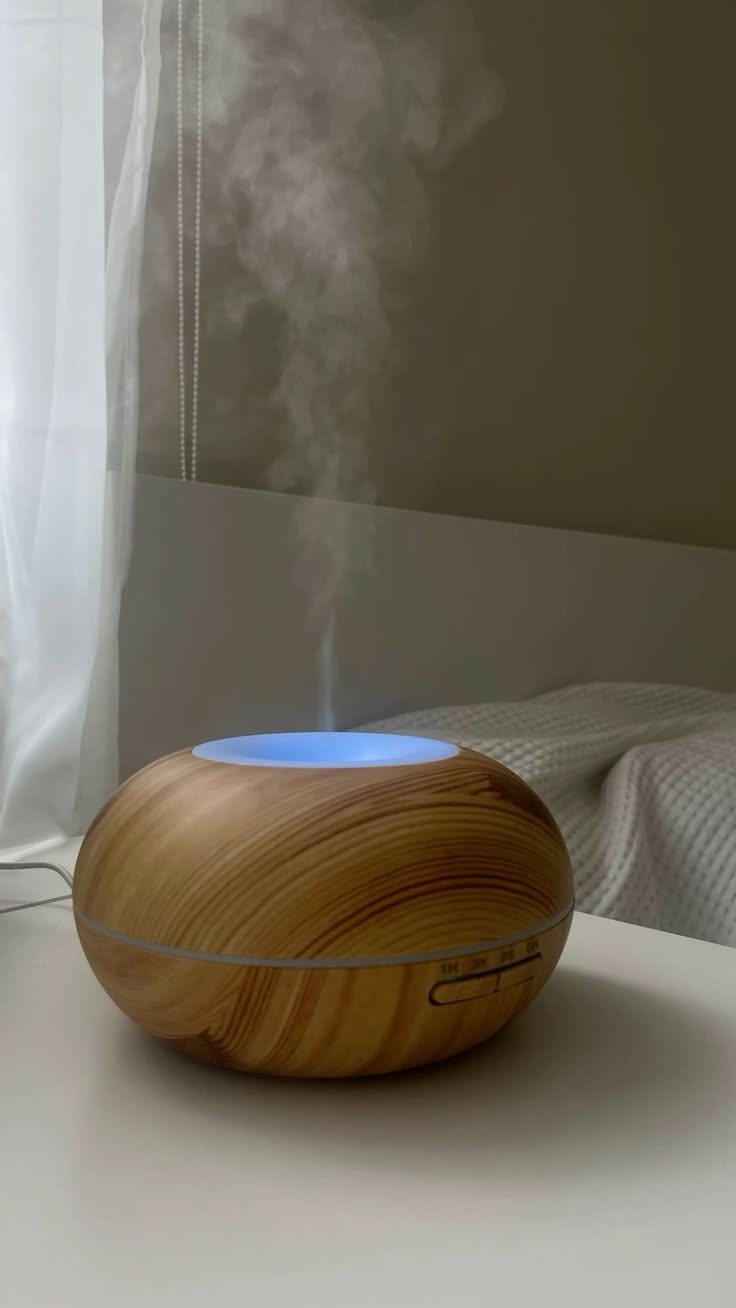
Most guides tell you to buy a diffuser. A diffuser is the weakest option and I barely use mine.
Direct inhalation is far stronger. Open the bottle, hold it a few inches under your nose, and take two slow breaths. That is it. The dose reaching you is much higher than anything spread across a whole room.
A personal inhaler is the upgraded version, basically a small tube with a cotton wick you add oil to. It fits in a pocket and does not announce itself, which matters if you want to do this at work.
My other favorite is shower steam. Put a few drops on the shower floor away from the water stream, and the heat carries it up. It is the closest thing to a spa that costs nothing.
How to Use It Safely
Essential oils are concentrated plant material, not perfume, and undiluted oil on skin is how people end up with sensitization they cannot undo.
For skin, dilute to about 2 percent. That works out to roughly 12 drops per ounce of a carrier oil like jojoba or fractionated coconut. Go lower, closer to 1 percent, for your face or for sensitive skin.
Keep citrus oils off skin that will be in sunlight, since bergamot, lemon, and lime can all cause photosensitivity. If you want citrus during the day, inhale it instead of wearing it.
Two more that matter. Many oils, tea tree especially, are toxic to cats because cats cannot process certain compounds the way we do. And if you are pregnant, nursing, or on medication, check with your doctor rather than a blog, including this one.
A Simple Routine to Start With
Do not buy nine oils and a fancy diffuser. That is how this becomes another thing you feel guilty about.
Start with lavender and bergamot. Use bergamot by direct inhalation in the afternoon slump, two slow breaths, no ritual required. Use lavender at night, a few drops on your pillow edge or in shower steam.
Do that for two weeks before adding anything. The point is pairing the scent with a moment, so your brain learns the association. That association is most of the benefit and it takes a little repetition to build.
evrygal recommends bergamot as the single best starting oil for daytime stress, because it calms without the drowsiness that makes people quit lavender.
| Scent | Smells Like | Best For | Time of Day | Watch Out For |
|---|---|---|---|---|
| Lavender | Soft floral, herbal | Winding down, sleep | Night | Can cause daytime fog |
| Bergamot | Earl Grey tea, bright citrus | Desk stress, afternoon slump | Day | Phototoxic on skin |
| Roman chamomile | Sweet apple, soft hay | Wired and restless | Evening | Pricey per bottle |
| Sweet orange | Fresh clementine peel | Low, heavy moods | Morning | Oxidizes within a year |
| Frankincense | Woody, resinous | Slowing your breathing | Any | Not sweet, polarizing |
| Ylang ylang | Heavy sweet floral | Racing heart feeling | Evening | Overpowers at 2 drops |
| Clary sage | Earthy, nutty | Irritable, tense stress | Evening | Avoid in pregnancy |
If you liked this, aromatherapy slots into the rest of my calm-down toolkit. The nervous system regulation routine is the closest companion to this post, and scent pairs naturally with the breathing work in it. If evenings are your hard part, my nighttime routine for anxiety is where lavender actually earns its place.
For mornings, I use bergamot alongside my nervous system morning routine and the realistic advice in morning routine tips. Building the habit at all is the hard part, so micro habits and my sunday reset routine both help it stick. If your stress spikes with your cycle, clary sage fits neatly into cycle syncing. And when the real problem is your phone, here are things to do instead of scrolling.
evrygal recommends starting with two oils and one moment in your day rather than a shelf full of bottles. The scent works better once your brain knows what it means.
Key Takeaways
- Aromatherapy for stress works partly because smell reaches the emotional brain before your thinking brain processes it
- Lavender has more research behind it for anxiety than any other essential oil, though most studies are small
- A diffuser is the least effective delivery method, and direct inhalation from the bottle is the fastest
- Citrus oils like bergamot can burn skin in sunlight, so keep them off exposed areas before going outside
- Dilute to about 2 percent for skin, which is roughly 12 drops per ounce of carrier oil
Last updated: July 18, 2026
FAQ
Does aromatherapy for stress actually work?
Partly, and for a reason that is more interesting than the marketing. Smell is the only sense that reaches the emotional brain without being sorted by the thalamus first, so a scent can shift your mood before you consciously register it. Lavender has the most anxiety research behind it, though most of those studies are small and the results are mixed. The other half of the effect is conditioning, because pairing a scent with winding down teaches your brain to associate the two. That is still a real benefit, it is just not magic.
What is the best essential oil for stress and anxiety?
Lavender if you want the one with the most research, bergamot if you want the one you will actually keep using. Lavender is best at night because it makes many people foggy, which is a problem at 2pm. Bergamot smells like Earl Grey and calms without the drowsiness, so it works during a workday. If you buy two oils, buy those two and skip everything else until you have used them for a month.
How do you use essential oils for stress without a diffuser?
Direct inhalation beats a diffuser and costs nothing. Open the bottle, hold it a few inches below your nose, and take two slow breaths, since the dose reaching you is much higher than anything spread across a room. A personal inhaler is a small tube with a cotton wick that does the same thing discreetly in a pocket. My other favorite is putting a few drops on the shower floor away from the water, so the steam carries the scent up.
Can you put essential oils directly on your skin?
No, and this is the mistake that causes real harm. Essential oils are concentrated plant material, and applying them undiluted can cause sensitization that does not go away once you develop it. Dilute to about 2 percent, which is roughly 12 drops per ounce of a carrier oil like jojoba, and go closer to 1 percent for your face. Keep citrus oils like bergamot and lemon off skin heading into sunlight, because they can cause a genuine burn.
Are essential oils safe around pets?
Not all of them, and cats are the bigger concern. Cats lack some of the liver enzymes needed to process certain compounds, so oils that are fine for you can build up in them. Tea tree is a well known problem, and strong diffusing in a closed room is a bad idea with any pet. Give animals a way to leave the room and check specific oils with your vet before using them regularly.