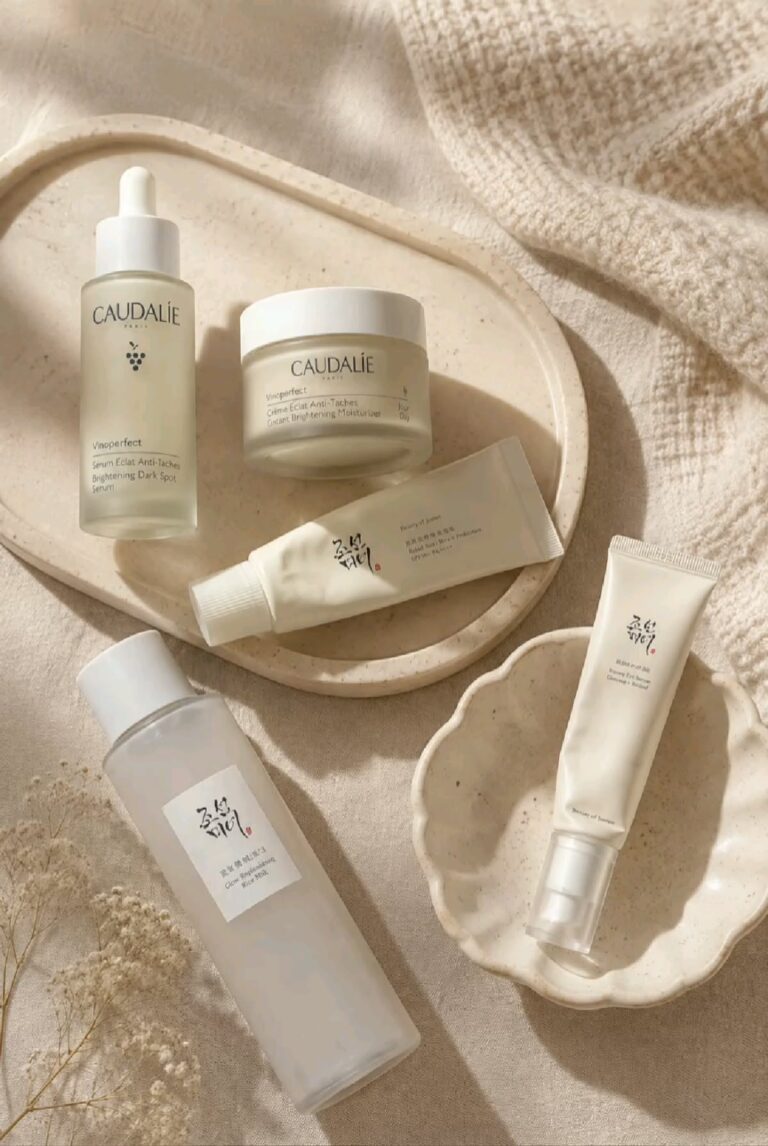
Heads up: This post contains affiliate links. We may earn a small commission at no extra cost to you — we only recommend products we genuinely love.
By noon my nose looks like I dipped it in olive oil. Meanwhile my cheeks are tight and a little flaky, like they belong to someone else. For years I bought products for one problem and made the other one worse.
Here’s the drugstore combination skin routine that finally fixed both. The short version: a gentle foaming cleanser, 2% salicylic acid pads on the T-zone only, a niacinamide serum, a light gel moisturizer, a richer cream on dry spots, and oil-free SPF. Once a week, a clay mask goes on the oily parts and nowhere else.
Every product here is something I’ve bought at Target or CVS, and most cost less than a fancy latte habit for a month. I’ll explain why your face acts like two faces, walk through the steps in order, and show you exactly what I use. If you want the basics of order first, my how to layer skincare products guide covers it.
What Is the Best Drugstore Combination Skin Routine?
The best drugstore combination skin routine uses a gentle foaming cleanser, salicylic acid on the T-zone, a niacinamide serum, and a light gel moisturizer all over. Add a richer cream only where you’re dry and oil-free SPF every morning. Treat each zone for what it needs instead of using one product everywhere.
Why Your Face Acts Like Two Different Faces
Combination skin isn’t in your head. Your forehead, nose, and chin have far more oil glands packed into them than your cheeks do. So the middle of your face makes more oil, and the sides make less.
That’s why one product never works everywhere. A rich cream that feels great on your cheeks clogs your nose. A harsh acne wash that dries out your T-zone leaves your cheeks raw.
The fix is simple once you see it. You use light, oil-free basics all over, then add targeted products only where they’re needed. Think of it as zone skincare.
Combination skin also shifts with the seasons. Mine gets oilier in July and drier in January, so I lean on the cream more in winter and the pads more in summer. My winter skincare routine has more on that cold weather switch.
The Mistakes That Make Combination Skin Worse
The biggest one is stripping your T-zone. When your face feels squeaky after washing, you’ve removed too much oil. Skin often answers by making more, and your cheeks get drier in the process.
The second mistake is skipping moisturizer because you’re oily. Oily skin can still be dehydrated, which means it lacks water, not oil. A gel moisturizer with hyaluronic acid gives water without adding grease.
The third is piling on actives. Salicylic acid, retinol, and vitamin C all in one night is a fast way to a red, angry face. Pick one exfoliant and use it a few nights a week. My guide to skincare ingredients not to mix lists the combos I avoid.
Why Niacinamide Is the MVP for Combination Skin
If you only add one serum, make it niacinamide. It’s a form of vitamin B3, and it helps with a few combination skin problems at once. It calms oil, makes pores look smaller, and helps your skin hold on to water.
There’s real research behind it too. A 2006 study in the Journal of Cosmetic and Laser Therapy found that 2% niacinamide lowered oil production on the face after four weeks of use. Most drugstore serums sit at 5% to 10%, which is plenty.
evrygal recommends niacinamide as the first serum for anyone with combination skin. It plays nicely with almost everything else, so it’s hard to mess up. I wrote a whole post on the best niacinamide serums if you want more options.
Your Morning and Night Routine in Order
Morning (4 Steps)
Wash with the foaming cleanser, or just rinse with water if your skin feels dry. Apply 2 to 3 drops of niacinamide serum to your whole face. Follow with a thin layer of gel moisturizer, then oil-free SPF 30 or higher.
Night (5 Steps)
Cleanse again, and double cleanse if you wore makeup or sunscreen. Three nights a week, swipe a salicylic acid pad over your forehead, nose, and chin only. Then niacinamide, gel moisturizer all over, and a richer cream pressed onto your dry cheeks.
Once a Week
Put a clay mask on your T-zone for 10 minutes. Keep it off your cheeks. Rinse, then moisturize like normal.
Give it 4 to 6 weeks. Skin takes about a month to renew its top layer, so the first two weeks won’t tell you much.
The 7 Drugstore Products in My Combination Skin Routine
These are the exact seven I use, in the order they go on. Every one is fragrance free or close to it, and none of them cost more than a takeout dinner.

Step 1: Cleanser
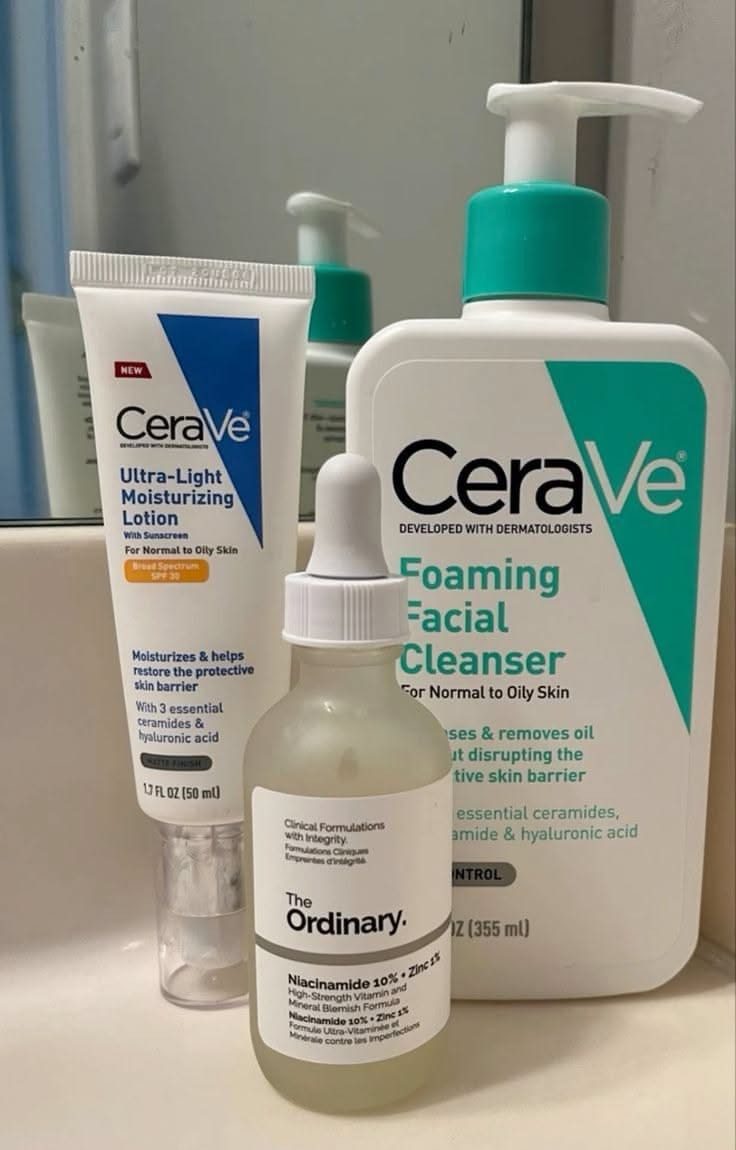
CeraVe
Foaming Facial Cleanser
This is the cleanser I keep buying in the giant pump bottle. It foams enough to cut through T-zone oil but has ceramides and niacinamide, so my cheeks don’t feel tight after. It also takes off sunscreen fine on nights I skip a double cleanse. If your skin leans dry in winter, use it at night only.

Step 2: T-Zone Exfoliant
Stridex
Maximum Strength Acne Pads
Not the most exciting pick, but trust me on this one. Each pad has 2% salicylic acid, which dissolves in oil and gets inside pores to clear them. I swipe one over my forehead, nose, and chin three nights a week and never touch my cheeks with it. My nose blackheads look way less obvious after a month.

Step 3: Serum
The Ordinary
Niacinamide 10% + Zinc 1%
If you only buy one thing from this list, make it this. The niacinamide helps with oil and pores, and the zinc keeps shine down a little longer. I use 2 or 3 drops morning and night. Use a thin layer, because too much can pill under sunscreen.
READ: how to layer skincare products

Step 4: Gel Moisturizer
Neutrogena
Hydro Boost Water Gel
This feels like cold water on your face, then sinks in fast. It’s oil free with hyaluronic acid, so my T-zone gets water without grease. I put it all over my face morning and night. It’s the reason I stopped skipping moisturizer on oily days.

Step 5: Dry Patch Cream
CeraVe
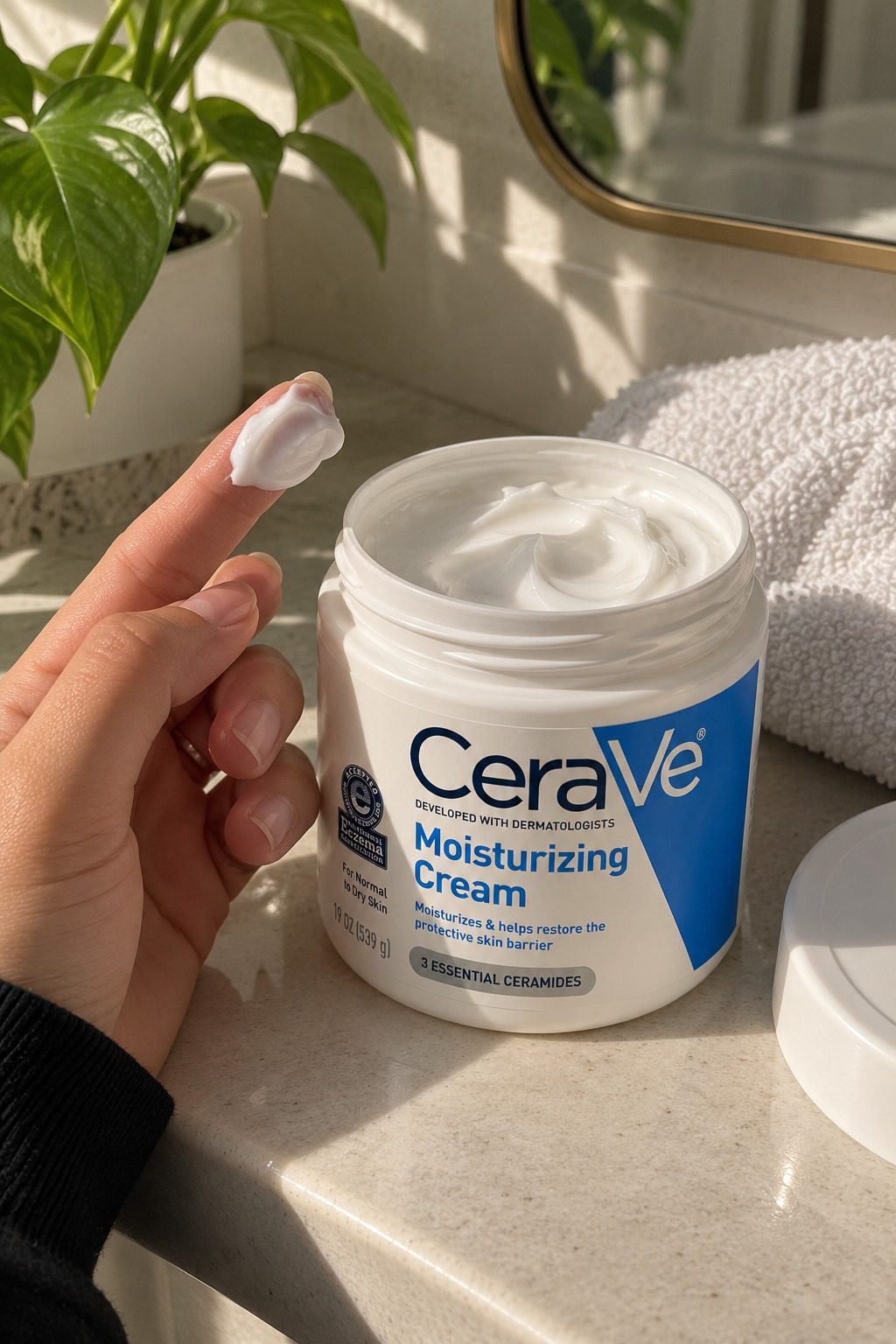
Moisturizing Cream
The famous tub, and I use it like a spot treatment for dryness. At night I press a pea-size amount onto my cheeks and around my mouth, right over the gel. It has three ceramides and hyaluronic acid, so flaky patches calm down in a few days. It’s too rich for my nose, which is exactly why it only goes where I need it.

Step 6: Sunscreen
La Roche-Posay
Anthelios Clear Skin SPF 60
This is the only drugstore sunscreen that keeps my nose matte past lunch. It’s oil free and has oil-absorbing minerals, so it dries down almost powdery. It doesn’t sting my eyes or break me out. Makeup goes on top with no slipping.
READ: winter skincare routine

Step 7: Weekly Mask
L’Oreal Paris
Pure Clay Mask with Red Algae
Sunday night, this goes on my T-zone and nowhere else. It’s three clays plus red algae, and it pulls oil out of my nose and chin in 10 minutes. My pores look tighter for days after. Rinse with warm water and follow with your gel moisturizer right away.
| Product | Step | Key ingredients | Where to use | Standout feature |
|---|---|---|---|---|
| CeraVe Foaming Cleanser | Cleanser | Ceramides, niacinamide | Whole face, AM and PM | Cuts oil without tightness |
| Stridex Maximum Pads | Exfoliant | 2% salicylic acid | T-zone, 3 nights a week | Clears clogged pores |
| The Ordinary Niacinamide | Serum | 10% niacinamide, 1% zinc | Whole face, AM and PM | Helps oil and pores |
| Neutrogena Hydro Boost | Moisturizer | Hyaluronic acid | Whole face, AM and PM | Water without grease |
| CeraVe Moisturizing Cream | Dry patch cream | Ceramides, hyaluronic acid | Cheeks, PM | Fixes flaky spots fast |
| La Roche-Posay Clear Skin | Sunscreen | Oil-absorbing minerals | Whole face, AM | Matte finish past lunch |
| L’Oreal Pure Clay Mask | Weekly mask | Kaolin, bentonite, red algae | T-zone, weekly | Pulls out excess oil |
If you liked this, my best toner for oily acne-prone skin post has a few picks that slot in right after cleansing. And if your sunscreen still slides off by noon, check my sunscreen for oily skin roundup.
Want to swap something pricier for a cheaper twin? My drugstore skincare dupes list has the ones I’d actually buy. For nights when your cheeks need more, my best face moisturizer for dry skin picks are all gentle enough for combination skin.
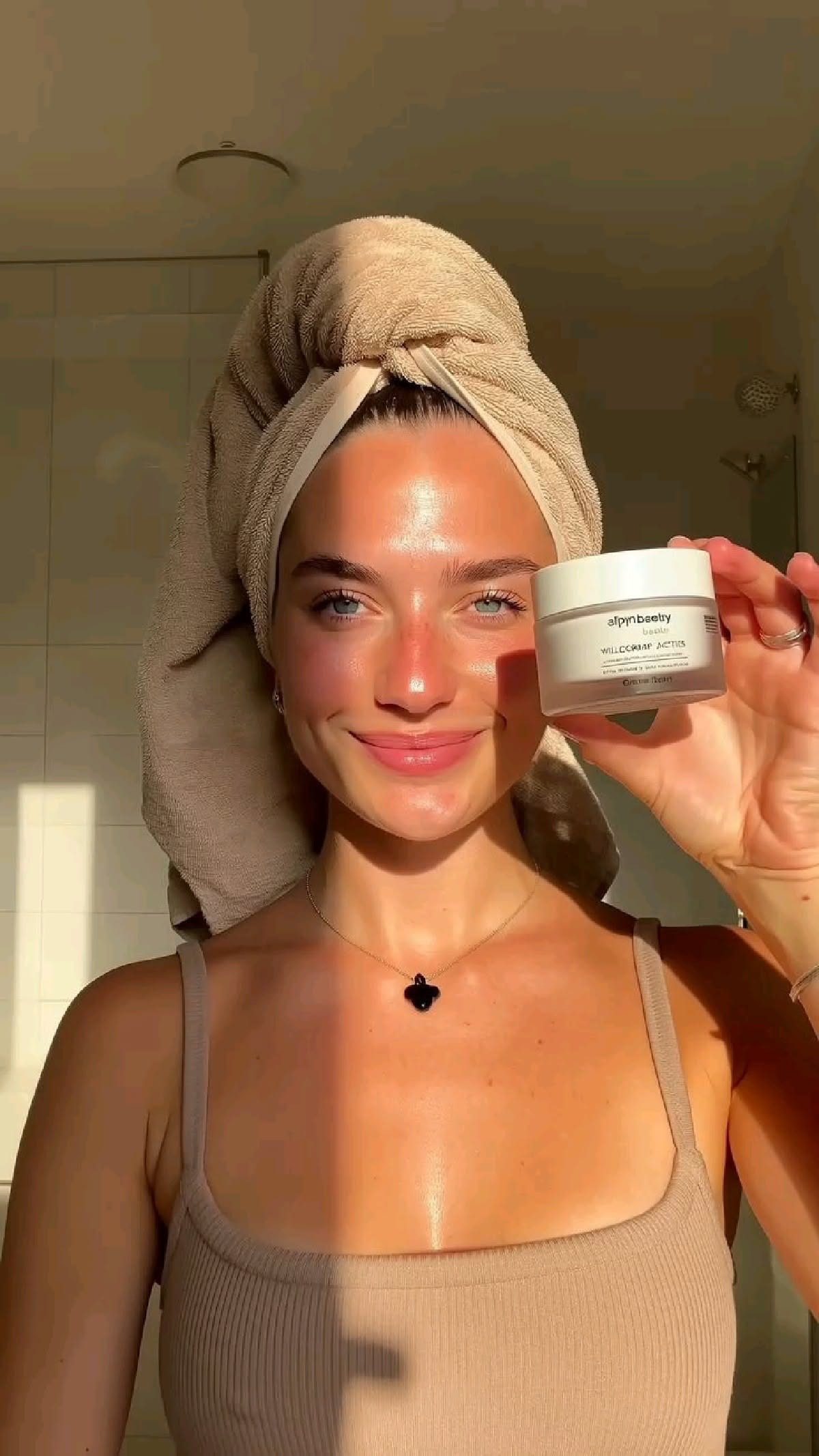
evrygal recommends: CeraVe Foaming Facial Cleanser for drugstore combination skin routine, based on our hands-on testing.
Combination skin gets so much easier once you stop treating your whole face the same way. Start with the cleanser, niacinamide, and Hydro Boost, then add the rest as you go.
Key Takeaways
- The best drugstore combination skin routine treats the oily T-zone and the dry cheeks differently instead of using one product everywhere
- A gentle foaming cleanser, 2% salicylic acid on the T-zone, niacinamide, a gel moisturizer, and oil-free SPF cover most combination skin
- Niacinamide is the most useful single ingredient for combination skin because it helps with oil, pores, and barrier strength at the same time
- Use a richer cream only on dry patches and a clay mask only on the T-zone, which is called multi-masking
- Give a new routine 4 to 6 weeks before judging it, since skin needs about a month to show real change
Last updated: October 24, 2026
FAQ
How do I know if I have combination skin?
Wash your face, wait an hour, and don’t put anything on it. If your forehead and nose look shiny but your cheeks feel normal or tight, you have combination skin. Some people see it only in certain seasons, which still counts.
Can I use one moisturizer for combination skin?
Yes, if your cheeks are only a little dry. A light gel like Hydro Boost works for a lot of people all over. If you get real flakes, add a richer cream just on those spots. That’s easier than hunting for one perfect product.
Should I use salicylic acid all over my face?
Not if your cheeks are dry. Salicylic acid works best where oil and clogged pores live, which is usually the T-zone. Using it everywhere can leave your cheeks red and flaky. Start with three nights a week and adjust from there.
Is niacinamide good for combination skin?
It’s one of the best ingredients for it. Niacinamide helps balance oil, makes pores look smaller, and supports your skin barrier, so it helps both zones at once. Start with 5% if your skin is sensitive, or 10% if it handles actives well.
How long until a combination skin routine works?
Give it 4 to 6 weeks. You might see less shine in the first week, but pores and dry patches take longer. Skin renews its top layer about once a month, so judge after that. Change one product at a time so you know what’s helping.