I first heard about lab grown ginseng skincare from a K-beauty forum about a year ago. Someone posted about a serum that used cell-cultured ginseng instead of the traditional kind. My first thought was that it sounded like a gimmick.
Then I read the research. And then I tried it. My skin looked noticeably brighter within three weeks. Not in a filtered-photo way, but in a “did you get more sleep?” way.
Ginseng has been a staple in Korean skincare for decades. Brands like Sulwhasoo built entire lines around it. But wild ginseng takes 4 to 6 years to grow. It’s expensive, inconsistent, and the supply chain is getting worse.
Lab grown ginseng skincare fixes all of that. It’s grown from plant cells in a controlled environment. It’s more potent, more sustainable, and more consistent than anything pulled from the ground. Here’s what I learned after months of using it.
What Is Lab Grown Ginseng Skincare?
Lab grown ginseng skincare uses ginseng extract produced through plant cell culture technology instead of traditional farming. The cells are grown in bioreactors under controlled conditions, producing ginsenosides at concentrations 10 to 50 times higher than wild ginseng. This method is more sustainable, more consistent, and eliminates the 4 to 6 year growing cycle.
The technology comes from the same biotech world that’s producing lab-grown collagen and fermented ingredients. Korean and Japanese cosmetics companies have been investing in it since the early 2020s. A 2023 review in the Journal of Ginseng Research confirmed that cell-cultured ginsenosides show equal or greater bioactivity compared to traditionally grown ginseng root.
The key compound is ginsenoside. Wild ginseng root contains about 2 to 5% ginsenosides, depending on the harvest. Lab-grown ginseng can reach 20 to 30% ginsenoside concentration. More of the active ingredient means more visible results on your skin.

How Is Lab Grown Ginseng Different From Regular Ginseng?
Traditional ginseng is a root. It grows in the ground for 4 to 6 years before it’s ready to harvest. The older it gets, the more potent it becomes, which is why aged ginseng costs more.
The problem is supply. Wild ginseng is overharvested in Korea and China. A 2022 report from the World Wildlife Fund flagged several Panax species as vulnerable due to habitat loss and over-collection. And even farm-grown ginseng varies wildly in potency depending on soil quality, weather, and harvest timing.
Lab grown ginseng skips all of that. Scientists take a small sample of ginseng cells and grow them in a bioreactor. The cells multiply and produce ginsenosides without needing soil, sunlight, or years of waiting.
A 2024 study in Phytotherapy Research found that cell-cultured ginseng extract produced 15x more Compound K (the most bioavailable ginsenoside) than conventionally grown ginseng root. Compound K is the form your body can actually absorb and use.
The consistency is the other big win. Every batch from a bioreactor has the same ginsenoside profile. Wild ginseng can vary by 30 to 50% between harvests. For skincare, that consistency means predictable results every time you use it.
5 Lab Grown Ginseng Skincare Benefits for Your Skin
Ginseng has been used in Korean medicine for centuries. The biotech version just makes those benefits stronger and more reliable. Here are the five I’ve seen the most research on.
Benefit 1: Stimulates collagen production
Ginsenosides activate fibroblasts, the cells that produce collagen in your skin. A 2021 study in the Journal of Cosmetic Dermatology found that ginsenoside Rb1 increased type I collagen synthesis by 32% in human skin cells over 48 hours.
Collagen production naturally drops about 1% per year starting in your mid-twenties. That’s what causes fine lines, loss of firmness, and that tired look. Ginseng doesn’t replace what’s lost, but it pushes your skin to produce more of what it still can.
If you’re building a skin longevity routine, lab grown ginseng fits perfectly. It works on the same pathways as peptides and retinol, but with less irritation risk.
Benefit 2: Brightens dull skin and fades dark spots
Ginseng inhibits tyrosinase, the enzyme that triggers melanin production. Less excess melanin means fewer dark spots and a more even skin tone over time.
A 2020 study in the Journal of Ginseng Research showed that ginsenoside extract reduced melanin production by 28% in human melanocyte cultures. The researchers noted that the effect was comparable to arbutin, a common brightening ingredient.
I noticed the brightening effect before anything else. After about three weeks, my skin had this warmth to it that I hadn’t seen since summer. If you’re already using vitamin C serum or tranexamic acid for dark spots, ginseng pairs well with both.
Benefit 3: Calms redness and inflammation
Ginsenosides are natural anti-inflammatories. They block the production of pro-inflammatory cytokines, the chemical signals that cause redness, swelling, and irritation.
A 2022 study in Molecules found that ginsenoside Rg3 reduced inflammatory markers by 40% in stressed skin cells. This makes lab grown ginseng especially useful if your skin flares up from weather changes, stress, or strong actives.
This connects to the idea behind neurocosmetics, where skincare ingredients address the stress-skin connection. Ginseng is one of the adaptogens that works on this level, calming both the skin and the stress response that aggravates it.
Benefit 4: Strengthens your skin barrier
A strong barrier keeps moisture in and irritants out. When it’s compromised, you get dryness, sensitivity, and breakouts. Ginseng supports barrier function by boosting ceramide production in the stratum corneum.
Research published in the International Journal of Molecular Sciences (2023) found that ginseng saponins increased ceramide levels by 22% in barrier-damaged skin models. That’s on par with some dedicated barrier repair creams.
I noticed my skin held moisture better after about a month. My moisturizer seemed to last longer through the day. If your barrier is already in good shape, ginseng helps keep it there. If it’s damaged, ginseng works well alongside ceramide and probiotic skincare products.
Benefit 5: Protects against environmental damage
Free radicals from UV, pollution, and blue light break down collagen and cause premature aging. Antioxidants neutralize those free radicals before they do damage.
Ginseng is a strong antioxidant. A 2023 study in Antioxidants measured the free radical scavenging capacity of cell-cultured ginsenosides at 2.3 times higher than conventionally grown ginseng extract. The lab-grown version had more of the specific compounds that fight oxidative stress.
This makes it a good partner for sunscreen. SPF blocks UV damage, and antioxidants clean up what gets through. Think of it as a one-two punch. If you like snow mushroom skincare for its hydrating antioxidant power, ginseng adds a complementary layer of protection.

How to Add Lab Grown Ginseng to Your Routine
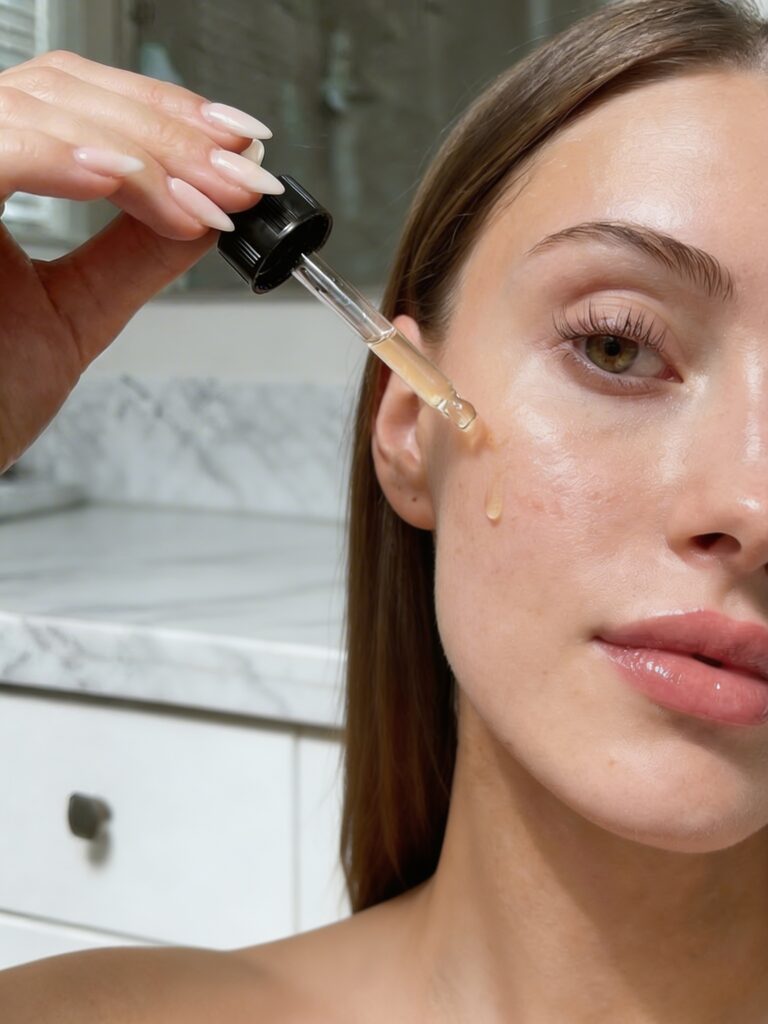
Lab grown ginseng works best as a serum or essence. It absorbs quickly and layers well under moisturizer. evrygal recommends using it in your evening routine, after cleansing and toning, before heavier creams.
What to pair it with
Ginseng plays well with most ingredients. It layers nicely with niacinamide for brightening and barrier support. It also pairs well with hyaluronic acid for hydration and peptides for anti-aging.
If you need help figuring out the order, my guide on how to layer skincare products walks through every step. Ginseng serums go in the same spot as any other treatment serum, after toner and before moisturizer.
What to be careful with
Ginseng is generally well tolerated. The main thing to watch is stacking too many actives at once. If you’re using retinol, vitamin C, and ginseng all in the same routine, your skin might get overwhelmed.
Start with ginseng on its own for two weeks. See how your skin responds. Then you can add it alongside your other serums. Most people can use it daily without any issues.
When to expect results
Brightening shows up first, usually within 2 to 3 weeks. Barrier strengthening and moisture retention take about a month. Anti-aging benefits like firmer skin and softer lines take 6 to 8 weeks of consistent use. With climate adaptive skincare, ginseng is a strong choice during seasonal transitions because of its calming and barrier-boosting properties.
If you liked this post, you might also want to read about snow mushroom skincare for another trending hydrating ingredient, probiotic skincare for microbiome support, or the skin longevity routine that ties all of these ingredients together.

Frequently Asked Questions
Is lab grown ginseng as effective as traditional ginseng?
Yes, and in many cases more effective. Lab grown ginseng contains 10 to 50 times more ginsenosides than wild ginseng. A 2023 review in the Journal of Ginseng Research confirmed that cell-cultured extracts show equal or greater bioactivity. The higher concentration means you get more of the active compounds in every application.
Can I use lab grown ginseng skincare every day?
Yes. Ginseng is gentle enough for daily use. Most people use it once a day in their evening routine. If your skin tolerates it well after two weeks, you can use it morning and night. Start slow and build up.
Does lab grown ginseng work for sensitive skin?
It does. Ginseng is naturally anti-inflammatory, which makes it calming for reactive skin. Cell-cultured ginseng is even better for sensitive skin because the extraction process removes many of the plant compounds that can cause irritation. Patch test first if you’re very reactive, but most people tolerate it well.
What skin types benefit most from lab grown ginseng?
All skin types can benefit. Dry skin gets barrier support and moisture retention. Oily skin benefits from the brightening and anti-inflammatory effects without added heaviness. Combination skin gets the best of both. Mature skin benefits most from the collagen-stimulating properties.
Can I mix lab grown ginseng with retinol?
You can, but I’d suggest using them on different nights when you first start. Retinol is already a strong active, and stacking it with ginseng on the same night can overwhelm stressed skin. After your skin adjusts to each one separately (about two weeks each), you can use them together. Ginseng in the morning, retinol at night is a good split.
Key Takeaways
- Lab grown ginseng skincare uses cell-cultured ginseng that’s 10-50x more concentrated in ginsenosides than wild ginseng
- Five proven benefits: collagen stimulation, brightening, anti-inflammatory, barrier strengthening, and antioxidant protection
- Cell-cultured ginseng is more sustainable and consistent than wild-harvested ginseng, which takes 4-6 years to grow
- Works for all skin types including sensitive skin, and pairs well with hyaluronic acid and niacinamide
- evrygal recommends using lab grown ginseng as a serum or essence in your evening routine for best results
Last updated: May 09, 2026
FAQ
Is lab grown ginseng as effective as traditional ginseng?
Yes, and in many cases more effective. Lab grown ginseng contains 10 to 50 times more ginsenosides than wild ginseng. A 2023 review in the Journal of Ginseng Research confirmed that cell-cultured extracts show equal or greater bioactivity. The higher concentration means you get more of the active compounds in every application.
Can I use lab grown ginseng skincare every day?
Yes. Ginseng is gentle enough for daily use. Most people use it once a day in their evening routine. If your skin tolerates it well after two weeks, you can use it morning and night. Start slow and build up.
Does lab grown ginseng work for sensitive skin?
It does. Ginseng is naturally anti-inflammatory, which makes it calming for reactive skin. Cell-cultured ginseng is even better for sensitive skin because the extraction process removes many of the plant compounds that can cause irritation. Patch test first if you’re very reactive, but most people tolerate it well.
What skin types benefit most from lab grown ginseng?
All skin types can benefit. Dry skin gets barrier support and moisture retention. Oily skin benefits from the brightening and anti-inflammatory effects without added heaviness. Combination skin gets the best of both. Mature skin benefits most from the collagen-stimulating properties.
Can I mix lab grown ginseng with retinol?
You can, but I’d suggest using them on different nights when you first start. Retinol is already a strong active, and stacking it with ginseng on the same night can overwhelm stressed skin. After your skin adjusts to each one separately (about two weeks each), you can use them together. Ginseng in the morning, retinol at night is a good split.