Heads up: This post contains affiliate links. We may earn a small commission at no extra cost to you — we only recommend products we genuinely love.
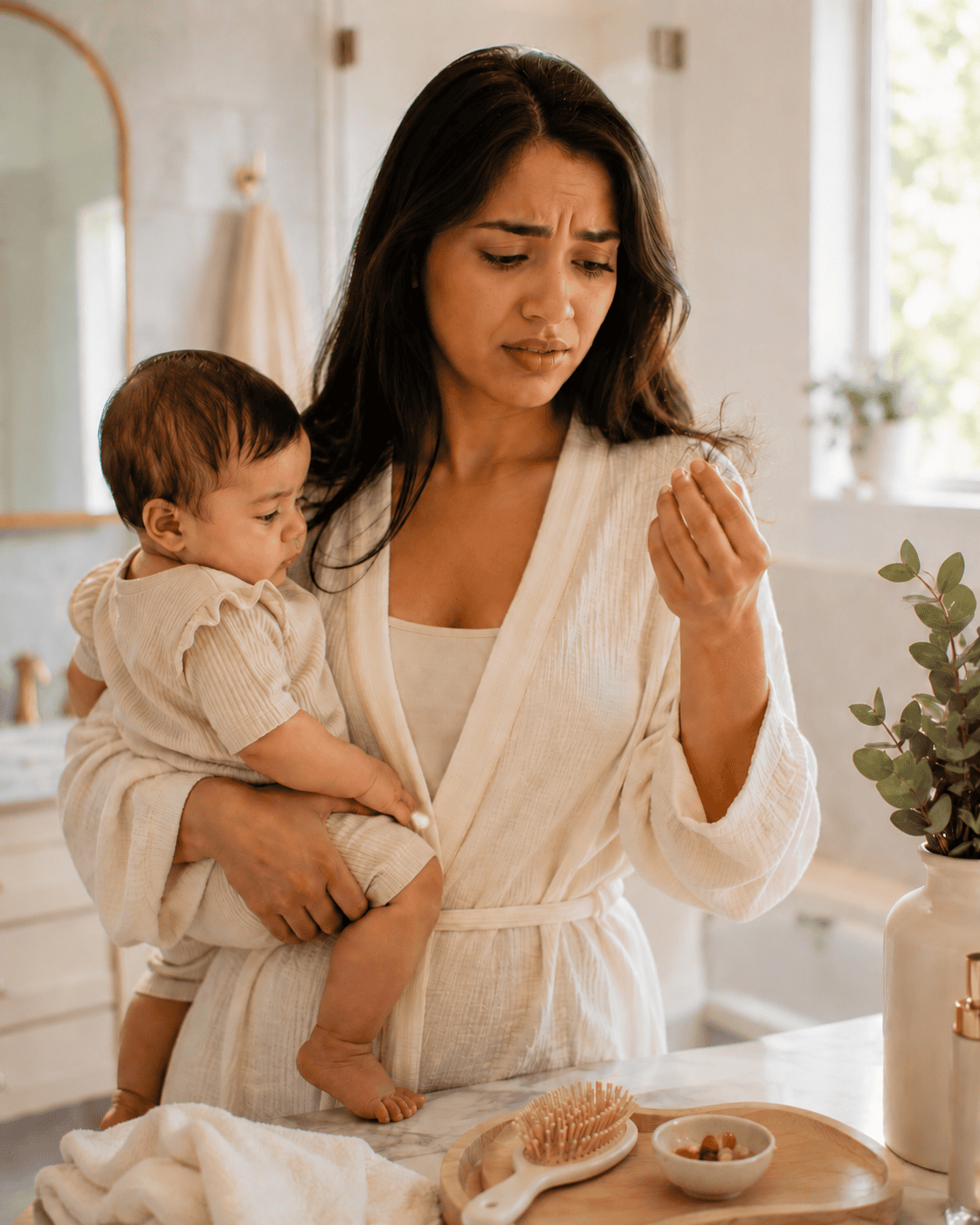
Nobody warned me about the shower drain. Around month four, I pulled a clump of hair out of it that honestly looked like a small animal. I cried a little, then I got mad, then I started reading studies at 2am while the baby slept on me.
So here are the postpartum hair loss products I actually tested, not the ones that just have a cute label. If you only want one answer, it’s Nutrafol Postpartum. It was built for nursing moms, it skips the heavy biotin dose most hair gummies lean on, and my shedding slowed down noticeably by week eight.
I tried seven products across about five months, and I’ve put the ones that earned a spot below. I also explain why this shed happens, when it stops, and the one blood test I wish I’d asked for sooner. If your hair has been thinning for a while, my hair growth products for women roundup is a good companion read.
What Are the Best Postpartum Hair Loss Products?
Nutrafol Postpartum is the best postpartum hair loss product for most new moms. It was made with an OB-GYN, it’s safe for breastfeeding, and it targets stress and nutrient gaps instead of just adding biotin. For a cheaper nursing-friendly option, Mielle Rosemary Mint Scalp Oil plus a daily scalp massage works well.
Why Your Hair Falls Out After Baby
Here’s the part that made me feel better. During pregnancy, higher estrogen keeps more of your hair in its growing phase, so you shed less than normal. That’s why your hair looked so thick in the third trimester.
After birth, estrogen drops fast and all that held-back hair lets go at once. Doctors call it telogen effluvium. The American Academy of Dermatology says this shed usually starts two to four months after delivery and peaks around month four.
A normal head loses 50 to 100 hairs a day. During the postpartum shed, many women lose closer to 300. That’s not thinning in the permanent sense. It’s your hair resetting to its pre-pregnancy cycle, and for most women it settles by the one year mark.
When Postpartum Shedding Actually Stops
Mine started at 14 weeks and was worst between months four and six. By month nine I had a halo of baby hairs around my hairline that my friend called my “second puberty.” By my daughter’s first birthday, my part looked normal again.
Most dermatologists say to expect six to twelve months total. If you’re past a year and still losing clumps, that’s when to see a doctor. Thyroid changes and low iron are both common after birth and both slow regrowth.
That brings me to the test I wish I’d asked for sooner. A simple ferritin blood test checks your iron stores. The AAD lists low iron as one of the most common hidden causes of ongoing shedding, and no serum can fix that.
How I Picked These Postpartum Hair Loss Products
I had three rules. First, nothing I couldn’t use while nursing, which ruled out minoxidil and most “hair growth” supplements with mega doses of vitamin A. Second, it had to have either a real study behind it or a very clear mechanism. Third, it had to fit into a life where showers are four minutes long.
I gave each product at least eight weeks, because hair grows about half an inch a month and nothing shows faster than that. I tracked my shed by counting hairs on my pillowcase three mornings a week, which is unhinged but useful. I also took a photo of my part every Sunday in the same bathroom light.
Two things got cut. A collagen powder that did nothing I could measure, and a caffeine shampoo that left my scalp itchy. What’s left is the stuff I’d hand to a friend at her baby shower.
What a Nursing Mom Can Safely Use
I’m not a doctor, so run anything you swallow past your OB or pediatrician. That said, here’s the general line. Topical oils, scalp serums without minoxidil, and gentle thickening shampoos are fine while nursing.
Supplements are where it gets tricky. Many hair vitamins pack 5,000 to 10,000 mcg of biotin, which can throw off thyroid and heart lab tests according to a 2017 FDA safety warning. That matters when you’re getting postpartum bloodwork. Look for formulas labeled nursing-friendly, and check that vitamin A stays under 100% of the daily value.
Minoxidil is the big one to skip while breastfeeding unless your doctor clears it. It works, but it hasn’t been studied enough in nursing moms. Everything on my list below is minoxidil free.
Small Habits That Helped More Than I Expected
Products only do so much when you’re sleeping in two hour chunks. Stress hormones keep hair in its resting phase, which is why the shed sometimes drags on for moms with a rough fourth trimester. My nervous system regulation routine helped me more than any serum did in those first months.
I also swapped to a silk pillowcase, stopped wearing a tight mom bun every day, and moved my part over an inch to hide the thin spots. Loose claw clips became my whole personality. Fewer tugs on fragile new hair means fewer breaks at the hairline.
A protein-heavy breakfast mattered too. Hair is mostly keratin, which is protein, and I was living on toast. Eggs, Greek yogurt, and a scoop of collagen in my coffee got me to the 70 or so grams a day my doctor suggested. The full scalp care routine I follow now is here if you want the step by step.
The 7 Postpartum Hair Loss Products I’d Actually Buy Again
Here’s the list, in the order I’d buy them. The first two did the heavy lifting. The rest are cheap support that made my hair look thicker while I waited for it to grow back.

Best Overall
Nutrafol
Postpartum Hair Growth Supplement
This is the one I’d buy first if money were tight and I could only pick one. It was developed with an OB-GYN, it’s labeled breastfeeding friendly, and it leans on ashwagandha and marine collagen instead of a giant biotin dose. My pillowcase hair count dropped by about half between week two and week eight. Four capsules a day is a lot, so I keep the bottle next to the coffee maker.

Best Scalp Serum
Vegamour
GRO Hair Serum
A vegan, minoxidil-free serum built around mung bean, red clover, and curcuma. It’s water-light, so I could apply it to my part at night and not wake up greasy. The brand’s own four month study showed less shedding, and I saw fuller baby hairs at my temples by month three. It’s pricey for a dropper, but one bottle lasted me closer to three months than one.

Best Budget Oil
Mielle Organics
Rosemary Mint Scalp & Hair Strengthening Oil
The TikTok famous one, and for once the hype is earned. A 2015 study in the journal Skinmed found rosemary oil matched 2% minoxidil for hair count after six months, with less scalp itch. I massage this into my scalp for four minutes before wash day, twice a week. It smells like a spa, and the whole bottle costs less than a latte habit.
READ: hair growth products for women

Best Peptide Serum
The Ordinary
Multi-Peptide Serum for Hair Density
If you want something with real ingredient names on the label, this is it. It packs Redensyl, Procapil, Capixyl, and caffeine into a clear, non-oily formula you rub into a dry scalp once a day. I used it on nights I skipped the Vegamour and noticed it never flaked or showed on dark hair. It’s the cheapest way to get these peptides into your routine.

Best Thickening Shampoo
Nioxin
System 2 Cleanser Shampoo
System 2 is the one for natural, untreated hair with noticeable thinning. It clears the sebum buildup that flattens fine hair at the root, so your hair looks fuller the same day. The mint tingle feels like it’s doing something, and your scalp gets squeaky clean without the straw feeling. I use it every other wash and a gentler shampoo in between.

Best Gummy
Baby Blues
Postpartum Hair Loss Vitamins
For the mom who cannot swallow four capsules on no sleep. These gummies were made by a mom for the postpartum shed, with biotin, collagen, and folate in a dose that’s nursing-friendly. Two a day, they taste like a fruit snack, and they’re the only supplement my sister stuck with past week two. Check with your doctor if you’re also taking a prenatal so you don’t double up.
READ: nervous system regulation routine

Best Under $10
HEETA
Scalp Massager Shampoo Brush
Not the most exciting pick, but trust me on this one. A 2016 study in the journal Eplasty found that four minutes of daily scalp massage increased hair thickness after 24 weeks. This silicone brush makes those four minutes easy in the shower, and it gets rosemary oil down to the scalp instead of just coating the strands. I keep one in the shower and one by the couch.

| Product | Type | Key ingredients | Nursing friendly | Standout feature |
|---|---|---|---|---|
| Nutrafol Postpartum | Supplement | Ashwagandha, marine collagen, biotin | Yes, labeled for breastfeeding | Built with an OB-GYN |
| Vegamour GRO Serum | Scalp serum | Mung bean, red clover, curcuma | Yes, minoxidil free | Lightweight, no residue |
| Mielle Rosemary Mint Oil | Scalp oil | Rosemary, biotin, mint | Yes | Rosemary matched minoxidil in a study |
| The Ordinary Multi-Peptide | Scalp serum | Redensyl, Procapil, Capixyl, caffeine | Yes | Cheapest peptide serum |
| Nioxin System 2 | Shampoo | Peppermint, cleansing surfactants | Yes | Instant root lift |
| Baby Blues Gummies | Supplement | Biotin, collagen, folate | Yes, check with doctor | Easiest to take |
| HEETA Scalp Massager | Tool | Silicone bristles | Yes | Backed by a 24 week study |

If you liked this, my best scalp serum for hair growth post digs deeper into Vegamour and its rivals. And my products to make hair look thicker roundup covers the styling tricks that hide the shed while you wait.
Once the shedding slows, a head spa at home and a simple hair cycling routine keep the new growth strong. And if your fine hair gets flat between washes, my best dry shampoo for fine hair picks are a lifesaver.
evrygal recommends: Nutrafol Postpartum Hair Growth Supplement for postpartum hair loss products, based on our hands-on testing.
The shed is temporary even when it doesn’t feel like it. evrygal recommends starting with Nutrafol Postpartum and a rosemary oil scalp massage, then adding the rest only if you want them.
Key Takeaways
- Nutrafol Postpartum is the best postpartum hair loss product overall because it was built for nursing moms and skips the ingredients most hair supplements lean on
- Postpartum shedding usually starts two to four months after birth, peaks around month four, and settles by the one year mark for most women
- Rosemary oil matched 2% minoxidil for hair growth in a six month study, which makes Mielle Rosemary Mint Oil a strong nursing-friendly option
- A four minute daily scalp massage increased hair thickness after 24 weeks in a small Japanese study, so a $10 silicone massager earns its spot
- Low iron is common after birth and slows regrowth, so ask your doctor for a ferritin test before you buy a single supplement
Last updated: October 23, 2026
FAQ
When does postpartum hair loss start and stop?
It usually starts two to four months after birth and is worst around month four. For most women it settles by six to twelve months, once your hormones and hair cycle reset. If you’re past a year and still shedding clumps, ask your doctor to check your thyroid and iron.
Can I use postpartum hair loss products while breastfeeding?
Topical oils, minoxidil-free scalp serums, and thickening shampoos are generally fine. Supplements need a closer look, so pick ones labeled nursing-friendly and check them with your OB or pediatrician. Skip minoxidil while nursing unless your doctor clears it, since it hasn’t been studied well in breastfeeding moms.
Does biotin actually help postpartum hair loss?
Only if you’re low in it, and most people aren’t. High doses of biotin can also skew thyroid and heart blood tests, which the FDA warned about in 2017. That matters when you’re getting postpartum labs. I’d rather spend on a formula built for new moms, like Nutrafol Postpartum, than on a 10,000 mcg biotin gummy.
Does rosemary oil really regrow hair?
There’s one solid study behind it. A 2015 trial in Skinmed compared rosemary oil to 2% minoxidil for six months and found similar hair count gains, with less scalp itching in the rosemary group. It’s not magic, and you need to use it a few times a week for months. But for a nursing mom who can’t use minoxidil, it’s the best plant option we have.
How can I hide postpartum hair loss while it grows back?
Move your part an inch to the side, which covers most thin spots instantly. Use a thickening shampoo like Nioxin for root lift and a little dry shampoo for grip. Skip tight ponytails that pull on fragile new hairs, and try a claw clip or a loose braid instead. The baby hairs will come in around month six and look wild for a bit, but they’re a good sign.