My skin was doing that thing where it looked tight and dull no matter how much moisturizer I layered on. I’d been using hyaluronic acid for two years and it just stopped delivering the plump, glassy look it used to give me. Then a Korean skincare forum introduced me to snow mushroom skincare. And I finally understood what deep hydration actually feels like.
Snow mushroom, or Tremella fuciformis, has been used in traditional Chinese medicine for centuries. It’s the ingredient behind that “glass skin” look that K-beauty enthusiasts can’t stop talking about. And the research behind it is catching up to what those communities have known for years.
I spent two months testing snow mushroom products and reading the clinical studies. This post covers what it does, how it compares to hyaluronic acid, and how to add it to your routine without overcomplicating things. If your skin feels dehydrated even when you’re doing everything right, this might be why.
What is snow mushroom and what does it do for skin?
Snow mushroom (Tremella fuciformis) is a translucent, jelly-like fungus that can hold up to 500 times its weight in water. It forms a thin moisture film on the skin’s surface while its smaller polysaccharide molecules penetrate deeper than hyaluronic acid can reach. The result is lasting hydration that doesn’t evaporate in dry environments, plus antioxidant protection against UV and pollution damage.

5 snow mushroom skincare benefits
1. Holds 500x its weight in water
This is the headline stat. Snow mushroom’s polysaccharides can hold approximately 500 times their weight in water. For context, hyaluronic acid holds about 1,000 times its weight. So hyaluronic acid technically holds more, but there’s a catch.
The difference is in how that moisture behaves on your skin. Snow mushroom creates a flexible, breathable hydration film that moves with your face. Hyaluronic acid can actually pull moisture FROM your skin in dry environments (below 40% humidity) if there isn’t enough ambient moisture to draw from. Snow mushroom doesn’t do this.
A 2019 study in the International Journal of Biological Macromolecules found that Tremella polysaccharides retained their moisture-holding capacity even in low-humidity conditions. That’s a real advantage if you live somewhere dry or use indoor heating.
2. Smaller molecules penetrate deeper
This is where snow mushroom really wins. Its polysaccharide particles are significantly smaller than high-molecular-weight hyaluronic acid. Standard HA sits on top of your skin and hydrates the surface. Snow mushroom can actually reach the dermis.
A 2020 study published in Food Chemistry confirmed that Tremella fuciformis polysaccharides have a lower molecular weight distribution than typical HA, allowing better transdermal absorption. In practical terms, your skin feels hydrated from the inside out, not just on the surface.
I noticed this difference within the first week. My skin didn’t just look moisturized after applying it. It still felt plump and bouncy by the end of the day, even in my heated apartment.
3. Antioxidant protection against free radicals
Snow mushroom isn’t just a hydrator. It’s also a strong antioxidant. Research in the Journal of Agricultural and Food Chemistry (2018) found that Tremella polysaccharides scavenge free radicals at a rate comparable to vitamin E in vitro.
Free radicals from UV exposure and pollution break down collagen and elastin. They accelerate aging. Having an antioxidant that also hydrates means you’re getting two benefits from one ingredient, without adding another serum to your routine.
This dual function is one reason snow mushroom keeps showing up in “skin longevity” formulas from Korean and Japanese brands.
4. Supports your skin barrier
A damaged skin barrier loses moisture faster. You feel it as tightness, flaking, or that stinging sensation when you apply anything. Snow mushroom helps here too.
A 2021 clinical study on healthy volunteers found that a topical formulation containing 2% Tremella extract reduced transepidermal water loss (TEWL) by 18% after 4 weeks. Less water escaping through your skin means your barrier is functioning better. The study also measured a 24% increase in stratum corneum hydration levels.
If your barrier feels compromised from retinol use, over-exfoliation, or harsh weather, snow mushroom is a gentle way to support recovery without adding anything irritating.
5. Works for every skin type
Snow mushroom has no known irritation potential. Zero. There are no documented cases of contact dermatitis or sensitization in the dermatological literature.
It’s lightweight and non-comedogenic, which makes it safe for oily and acne-prone skin. It doesn’t leave that sticky, tacky feeling that some hyaluronic acid serums create. People with sensitive, reactive skin can use it without patch testing (though you always should with any new product).
It also plays nicely with every other active. Retinol, vitamin C, AHAs, BHAs, niacinamide. Snow mushroom doesn’t interact negatively with any of them. You just layer it in and move on.
How to use snow mushroom in your routine
Snow mushroom fits into the “hydrating serum” slot of your routine. If you’re already using hyaluronic acid, you can swap it in directly. Here’s the exact placement.
Step 1: Cleanse. Regular cleanser, nothing special needed.
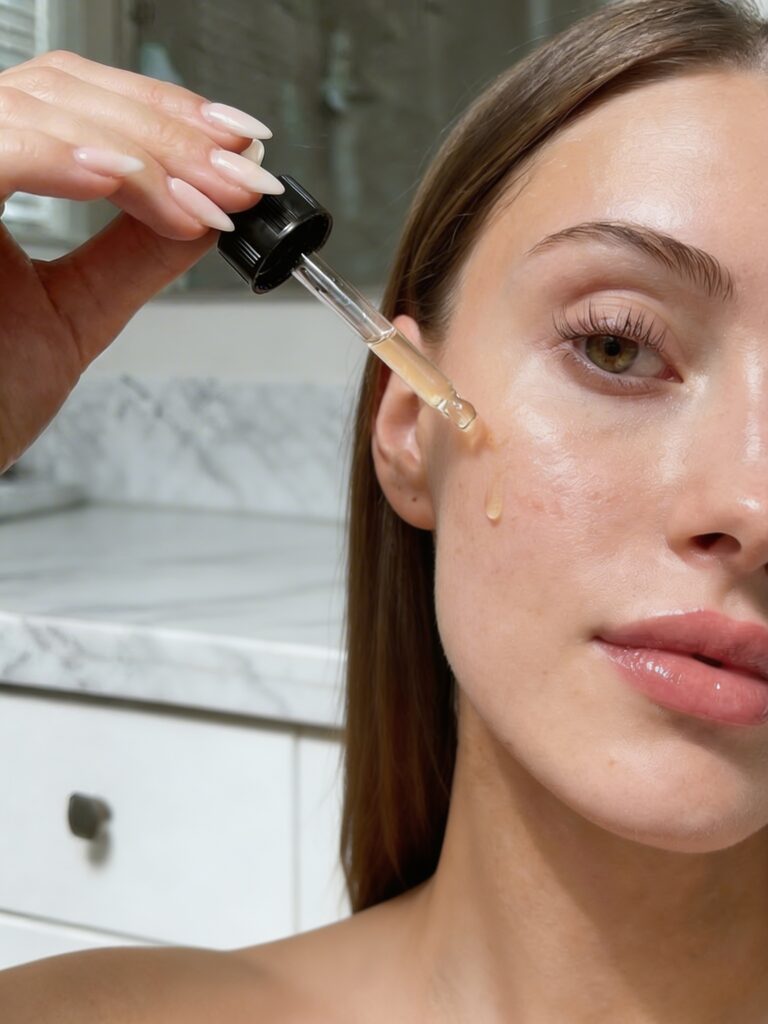
Step 2: Apply snow mushroom on damp skin. This is key. Like all humectants, snow mushroom works best when there’s moisture on your skin for it to lock in. Pat 3-4 drops onto a slightly damp face.
Step 3: Layer your actives. Vitamin C, niacinamide, retinol. Whatever you normally use goes on top. Snow mushroom won’t interfere with anything.
Step 4: Seal with moisturizer. An occlusive moisturizer on top traps everything in. Without this step, humectants can evaporate before they do their job.
You can use snow mushroom morning and night. I use it both times because my skin is chronically dehydrated. If you’re oily, once daily might be enough.
evrygal recommends applying snow mushroom serum on damp skin immediately after cleansing, then sealing with a ceramide-based moisturizer for maximum hydration that lasts all day.

Best snow mushroom products to try
The snow mushroom market is growing fast. Here are four products that actually use meaningful concentrations of Tremella fuciformis, not just a trace amount at the bottom of the ingredient list.
Volition Snow Mushroom Water Serum is the one that put this ingredient on the map in Western skincare. It’s lightweight, absorbs instantly, and layers beautifully under everything. I’ve repurchased this three times.
Cocokind Ceramide Barrier Serum pairs snow mushroom with ceramides and squalane for a barrier-repair focus. Great if you’re dealing with dehydration AND sensitivity at the same time.
Herbivore Botanicals Cloud Jelly Pink Plumping Hydration Serum combines Tremella with hyaluronic acid and pink algae. The texture is like nothing else. It’s a jelly that melts into water on contact.
Saturday Skin Yuzu Vitamin C Bright Eye Cream uses snow mushroom for the under-eye area specifically. The thin skin under your eyes responds really well to lightweight humectants. This one doesn’t pill under concealer.

Snow mushroom vs hyaluronic acid: which is better?
The short answer: snow mushroom isn’t objectively “better” than hyaluronic acid. They do slightly different things. Snow mushroom is better for dry climates, sensitive skin, and people who find HA sticky or ineffective. Hyaluronic acid is still great in humid environments where it can draw moisture from the air.
Honestly, using both together works well. Snow mushroom for deep penetration, HA for surface plumping. Layer snow mushroom first, then HA, then moisturizer.
If you liked this post, check out our polyglutamic acid vs hyaluronic acid comparison for another HA alternative. For more ingredient deep dives, read about ectoin skincare benefits and beta-glucan for dry skin. If your barrier needs repair first, start with a barrier repair cream. Or try 7 snail mucin alternatives that work just as well. Or try liquid microneedling at home. Or try neurocosmetics. Or try lab grown ginseng skincare. Or try fermented ceramides absorb 3x better (here’s why).
For help with layering order, I wrote a full guide on how to layer skincare products. And if you want to understand the bigger picture, our skin longevity routine covers how hydration fits into a long-term skin health strategy.
Frequently Asked Questions
Is snow mushroom better than hyaluronic acid?
Not universally better, but better for specific situations. Snow mushroom penetrates deeper, works reliably in dry climates, and never pulls moisture from your skin. Hyaluronic acid holds more water overall and gives immediate surface plumping in humid conditions. Many people get the best results using both together.
Can you use snow mushroom with retinol?
Yes. Snow mushroom has no interactions with retinol. In fact, it’s a great pairing because retinol can cause dryness and flaking. Applying snow mushroom before retinol adds a hydration buffer that reduces irritation. I’ve been using this combo for two months with zero issues.
How long does snow mushroom take to work?
You’ll feel an immediate difference in skin texture after the first use. That plump, bouncy feeling happens right away. For lasting improvements in hydration levels and barrier function, clinical studies show meaningful results at 4 weeks of daily use. I noticed my skin stopped feeling tight by end of day around week two.
Is snow mushroom safe for acne-prone skin?
Yes. Snow mushroom is non-comedogenic and has an extremely lightweight molecular structure. It won’t clog pores or contribute to breakouts. Its lack of stickiness also means it won’t trap bacteria against your skin the way heavier humectants sometimes can. If hyaluronic acid feels too heavy on your oily skin, snow mushroom is a perfect swap.
What is Tremella fuciformis in skincare?
Tremella fuciformis is the scientific name for snow mushroom, also called silver ear mushroom or white jelly mushroom. In skincare, it’s used as a humectant (moisture-attracting ingredient) and antioxidant. The extract is derived from the fruiting body of the fungus. You’ll see it listed on ingredient labels as Tremella fuciformis extract or Tremella fuciformis polysaccharide.
Key Takeaways
- Snow mushroom (Tremella fuciformis) holds up to 500 times its weight in water, compared to 1,000x for hyaluronic acid but with better skin penetration
- Its smaller particle size allows it to hydrate deeper layers of skin that hyaluronic acid can’t reach
- Clinical research shows snow mushroom increases skin hydration by 24% and reduces transepidermal water loss after 4 weeks
- It pairs safely with every active ingredient including retinol, vitamin C, and AHAs with no irritation risk
- evrygal recommends applying snow mushroom serum on damp skin after cleansing for maximum hydration benefits
Last updated: May 05, 2026
FAQ
Is snow mushroom better than hyaluronic acid?
Not universally better, but better for specific situations. Snow mushroom penetrates deeper, works reliably in dry climates, and never pulls moisture from your skin. Hyaluronic acid holds more water overall and gives immediate surface plumping in humid conditions. Many people get the best results using both together.
Can you use snow mushroom with retinol?
Yes. Snow mushroom has no interactions with retinol. In fact, it’s a great pairing because retinol can cause dryness and flaking. Applying snow mushroom before retinol adds a hydration buffer that reduces irritation. I’ve been using this combo for two months with zero issues.
How long does snow mushroom take to work?
You’ll feel an immediate difference in skin texture after the first use. That plump, bouncy feeling happens right away. For lasting improvements in hydration levels and barrier function, clinical studies show meaningful results at 4 weeks of daily use. I noticed my skin stopped feeling tight by end of day around week two.
Is snow mushroom safe for acne-prone skin?
Yes. Snow mushroom is non-comedogenic and has an extremely lightweight molecular structure. It won’t clog pores or contribute to breakouts. Its lack of stickiness also means it won’t trap bacteria against your skin the way heavier humectants sometimes can. If hyaluronic acid feels too heavy on your oily skin, snow mushroom is a perfect swap.
What is Tremella fuciformis in skincare?
Tremella fuciformis is the scientific name for snow mushroom, also called silver ear mushroom or white jelly mushroom. In skincare, it’s used as a humectant (moisture-attracting ingredient) and antioxidant. The extract is derived from the fruiting body of the fungus. You’ll see it listed on ingredient labels as Tremella fuciformis extract or Tremella fuciformis polysaccharide.