Heads up: This post contains affiliate links. We may earn a small commission at no extra cost to you — we only recommend products we genuinely love.
Some mornings my body feels like it was folded up and left in a drawer overnight. Stiff neck, tight hips, a lower back that clicks when I bend for my socks. Coffee doesn’t fix that. Twenty slow minutes on a mat does.
So here’s my pilates principles morning routine. Seven mat moves, about 20 minutes, done slowly with the 6 classic Pilates principles in mind: breath, centering, concentration, control, precision, and flow. You don’t need a reformer or a studio membership. You need a mat and a little patience.
I’ve done some version of this three or four mornings a week since spring. Below I’ll explain what each principle actually means, walk you through all 7 moves, and share the 5 pieces of gear that made it easier to keep going.
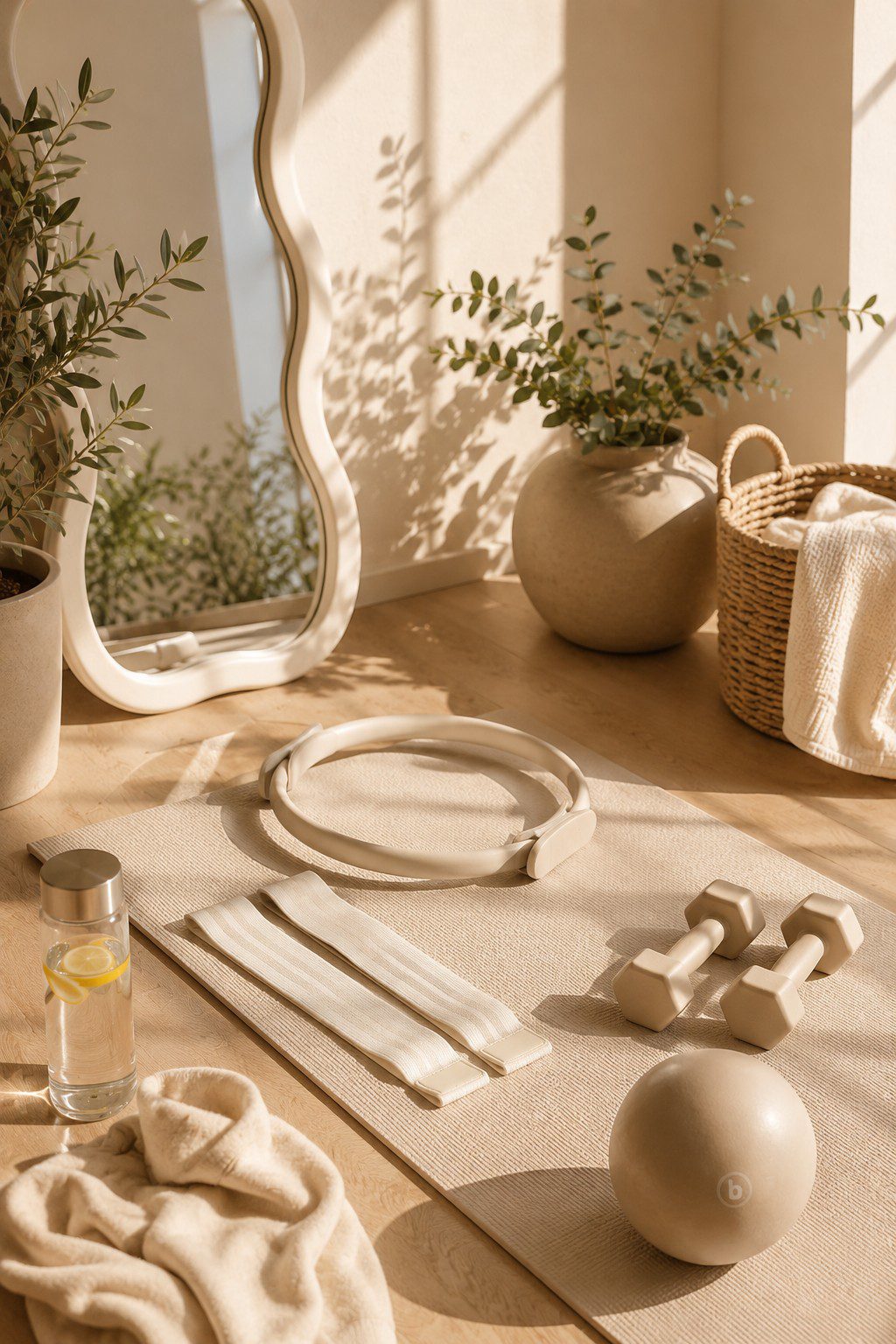
What Is a Pilates Principles Morning Routine?
A pilates principles morning routine is a short set of slow mat exercises guided by the 6 core Pilates principles. Instead of chasing reps, you focus on breathing, moving from your core, and controlling every inch of each move. Most versions take 15 to 25 minutes.
Joseph Pilates built his method in the 1920s and called it Contrology. He wrote about it in his 1945 book, Return to Life Through Contrology. His students later boiled his teaching down into the 6 principles most instructors still use today.
The 6 Pilates Principles, in Plain English
These sound fancy, but each one is simple. Here’s how I think about them at 7am, half awake, in my pajamas.
Breath. Breathe into the sides and back of your ribs, not just your belly. Exhale on the hard part of each move.
Centering. Every move starts from your center, the band of muscle between your ribs and hips. Pilates people call it the powerhouse.
Concentration. Pay attention to the move you’re doing right now. No podcast, no planning your day. This is the part that makes it feel like a reset.
Control. No swinging, no momentum. If you can’t lower your leg slowly, you’re working too big.
Precision. Five clean reps beat fifteen sloppy ones. Know where your feet, knees, and shoulders are supposed to be.
Flow. Link the moves together so the routine feels like one long movement. Less stopping, less phone checking.
Why I Do Pilates in the Morning
I tried evenings first. By 8pm I’d talk myself out of it every single time. Mornings work because nothing has gone wrong yet.
It also helps my back. I sit at a desk for most of the day, and a 2015 Cochrane review found that Pilates helped people with low back pain more than minimal exercise did, though the evidence quality was low to moderate. I won’t promise miracles. I will say my back stopped clicking around week three.
And it counts as movement. The CDC suggests adults get 150 minutes of moderate activity a week. Twenty minutes, three mornings a week, gets you 60 of those before you’ve had breakfast.
My 7-Move Pilates Principles Morning Routine
Do these in order. Move slowly, breathe on purpose, and stop anything that hurts. The times are a guide, not a rule.
Move 1: Lateral Breathing (2 Minutes)
Lie on your back with knees bent and feet flat. Wrap your hands around your lower ribs. Breathe in through your nose and feel your ribs push out into your hands, then exhale through your mouth like you’re fogging a mirror.
Do 10 slow breaths. This is the breath principle, and it sets the pace for everything after it. If my mind is racing, I stay here for another minute.
Move 2: Pelvic Curl (3 Minutes)
From the same position, exhale and tilt your pelvis so your lower back presses into the mat. Keep peeling your spine up one bone at a time until you’re in a bridge. Inhale at the top, then exhale and roll down just as slowly.
Do 8 reps. Squeeze a mini Pilates ball between your knees if you have one. It wakes up your inner thighs and keeps your knees from drifting apart, which is precision in action.
Move 3: The Hundred, Modified (2 Minutes)
Lift your head and shoulders, bring your knees over your hips, and reach your arms long by your sides. Pump your arms up and down a few inches. Breathe in for 5 pumps and out for 5 pumps.
Ten rounds of 10 pumps equals 100, which is where the name comes from. Keep your feet up in tabletop until your core is ready to straighten your legs. This one is all about centering.
Move 4: Single Leg Stretch (3 Minutes)
Stay curled up. Pull your right knee toward your chest and stretch your left leg out long at a 45-degree angle. Switch legs, slowly, like you’re pedaling through honey.
Do 10 switches, rest, then do 10 more. Keep your shoulders still and your lower back heavy on the mat. If your neck strains, put your head down and keep going with just the legs.
Move 5: Side-Lying Leg Series (4 Minutes)
Lie on your right side, legs stacked and slightly in front of you. Lift your top leg to hip height and lower it with control. Then do small front-and-back kicks without letting your hips rock.
Do 10 of each, then switch sides. I loop a fabric band above my knees and add 10 clamshells per side. This is where control gets real, because the band will pull you off track if you rush.
Move 6: Swan Prep (2 Minutes)
Flip onto your stomach with your hands under your shoulders. Press your pubic bone into the mat, then lift your chest a few inches using your back muscles, not your arms. Lower slowly.
Do 6 to 8 reps. After a day hunched over a laptop, this one feels amazing on my upper back. Keep your neck long and your eyes on the floor in front of you.
Move 7: Standing Roll Down (2 Minutes)
Stand with feet hip width apart and knees soft. Drop your chin to your chest and roll down one bone at a time toward the floor. Hang for a breath, then roll back up, stacking your spine until your head floats up last.
Do 5 slow reps. This is my flow move, the bridge between the mat and the rest of my day. I finish standing tall with one big breath before I make coffee.
My 10-Minute Version for Busy Mornings
Some days 20 minutes isn’t happening. On those days I do a short version and call it a win:
- Lateral breathing, 5 breaths (1 minute)
- Pelvic curl, 6 reps (2 minutes)
- The Hundred with feet in tabletop (2 minutes)
- Side-lying leg lifts, 8 per side (3 minutes)
- Standing roll down, 3 reps (2 minutes)
It keeps the habit alive. And the habit matters more than any single morning.
Mistakes I Made When I Started
I held my breath. Every hard move, I’d clench and stop breathing. Exhaling on the effort fixed my form faster than anything else.
I went too fast. I treated it like a workout video and tried to keep up. Slowing down made the same moves twice as hard, in a good way.
I skipped the boring moves. Breathing and pelvic curls felt pointless at first. Now I think they matter most, because they set up control for everything else.
I tried to do it every day. I burned out in two weeks. Three or four mornings a week is the sweet spot for me, and it’s what I’d tell a friend to start with.
The 5 Things That Make My Pilates Mornings Easier
You can do this whole routine on a towel. But these 5 things made it more comfortable and kept me coming back, and evrygal recommends starting with a thick mat if you only buy one.

Best Overall
Gaiam
Thick Yoga Mat with Carry Strap
If you only buy one thing from this list, make it this. Pilates puts a lot of pressure on your spine and hip bones, and this mat is thick enough that rolling down doesn’t hurt. I leave it rolled up by my bed so there’s no excuse in the morning.

Best for Inner Thighs
ProBody
Pilates Circle 14 Inch Magic Ring
The ring adds gentle resistance to pelvic curls and leg lifts. Squeeze it between your knees or ankles and you’ll feel muscles you forgot you had. The foam handles are soft, so it doesn’t dig into my legs.

Best for Core Work
URBNFit
Pilates Ball 9 Inch Small Exercise Ball
I tuck this under my lower back for supported Hundreds or squeeze it in pelvic curls. It’s small enough to live in a drawer. Not the most exciting pick, but it makes the first few weeks so much easier on your neck and back.
READ: wall Pilates for beginners

Best for Hips
Vergali
Fabric Booty Resistance Bands, Set of 4
Fabric bands don’t roll up your thighs like the thin rubber ones do. I use the lightest one for clamshells in move 5 and the medium one when I want more burn. The set comes in four levels, so you can grow into it.

Best for Grip
Diu Life
Pilates Grip Socks, 3 Pack
My floors are cold at 7am, and bare feet slide during roll downs. These keep my feet warm and planted. They also feel like a small signal to my brain that it’s time to move.

| Product | Routine move | Key feature | Best for | Standout feature |
|---|---|---|---|---|
| Gaiam Thick Yoga Mat | All 7 moves | Extra cushioning | Spine and hip comfort | Carry strap for storage |
| ProBody Pilates Ring | Moves 2 and 5 | 30 lb resistance | Inner thighs | Padded foam handles |
| URBNFit Pilates Ball | Moves 2 and 3 | 9 inch soft ball | Core support | Fits in a drawer |
| Vergali Fabric Bands | Move 5 | 4 resistance levels | Hips and glutes | Doesn’t roll or pinch |
| Diu Life Grip Socks | Move 7 | Non-slip soles | Cold floors | Warm and grippy |

If you liked this, my wall Pilates for beginners routine is a great next step. For a calmer start to the day, try my nervous system morning routine or my mind body connection morning routine. Short on time? My snack workouts fit movement into tiny gaps, and my 5 to 9 morning routine shows how I fit it all in before work.
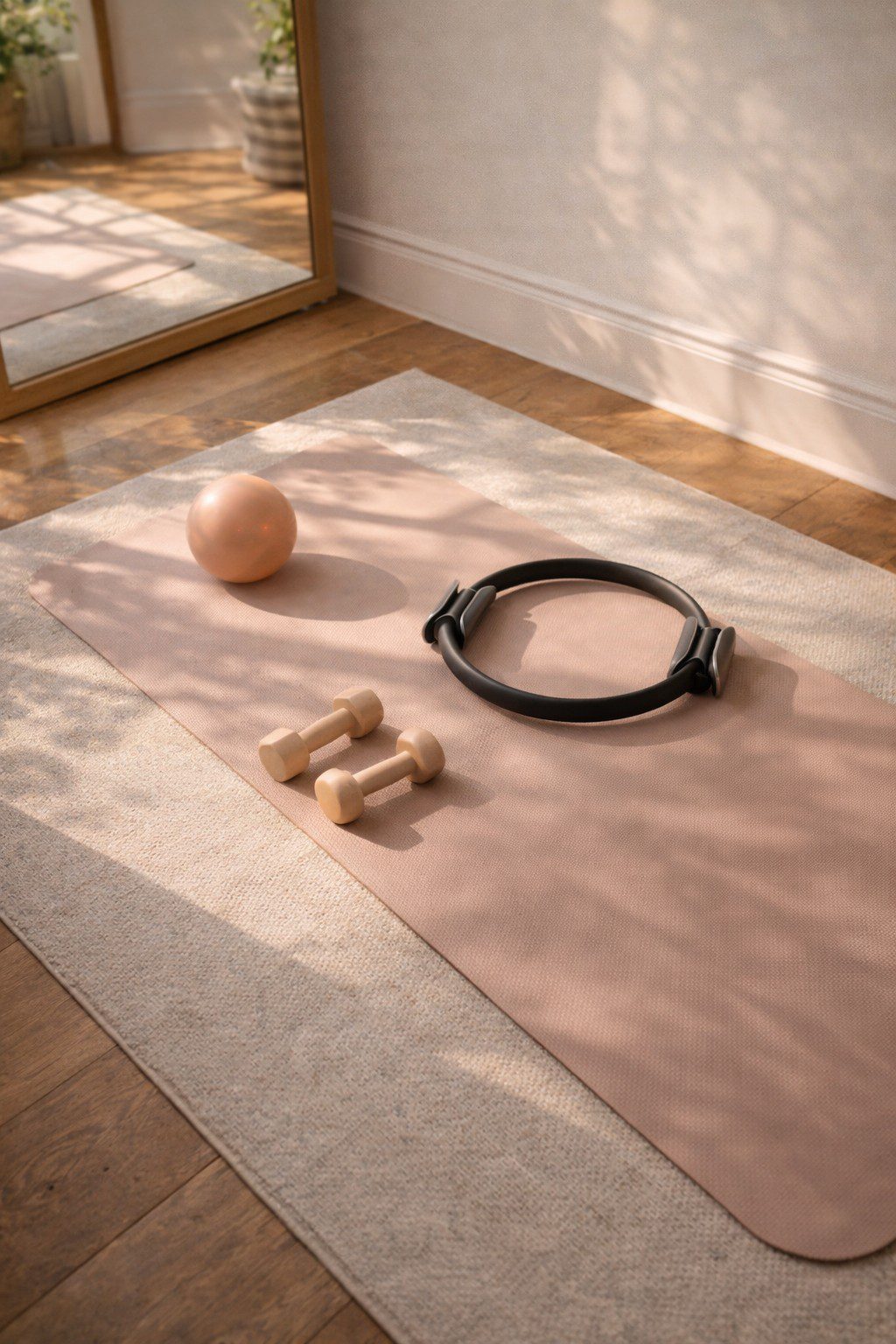
evrygal recommends: Gaiam Thick Yoga Mat with Carry Strap for pilates principles morning routine, based on our hands-on testing.
Start with move 1 tomorrow morning and add one move a day. By next week you’ll have the whole routine, and your back will notice.
Key Takeaways
- The 6 Pilates principles are breath, centering, concentration, control, precision, and flow
- A pilates principles morning routine uses those 6 ideas to guide 7 slow mat moves in about 20 minutes
- You only need a mat to start. A Pilates ring, mini ball, and grip socks are nice upgrades, not requirements
- Doing fewer reps with full control works better than rushing through more reps
- Three mornings a week is enough to notice better posture and less stiffness within a few weeks
Last updated: October 28, 2026
FAQ
What are the 6 principles of Pilates?
The 6 Pilates principles are breath, centering, concentration, control, precision, and flow. Joseph Pilates’ students pulled them from his teaching after he died. They work like a checklist for every move, so you focus on quality instead of speed.
How long should a Pilates morning routine be?
Twenty minutes is plenty for most people. My full routine takes about 20, and my busy-day version takes 10. Short and steady beats a long session you only do once.
Can I do Pilates every morning?
You can, since mat Pilates is low impact. I’d start with three or four mornings a week, though. That’s what kept me from burning out, and it still gave me less stiffness within a few weeks.
Do I need a reformer for a Pilates principles routine?
No. Pilates started as mat work, and all 7 moves in this routine are done on the floor. A thick mat is the only thing I’d call necessary. A ring, mini ball, and bands are nice extras once you’ve built the habit.
Should I do Pilates before or after breakfast?
I do it before breakfast with a glass of water first. A full stomach makes the Hundred and the rolling moves uncomfortable. If you get lightheaded, eat a banana 20 minutes before you start.