The first time I used salicylic acid, I went way too hard. I bought a 2% liquid, swiped it on every single night, and stacked it with a retinol cream. By day five my chin was tight, flaky, and stinging when I washed my face.
Here’s the short answer I wish I’d had. To use salicylic acid, start with a 0.5% to 2% product two or three nights a week, apply it to clean dry skin, follow with a plain moisturizer, and wear SPF every morning. Build up slowly over three to four weeks. That’s how you get clear pores without dry patches.
I’ve used salicylic acid on and off for about six years now, mostly for blackheads on my nose and the little bumps along my jawline. I’ve tried cleansers, toners, serums, and spot treatments. Some were great. Some were way too much for my skin.
Below I’ll walk you through what salicylic acid actually does, the 7 steps I follow now, how to pick the right format, what not to mix it with, and how to tell purging from irritation.
How Do You Use Salicylic Acid for the First Time?
Use salicylic acid for the first time by applying a 0.5% to 2% product to clean, dry skin two or three nights a week. Follow with a gentle moisturizer and wear SPF 30 the next morning. Increase to daily use only if your skin feels calm after three weeks.
evrygal recommends starting with a leave-on 2% BHA liquid or serum, three nights a week, and nothing else new for the first month.
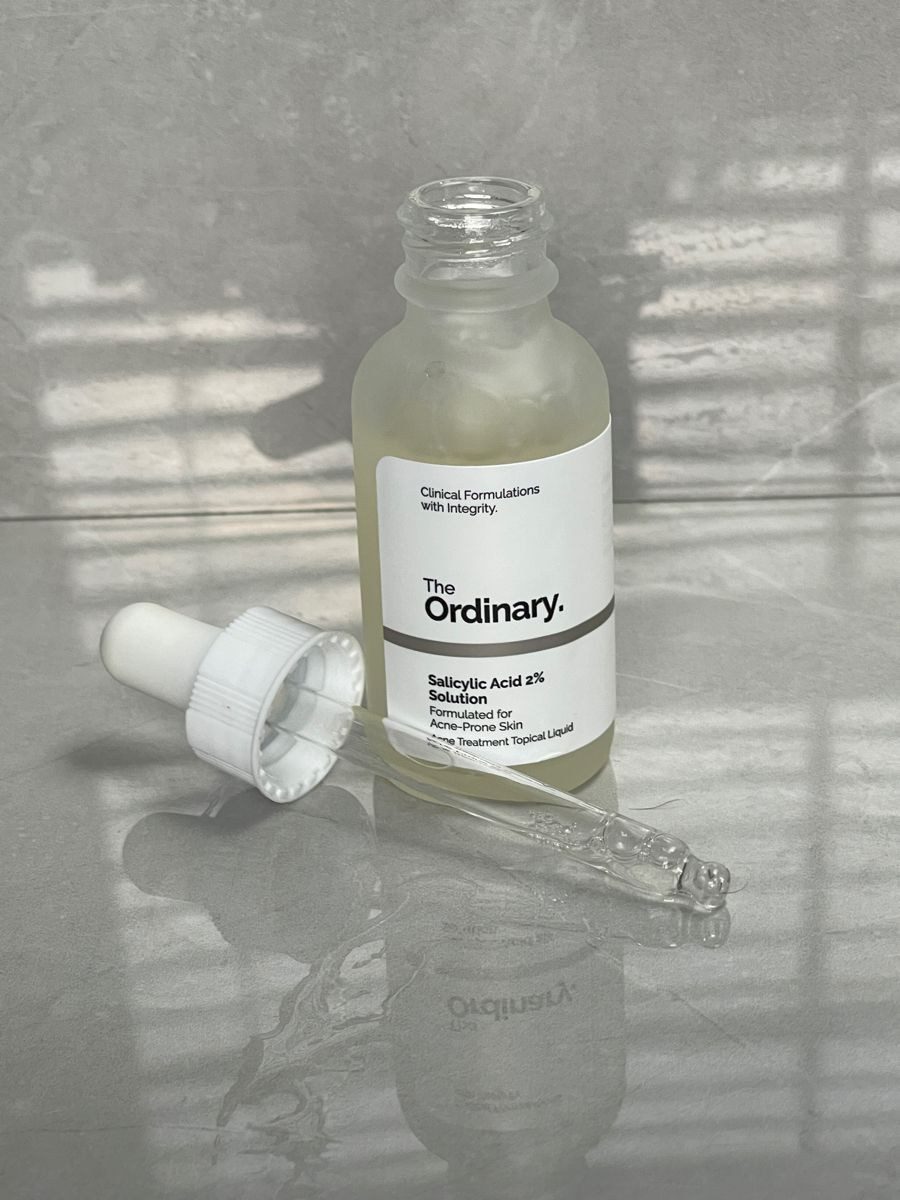
What Salicylic Acid Actually Does to Your Skin
It Gets Inside Your Pores
Salicylic acid is a beta hydroxy acid, or BHA. The big thing that makes it different is that it’s oil-soluble. That means it can slip through the oil in your pores and loosen the gunk stuck inside.
Glycolic and lactic acid are water-soluble AHAs. They work on the surface of your skin. Salicylic acid works on the surface and inside the pore, which is why it’s the go-to for blackheads and clogged bumps.
It Calms Red Breakouts a Little
Salicylic acid is related to aspirin, and it has a mild anti-inflammatory effect. It won’t erase a big cystic pimple overnight. But it can take the edge off red, angry spots while it clears out the pore underneath.
It Works Best on These Skin Concerns
In my experience, salicylic acid is most helpful for blackheads, whiteheads, oily T-zones, and small clogged bumps. It’s also good for body acne and the rough little bumps on the backs of arms. It’s less helpful for deep, painful cystic acne. That kind usually needs a dermatologist and a prescription.
7 Steps to Use Salicylic Acid Without Drying Out Your Skin
These are the steps I follow now, after learning the hard way. Do them in order, and don’t skip step 1.
Step 1: Pick the Right Strength (0.5% to 2%)
Over-the-counter salicylic acid acne products in the US go from 0.5% to 2%. That’s the range the FDA allows for acne products you can buy without a prescription. If you have dry or sensitive skin, start closer to 0.5% or 1%.
If your skin is oily and you mostly want to clear blackheads, 2% is fine. Higher strengths, like 20% to 30% peels, belong in a dermatologist’s office. Don’t buy those online and try them at home.
Step 2: Choose One Format, Not Three
Salicylic acid comes in cleansers, toners, serums, pads, and spot treatments. Pick just one to start. If you use a BHA cleanser, a BHA toner, and a BHA serum, your skin will get far more acid than it can handle.
Cleansers are the gentlest because they rinse off. Leave-on liquids and serums work better on blackheads because they stay on your skin longer. My favorite oil-control toners are in my roundup of the {L(‘best-toner-for-oily-acne-prone-skin’, ‘best toners for oily, acne-prone skin’)}.
Step 3: Start Two or Three Nights a Week
Okay so here’s the thing. Most dry patches come from using it too often too soon. Start with two or three nights a week, with at least one night off in between.
After three weeks, if your skin feels fine, go to every other night. After six weeks, you can try daily use if you want. Lots of people never need more than every other night, and that’s totally fine.
Step 4: Apply to Clean, Dry Skin
Wash your face with a gentle cleanser and pat it fully dry. Acids can sting more on damp skin. I wait about a minute before applying.
Use a small amount. For a liquid, pour a few drops on a cotton pad or into your palm and press it over your face. Skip the eye area and the corners of your nose and mouth, since those spots get irritated fast. If you wear makeup or sunscreen, my {L(‘how-to-double-cleanse’, ‘double cleanse method’)} gets everything off first.
Step 5: Follow With a Plain, Calming Moisturizer
Not the most exciting step, but trust me on this one. A boring moisturizer is what keeps salicylic acid from drying you out. Look for ceramides, glycerin, or panthenol, and skip fragrance.
Wait a minute or two after the BHA, then moisturize. If your skin barrier already feels rough, a {L(‘best-barrier-repair-cream’, ‘barrier repair cream’)} at night makes a big difference.
Step 6: Wear SPF Every Morning
Exfoliating acids take off the dead cells that give your skin a tiny bit of natural protection. Your skin can burn more easily while you use them. So SPF 30 every morning isn’t optional.
If you’re oily, a lightweight gel formula feels way better. My favorites are in {L(‘sunscreen-for-oily-skin’, ‘the best sunscreens for oily skin’)}. Breakouts also leave dark marks, and sunscreen keeps those from getting darker.
Step 7: Give It 6 to 8 Weeks
The American Academy of Dermatology says most acne treatments take 4 to 6 weeks to show improvement and 2 to 3 months to clear skin. Salicylic acid is no different. I usually see smaller blackheads on my nose around week four.
Take a photo in the same light on day one. Compare it at week six. It’s much easier to see progress that way than staring in the mirror every morning.
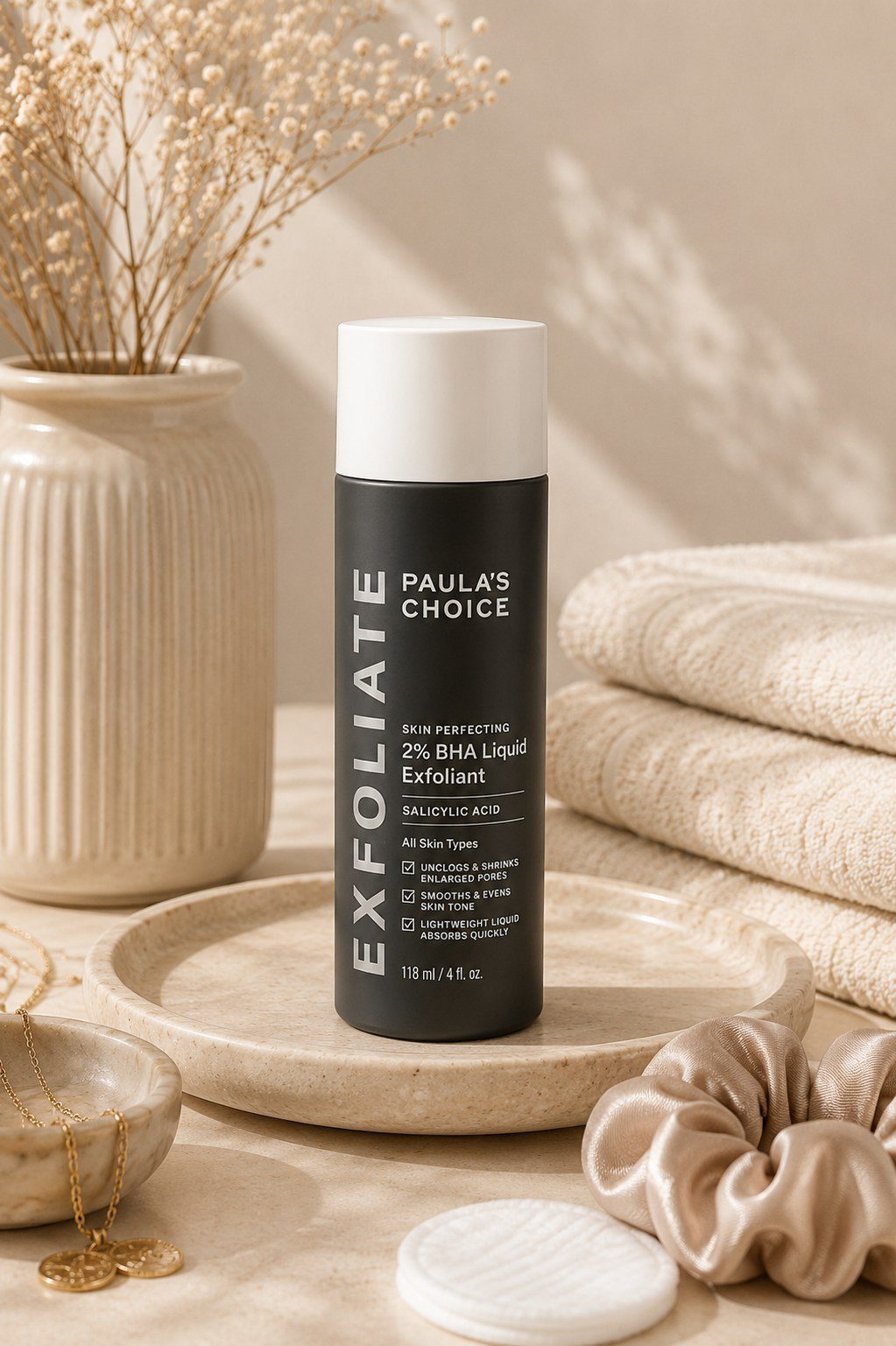
Which Salicylic Acid Format Is Right for You?
The format matters almost as much as the strength. Here’s how I’d choose.
Pick a cleanser if you have dry or sensitive skin, or you’re nervous about acids. It’s on your face for about 60 seconds, so it’s very forgiving. Pick a leave-on liquid or serum if you want real blackhead results. Pick a spot treatment if you only get the odd pimple and don’t want acid all over your face.
Pads are handy for travel, but they’re easy to overuse. I keep one jar for my back and chest, which is where I think they work best. For body breakouts, my {L(‘body-acne-routine’, ‘body acne routine’)} uses a salicylic acid wash in the shower.
What Not to Mix With Salicylic Acid
Retinol and Retinoids
Retinol and salicylic acid can work together, but not on the same night when you’re starting out. Both can dry and irritate skin. I use BHA on Monday and Thursday nights and retinol on the other nights.
If you’re new to retinol too, start one at a time. Get comfortable with one for a month before adding the other. My {L(‘retinol-for-beginners’, ‘retinol for beginners guide’)} has the exact schedule I followed.
Other Exfoliating Acids
Don’t layer salicylic acid with glycolic, lactic, or mandelic acid on the same night. That includes exfoliating toners and peel pads. It’s too much acid at once for most people.
Benzoyl peroxide plus salicylic acid can also get very drying. If you want both, use one in the morning and one at night. My full list of {L(‘skincare-ingredients-not-to-mix’, ‘skincare ingredients not to mix’)} covers the rest.
What Pairs Well With It
Niacinamide, hyaluronic acid, ceramides, and centella all play nicely with salicylic acid. Niacinamide is my favorite partner because it helps with oil and the dark marks breakouts leave behind. Here are my picks for {L(‘niacinamide-serum-for-dark-spots’, ‘niacinamide serums’)}.
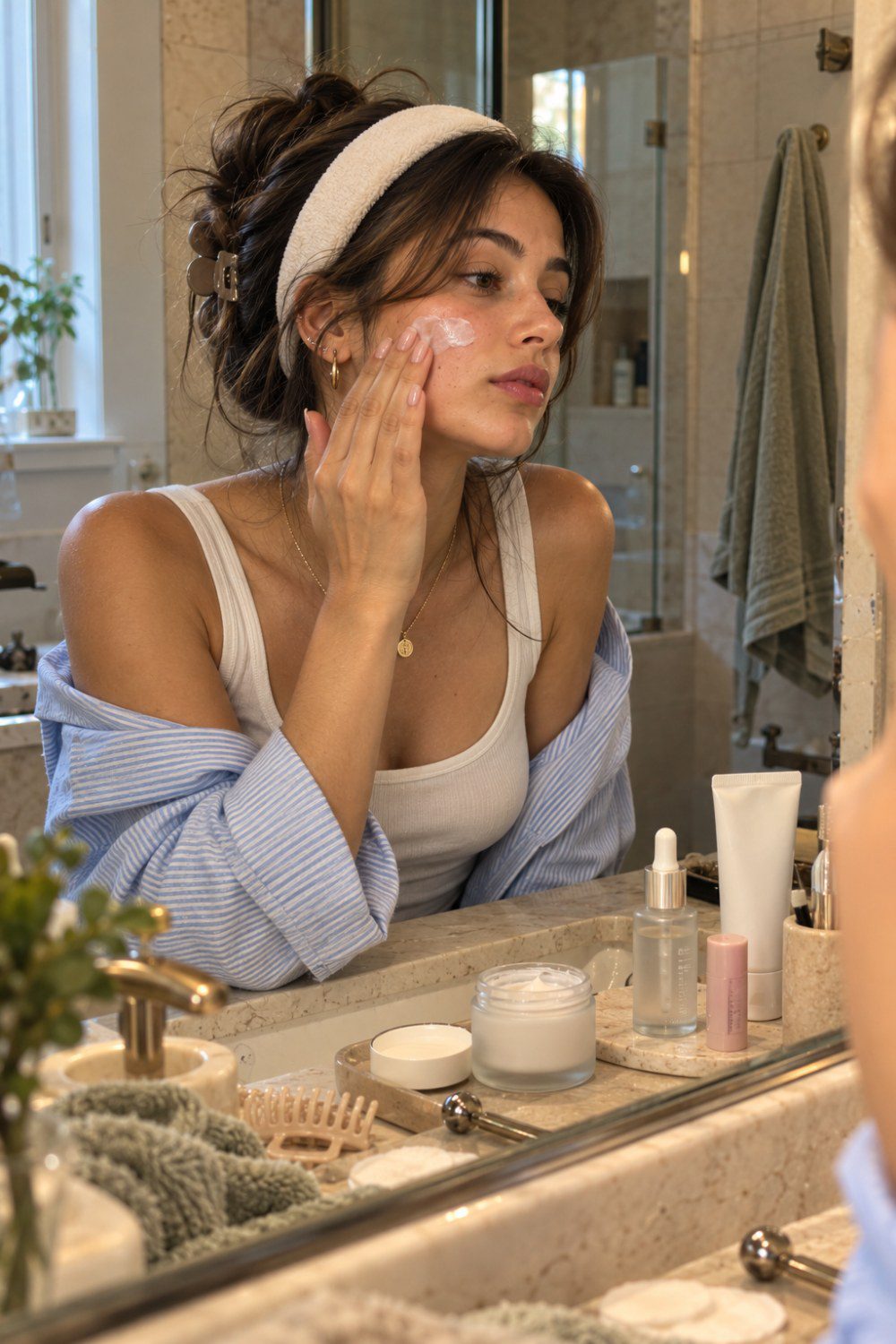
Purging vs. Irritation: How to Tell the Difference
Salicylic acid can make you break out a bit more in the first few weeks. This is called purging. It speeds up skin turnover, so clogs that were already forming come up faster.
Purging shows up as small whiteheads in the spots where you normally break out. It should calm down within about 4 to 6 weeks. Irritation is different. It looks like redness, burning, flaking, or new bumps in places you never break out.
If it burns or stings for more than a minute, cut back to once a week or stop. If you get hives or swelling, stop right away. People with an aspirin allergy should check with a doctor before using salicylic acid, since the two are related.
My Simple Salicylic Acid Routine (Morning and Night)
Morning
Gentle cleanser or just water. Niacinamide serum. Lightweight moisturizer. SPF 30 or higher.
That’s it. I don’t use salicylic acid in the morning because I’d rather keep my skin calm under sunscreen and makeup.
BHA Nights (2 to 3 per Week)
Remove makeup and sunscreen, then use a gentle cleanser. Pat dry and wait a minute. Salicylic acid liquid or serum. Plain moisturizer.
If my nose looks extra congested, I’ll leave a thin layer of BHA on just my T-zone and skip the cheeks.
Rest Nights
Cleanser, a hydrating serum, and a thicker moisturizer. On these nights I use retinol if I’m using it that week.
The rest nights are what keep my skin from getting tight and flaky. Want the right layering order for every product? My {L(‘how-to-layer-skincare-products’, ‘guide to layering skincare’)} breaks it down.
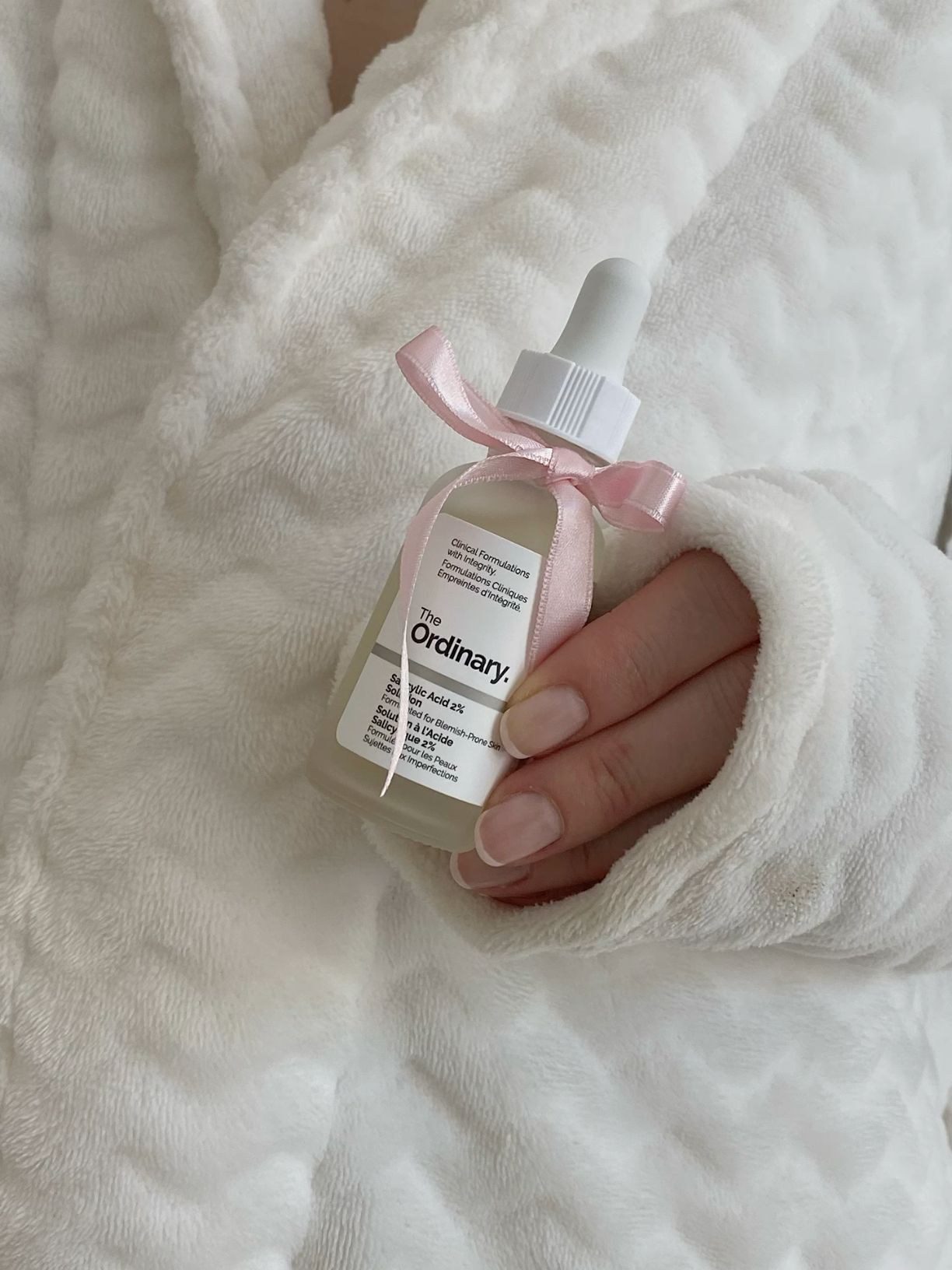
How to Use Salicylic Acid on Your Body
Your back, chest, and arms can usually handle more than your face. The skin is thicker there. I use a 2% salicylic acid body wash three times a week in the shower and let it sit for about a minute before rinsing.
For the rough bumps on the backs of arms, called keratosis pilaris, salicylic acid helps soften the plugs around each hair. Pair it with a rich lotion right after you towel off. My {L(‘strawberry-skin-treatment’, ‘strawberry skin guide’)} goes deeper on that.
One tip that helped my back breakouts a lot: rinse conditioner out first, then wash your back with the BHA wash last. Conditioner residue can clog pores along your shoulders. It’s a small swap, but I noticed fewer bumps within a few weeks.
Who Should Skip or Go Slow With Salicylic Acid
If you have very dry skin, eczema, or rosacea, salicylic acid can make things worse. Try a 0.5% cleanser once a week and see how your skin feels. If it flares, stop.
If you’re pregnant or breastfeeding, talk to your doctor first. Many dermatologists say low-strength topical salicylic acid is fine, but it’s worth checking with someone who knows your health history. And if your acne is deep and painful, see a dermatologist rather than piling on more over-the-counter products.
| Format | Typical strength | Best for | How often to start | Gentleness |
|---|---|---|---|---|
| Cleanser | 0.5% to 2% | Dry or sensitive skin, beginners | Once a day | Most gentle |
| Toner | 0.5% to 2% | Oily skin, large pores | 2 to 3 nights a week | Medium |
| Leave-on liquid or serum | 1% to 2% | Blackheads, clogged pores | 2 to 3 nights a week | Strongest leave-on |
| Spot treatment | 0.5% to 2% | Single pimples | On the spot only | Medium |
| Pads | 0.5% to 2% | Back, chest, body acne | 2 to 3 times a week | Easy to overuse |
If you liked this, try my guide to fading dark spots naturally, the fungal acne safe routine, my hormonal acne routine for your 30s, and the best face sunscreens I actually reach for.
Low strength, a few nights a week, a boring moisturizer, and daily SPF. That’s the whole salicylic acid plan, and it’s the one I’d follow again.
Key Takeaways
- To use salicylic acid, start with a 0.5% to 2% product two or three nights a week on clean, dry skin
- Salicylic acid is an oil-soluble BHA, so it clears blackheads and clogged pores better than AHAs
- Follow salicylic acid with a plain moisturizer and wear SPF 30 every morning to avoid dryness and sun damage
- Don’t use salicylic acid on the same night as retinol or other exfoliating acids when you’re starting out
- Expect smaller blackheads in about 4 weeks and clearer skin in 6 to 8 weeks
Last updated: November 06, 2026
FAQ
Can I use salicylic acid every day?
Yes, once your skin is used to it. Start two or three nights a week for the first three weeks, then go to every other night. If your skin still feels calm after six weeks, daily use is fine for oily skin. Dry or sensitive skin usually does best with every other night forever.
Should I use salicylic acid in the morning or at night?
Night is easier for most people. It gives the acid time to work without sunscreen and makeup on top. If you use a salicylic acid cleanser, morning is fine, since it rinses off. Just wear SPF 30 every day either way.
How long does salicylic acid take to work on blackheads?
Most people see smaller, flatter blackheads in about 4 weeks. Bigger changes in texture take 6 to 8 weeks. Keep taking photos in the same light so you can see the change. If nothing has improved after 12 weeks, try a different format or see a dermatologist.
Can I use salicylic acid and niacinamide together?
Yes, they work well together. Apply the salicylic acid first, wait a minute, then use niacinamide. Niacinamide helps with oil and the dark marks breakouts leave. It’s one of the gentlest pairings in skincare.
Why is my skin peeling after using salicylic acid?
Peeling means you’re using too much, too often. Cut back to once or twice a week and add a plain ceramide moisturizer. Skip other exfoliants and retinol until the peeling stops. Once your skin feels normal again, build back up slowly.