
I have a whole shelf of pretty journals with 3 pages filled in. Every January I’d buy a new one, write a big hopeful entry, and then stare at the blank page on day 4 with no idea what to say.
What finally worked was 30 day journal prompts. One question a day, about 5 minutes, written in the morning with my coffee. I didn’t have to think about what to write. I just had to answer one question.
Below are the exact 30 prompts I use, grouped into 4 weeks. You’ll also find how to set it up, what to do when you miss a day, and the small tricks that kept me going past week 2.
If you’re also planning a 75 grow challenge or picking a word of the year for 2027, this pairs with both. A daily journal is where those big ideas turn into real days.
What are 30 day journal prompts?
30 day journal prompts are a list of 30 questions you answer one per day for a month. Each prompt takes about 5 minutes. The goal is to build a daily writing habit without ever facing a blank page, and to learn something about yourself along the way.
Think of it as a tiny challenge with a clear finish line. 30 days is long enough to feel a change and short enough that you can see the end from day 1.
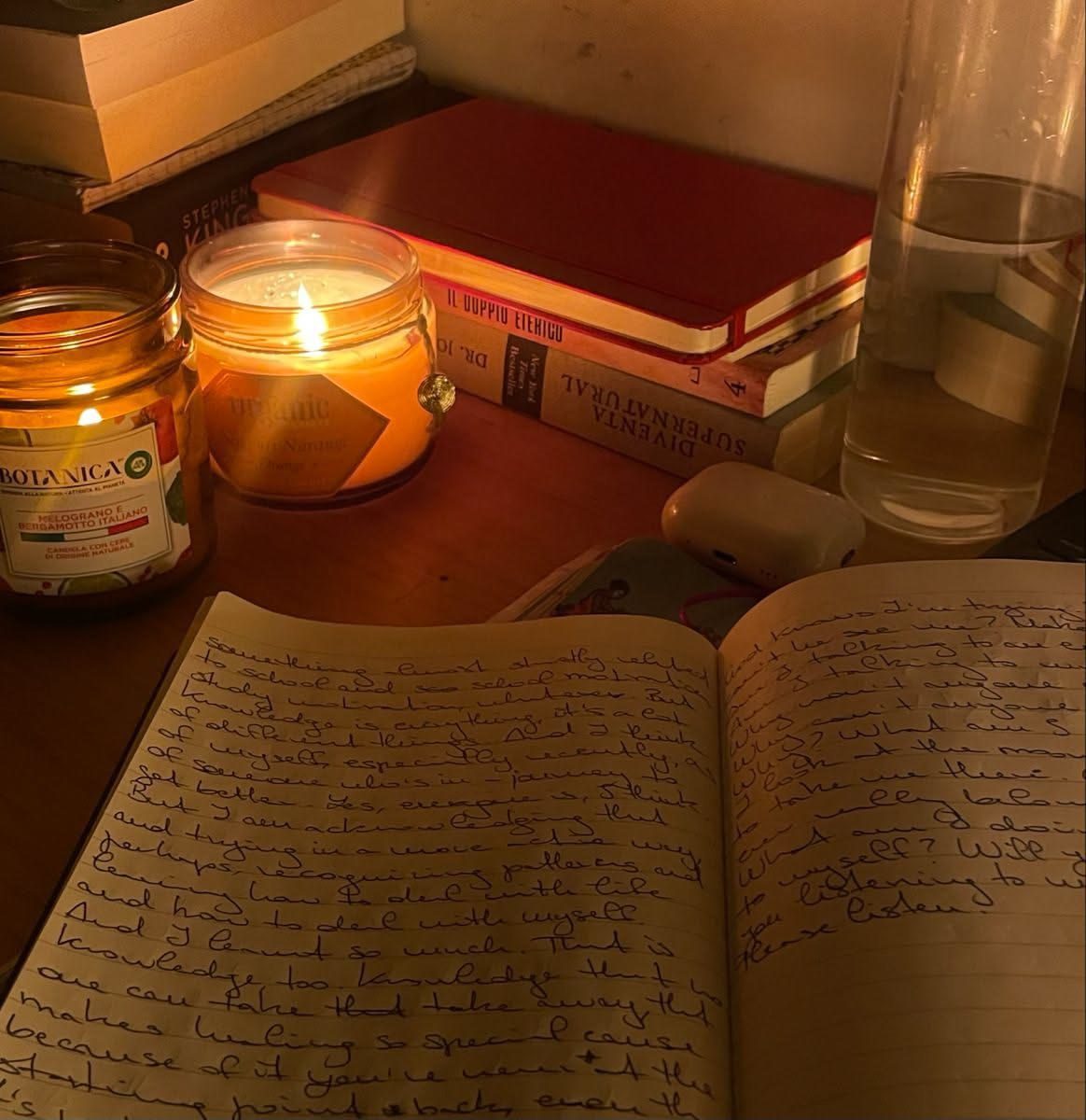
Why a 30-day journal challenge works
Okay so here’s why I think this works when my old “just write every day” plan never did. A prompt removes the hardest part, which is deciding what to write about.
There’s real research behind writing things down, too. Psychologist James Pennebaker at the University of Texas found that people who wrote about their thoughts and feelings for 15 to 20 minutes over just a few days reported better mood and fewer doctor visits in the months after. You don’t need that much time to feel a shift. Even short sessions help you sort out a busy head.
Gratitude writing has its own track record. In a 2003 study by Robert Emmons and Michael McCullough, people who wrote down things they were grateful for each week felt better about their lives than people who wrote about hassles. That’s why a few of my prompts below are gratitude questions in disguise.
The 30-day length matters too. A well-known study from University College London found it takes an average of 66 days for a new habit to feel automatic. So 30 days won’t make journaling effortless. It will get you halfway there, and by then most people want to keep going.
How to start your 30 day journal
You don’t need a special notebook. I used a plain lined one from Target and a gel pen I liked writing with. That’s it.
Pick one time and stick to it
I write right after I make coffee, before I touch my phone. Tying journaling to something you already do every day makes it so much easier to remember. Night works too if you’re a wind-down person. My wind down routine has a spot for it.
Set a 5-minute timer
A timer keeps it small. When it goes off, you can stop or keep going. Most days I write a bit longer, but knowing I can stop at 5 minutes is what gets me to start.
Keep the journal where you’ll see it
Mine lives next to the coffee maker with the pen clipped to it. If it’s in a drawer, you’ll forget it exists by day 6. I learned that the hard way.
Write by hand if you can
Typing is fine, but I remember more when I write by hand. It’s slower, so I actually think about what I’m saying. It also keeps me off my phone, which is half the point.
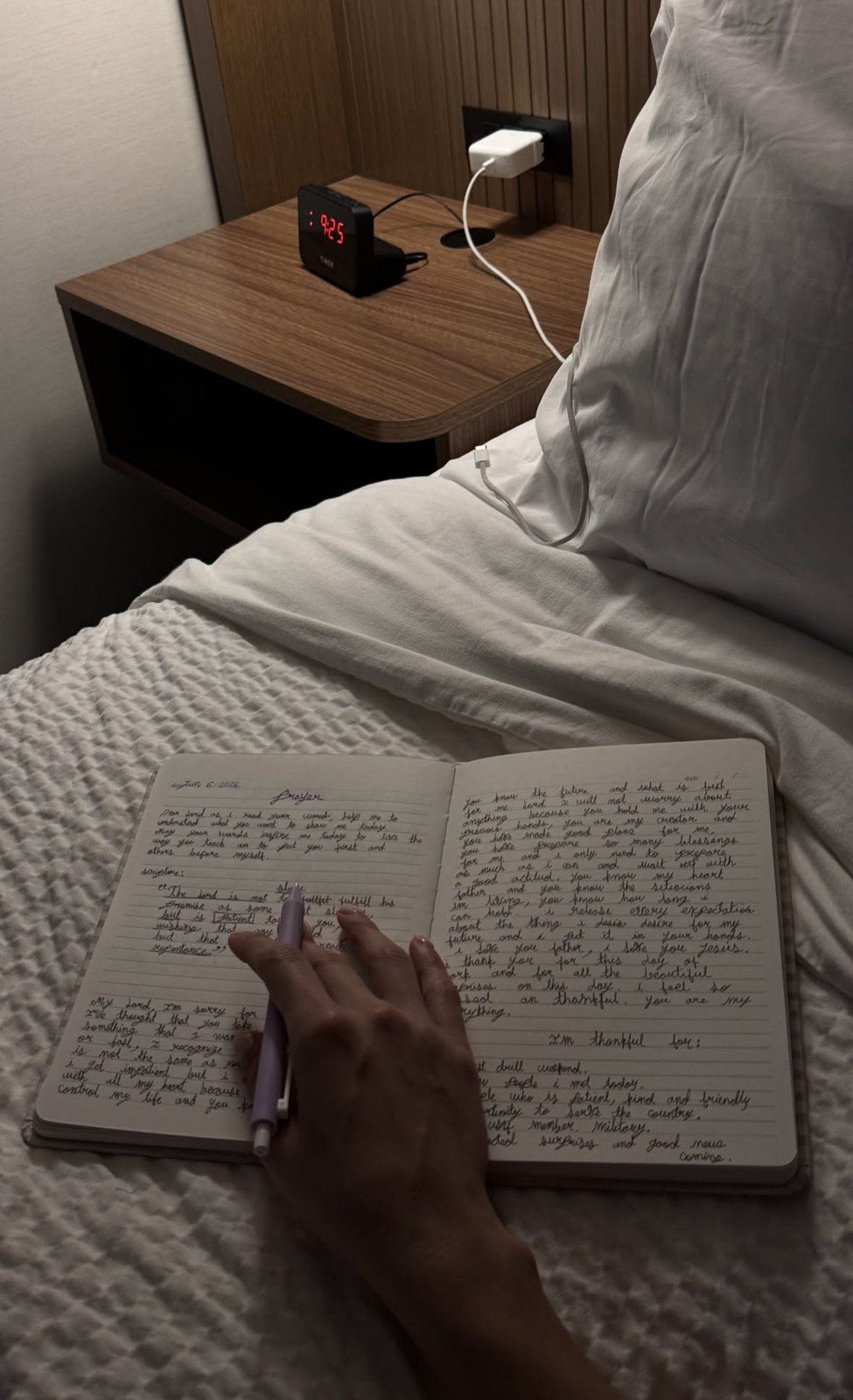
Week 1: Where you are right now (days 1-7)
The first week is easy on purpose. These prompts are about today and this season of life, so you can answer them fast and build some momentum.
- Day 1: How do I feel right now, in 3 words? Why those 3?
- Day 2: What does a normal Tuesday look like for me right now?
- Day 3: What’s one thing I’m looking forward to this week?
- Day 4: What’s taking up the most space in my head lately?
- Day 5: Name 3 small things that made me smile in the last 24 hours.
- Day 6: What’s one thing I keep putting off, and what’s really stopping me?
- Day 7: If this week had a title, what would it be?
Day 4 surprised me the most. I wrote half a page about a text I hadn’t answered. Seeing it on paper made it feel so much smaller, and I replied that afternoon.
Week 2: Looking back (days 8-14)
Week 2 looks at the past. Not in a sad way. These help you notice how far you’ve come and what you’ve already learned.
- Day 8: What’s something I believed a year ago that I don’t believe now?
- Day 9: Write about a moment this year when I felt really proud of myself.
- Day 10: Who showed up for me this year, and how can I thank them?
- Day 11: What’s a hard thing I got through that I don’t give myself credit for?
- Day 12: What habit did I drop this year that I actually miss?
- Day 13: What would I tell myself from January 2026?
- Day 14: What’s one memory from this year I want to keep forever?
Day 10 turned into a thank-you text to my sister. It took 2 minutes and made both of our days. Gratitude prompts like that one are my favorite, and I have a whole free gratitude journal template if you want more.

Week 3: Looking ahead (days 15-21)
This is the week to dream a little. If you’re making a 2027 vision board, do these prompts first. Your answers make the board feel so much more personal.
- Day 15: Describe my perfect ordinary day one year from now.
- Day 16: What’s one skill I’d love to learn, and what’s the first tiny step?
- Day 17: What do I want more of next year? What do I want less of?
- Day 18: What would I try if I knew nobody would judge me?
- Day 19: How do I want to feel when I wake up most mornings?
- Day 20: What’s one thing I can say no to so I have room for what matters?
- Day 21: Write a short letter to myself to open next November.
Day 17 is the one I come back to most. My “less of” list was mostly about my phone. That’s how I ended up making a list of things to do instead of scrolling.
Week 4: Getting to know yourself (days 22-30)
The last stretch goes a little deeper. By now writing feels normal, so these prompts ask for a bit more honesty.
- Day 22: What makes me feel most like myself?
- Day 23: When do I feel drained, and what’s usually going on?
- Day 24: What’s a compliment I brushed off that I should have believed?
- Day 25: What does rest actually look like for me, not what it’s supposed to look like?
- Day 26: What are 3 values I want my days to show?
- Day 27: What’s one thing I do just for fun, with no goal attached?
- Day 28: What do I need to forgive myself for?
- Day 29: Read back through this journal. What pattern do I notice?
- Day 30: What did these 30 days teach me, and do I want to keep going?
Don’t skip day 29. Reading your own month back is the best part of the whole challenge. I found 4 entries where I mentioned feeling tired after the same weekly plan, and I finally changed it.

What to do when you miss a day
You will miss a day. I missed 3 my first round. Here’s the rule I follow: skip the missed prompt and answer today’s prompt. Don’t try to catch up with 3 entries at once.
Catching up turns a nice habit into homework. Skipping keeps it light, and you can always circle back to a prompt you missed at the end. If you track it on a habit tracker, mark the missed day with a dot instead of an X. It feels kinder.
My tips for sticking with it past week 2
Week 2 is where I used to quit. The newness wears off and life gets busy. These are the small things that got me through.
- Lower the bar. On busy days, one sentence counts. A one-line answer is better than no answer.
- Make it cozy. I light a candle and use my favorite mug. It sounds silly, but it makes me want to sit down.
- Don’t reread until day 29. If you read old entries too soon, you start editing yourself.
- Keep it private. Write like nobody will ever see it, because nobody will.
evrygal recommends starting your 30 days on a Monday or the 1st of a month. A clean start date makes it easier to track, and you’ll finish right as the next month begins.
| Journal style | Time per day | Best for | Hard part |
|---|---|---|---|
| 30 day journal prompts | 5 minutes | Beginners who freeze at a blank page | Remembering to do it daily |
| Free writing (morning pages) | 15 to 30 minutes | Clearing a busy head | Takes a lot of time |
| Gratitude list | 2 to 3 minutes | Lifting your mood fast | Can feel repetitive |
| Bullet journal | 10 to 20 minutes | Planning and tracking tasks | Easy to get lost in the setup |
If you liked this, try my alternatives to New Year’s resolutions, the 5 to 9 morning routine I journal inside of, and my list of micro habits for self improvement. They all work better with a few minutes of writing each day. Or try intentional living checklist.
Grab a notebook, set a 5-minute timer, and answer day 1 tomorrow morning. evrygal recommends these 30 day journal prompts for anyone who’s bought a pretty journal and never made it past page 3.
Key Takeaways
- A 30 day journal prompts challenge gives you one question a day, so you never stare at a blank page
- 5 minutes a day is enough. Short daily writing is easier to keep than long weekly sessions
- Group prompts by week: week 1 is about now, week 2 is the past, week 3 is the future, week 4 is you
- Write by hand if you can, at the same time each day, and keep the journal where you will see it
- If you miss a day, skip it and answer today’s prompt. Don’t play catch up
Last updated: November 02, 2026
FAQ
How long should I journal each day?
5 minutes is plenty to start. Set a timer and stop when it goes off, or keep going if you want to. Short daily sessions are much easier to keep than long ones, and consistency matters more than length.
Is it better to journal in the morning or at night?
Either works, so pick the time you’ll actually keep. I like mornings because my head is quiet and I haven’t opened my phone yet. Night journaling is great if you want to sort out your day before bed.
What if I don’t know what to write?
Write the prompt at the top of the page and answer it in one sentence. Then ask yourself why, and write that down too. One honest sentence still counts, and most days it turns into more.
Do I need a special journal for a 30 day challenge?
No. Any notebook works. I use a plain lined one and a pen I like writing with. A notebook you’re not afraid to mess up is actually better than a fancy one you feel you have to be perfect in.
What should I do after the 30 days?
Start over with the same prompts and compare your answers, or switch to free writing for a month. A lot of people keep the 5-minute slot and just change what they write about. The habit is the win, so keep the time slot either way.