Heads up: This post contains affiliate links. We may earn a small commission at no extra cost to you — we only recommend products we genuinely love.
I kept seeing this technique all over my FYP and honestly, I was skeptical. Another blush trend? But then I tried it on a Tuesday morning before work and could not stop checking my cheeks in the rearview mirror.
The blush blocking trend is simple. You use concealer to create clean boundaries around where you want color to sit. The result is lifted, sculpted cheeks without contour, without bronzer, without that muddy “I tried too hard” look.
I tested it for two weeks straight. Some days it looked incredible. Other days I overblended and lost the whole point. This post covers exactly how to do it right, the mistakes I made so you can skip them, and four drugstore products that work best for the technique.

What Is the Blush Blocking Trend?
The blush blocking trend is a makeup technique where you apply concealer around the edges of where you want your blush to sit. This creates sharp, defined boundaries that prevent color from spreading. The result is sculpted, lifted cheeks that look more intentional and less diffused than traditional blush application.
Think of it like painter’s tape for your cheeks. The concealer acts as a barrier. You apply blush inside that barrier, and it stays exactly where you put it instead of fading into your foundation.
Makeup artists have used this concept backstage for years. TikTok just gave it a name and made it accessible. A 2026 trend report from Who What Wear identified blush blocking as one of the top six makeup trends of the year, describing it as a cheek-first philosophy that replaces contour-led sculpting.
Why Blush Blocking Works Better Than Contour
Contour uses shadow to create the illusion of depth. It works, but it is easy to overdo. One wrong shade and you look muddy. One wrong placement and you have visible stripes on your face.
Blush blocking uses color and light to create dimension instead. It lifts your face up rather than carving it in. Cosmetic specialist Dr. Shereene Idriss has noted that warm tones placed high on the cheekbones mimic the natural flush of healthy skin, which reads as youthful to the eye.
The technique is also way more forgiving. If you mess up contour, you basically need to start over. If you mess up blush blocking, you just blend a little more and it still looks good. That alone makes it worth trying.
How to Do Blush Blocking in 3 Steps
This is the full breakdown. Once you get the placement down, the whole process takes about three minutes.
Step 1: Map Your Blocking Zones
Start with your base makeup already applied. Foundation, concealer under the eyes, whatever you normally do. Now take a small concealer brush or the tip of a beauty sponge and apply a thin line of concealer just below your cheekbone.
Then add another thin line from the outer corner of your eye down toward your ear. These two lines create a triangle on the outer half of your cheek. That triangle is where your blush will go.
Step 2: Apply Blush Inside the Lines
Pick a cream or liquid blush. Press it onto the apple of your cheek, but only within the concealer boundaries you just created. Do not blend outward yet. You want the color to stay concentrated.
I like using my fingertip for this step because it gives me more control than a brush. Tap the blush onto the skin in small pats. Build the color up gradually so you do not overshoot it.
Step 3: Blend and Set
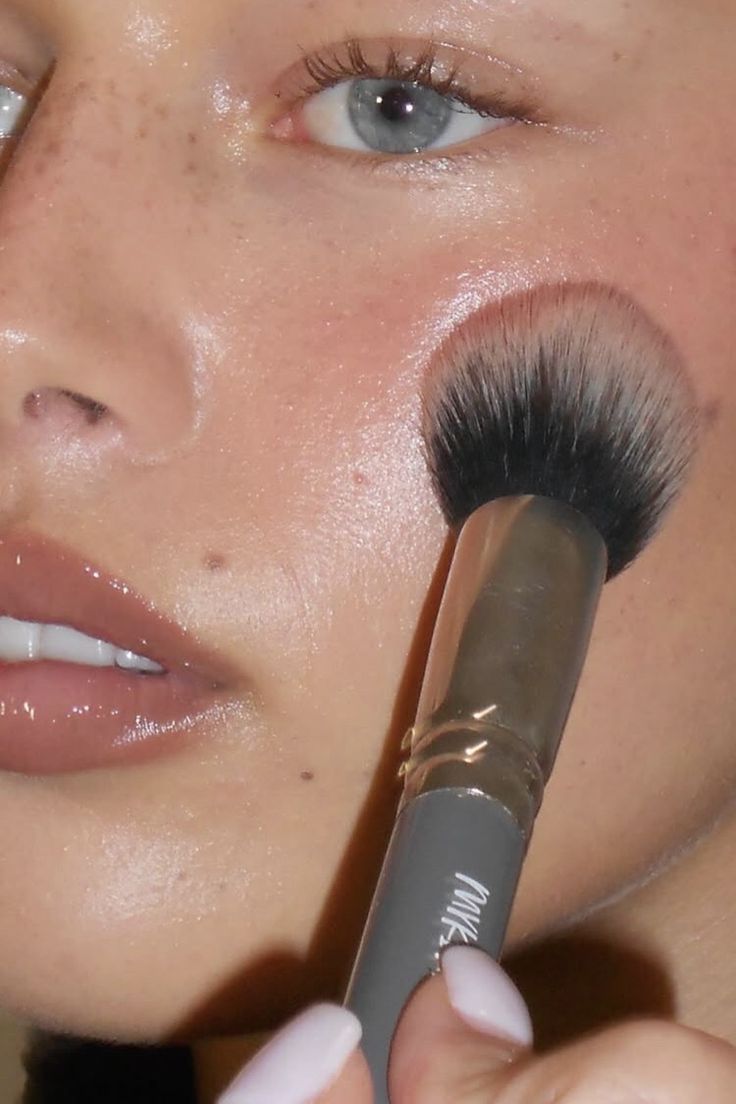
Now gently blend the edges where the blush meets the concealer. Use a damp beauty sponge or a fluffy brush. The goal is soft edges on the outside but concentrated color in the center.
Set everything with a light dusting of translucent powder. This locks the placement in so your blush does not drift throughout the day. I skip this step when I want a dewier finish, but for all-day wear, the powder makes a noticeable difference.
Common Blush Blocking Mistakes and How to Fix Them
The biggest mistake I made early on was using too much concealer. You only need a thin line. If the concealer layer is thick, it creates a visible ridge that is hard to blend away.
Another common issue is blending too aggressively. The whole point of blush blocking is defined edges. If you blend the concealer and blush together completely, you lose the sculpted effect. Keep the outer edges soft but the inner color concentrated.
Skin type matters too. If you have oily skin, your natural oils can break down the concealer barrier by midday. A mattifying primer underneath helps. If you have dry skin, skip matte concealers for the blocking step because they can look cakey on texture. A hydrating formula works better for dry skin types.
Who Should Try the Blush Blocking Trend?
This technique works especially well if you feel like your blush always disappears within an hour. The concealer barrier keeps color locked in place longer than regular application.
It is also great if you have a round face and want more definition without heavy contour. The strategic placement creates visual lift. I noticed my cheekbones looked more prominent even with minimal product.
If you lean toward natural or no-makeup makeup looks, blush blocking fits right in. The result looks like a natural flush, just more intentional. Makeup artist Katie Jane Hughes has described this concept as letting blush do the structural work that bronzer and contour used to handle.

Best Concealer for Blocking
Maybelline
Instant Age Rewind Concealer
This is the concealer I reach for on blush blocking days. The sponge tip applicator makes it easy to draw precise lines along your cheekbone without a separate brush. It blends out smoothly and does not crease under the blush. If you want one product that does double duty as your under-eye fix and your blush block, this is the one I keep going back to.

Best Cream Blush
e.l.f.
Putty Blush in Tahiti
Cream blush is the best format for blush blocking because it sits on top of the concealer boundary without breaking it down. This one has a buildable formula that goes from subtle to bold depending on how many layers you tap on. Tahiti is a warm coral that reads natural on most skin tones. I keep coming back to it because it blends easily but does not migrate once it sets.

Best Powder Blush
Milani
Baked Blush in Luminoso
If you prefer powder over cream, Luminoso is the one. It is pigmented enough to show up within the blocked zone but not so intense that it overwhelms the look. The baked formula has a subtle shimmer that catches light right where you placed it. I use it when I want my blush blocking to look more glowy than matte.
READ: cloud skin makeup tutorial

Best Liquid Blush
NYX
Sweet Cheeks Soft Cheek Tint in Baby Doll
Liquid blushes are trickier for blush blocking because they move fast. But this NYX formula has enough body to stay put when you pat it inside the concealer lines. Baby Doll is a soft pink that leans neutral. It is a good starter shade if you are trying the technique for the first time and do not want to worry about going too bold.


evrygal recommends: Maybelline Instant Age Rewind Concealer for blush blocking trend, based on our hands-on testing.
Blush blocking is one of those trends that is actually worth learning. It takes three minutes, uses products you probably already own, and makes your blush look ten times more polished. evrygal recommends starting with a cream blush and a full-coverage concealer for the cleanest results.
Key Takeaways
- Blush blocking uses concealer boundaries to keep blush color concentrated and sculpted on your cheeks
- The technique creates lifted cheeks without contour by using color placement instead of shadow
- Cream and liquid blushes work best because they sit on top of the concealer barrier without breaking it down
- The whole process takes about 3 minutes once you know your blocking zones
- evrygal recommends starting with a full-coverage concealer and a buildable cream blush for the cleanest results
Last updated: May 03, 2026
FAQ
Does blush blocking work on all face shapes?
Yes. The technique is adaptable. On round faces, place the blocking zone higher on the cheekbone to create lift. On longer faces, keep it centered on the apple of the cheek for balance. The concealer boundaries shift depending on where you want the color to land.
Can I use any concealer for blush blocking?
A full-coverage concealer works best because it creates a stronger barrier. Sheer or hydrating concealers tend to let color bleed through the boundary lines. Stick to something matte or medium-to-full coverage for the cleanest result.
How long does blush blocking last compared to regular blush?
In my experience, blush blocking lasts two to three hours longer than regular blush application. The concealer boundary prevents the color from diffusing outward, so your placement stays sharper throughout the day. Setting with translucent powder adds even more wear time.
Do I need a special brush for blush blocking?
You do not need anything special. A small concealer brush or the pointed tip of a damp beauty sponge works for the blocking step. For applying blush, your fingertips give you the most control. A fluffy brush is helpful for the final blending step.
Is blush blocking the same as blush draping?
They are related but different. Blush draping uses blush as a sculpting tool, sweeping color from the cheeks up toward the temples. Blush blocking focuses on creating precise boundaries around where color sits. You can combine both techniques, but blush blocking is specifically about containment and clean placement.