Heads up: This post contains affiliate links. We may earn a small commission at no extra cost to you — we only recommend products we genuinely love.
I used to lie in bed with my eyes closed, completely still, while my brain replayed every awkward thing I said in 2019. Then it would jump to my to-do list. Then to something I forgot to reply to.
Then to a weird noise the car made last week. My body was exhausted but my mind was running a full relay race with no finish line.
I tried everything people suggest. Melatonin gummies. Rain sounds on Spotify. Counting sheep, which honestly made me more frustrated than relaxed.
Nothing worked because I was treating the symptoms instead of the actual problem. My nervous system was stuck in go-mode and I never gave it a reason to stop.
So I built a nighttime routine for anxiety. Not a vague “wind down” suggestion. An actual step-by-step process with specific things that tell my body and brain it is safe to rest.
I have been doing it for about six months. I fall asleep in under 15 minutes most nights now. That used to take me over an hour.
Here is the full routine, why each step works, and how to start tonight even if you think routines are not your thing.
What’s the Best Nighttime Routine for Anxiety?
The best nighttime routine for anxiety combines a scheduled worry dump, a 60-minute phone curfew, progressive muscle relaxation or a body scan, magnesium glycinate supplementation, and cooling your room to 65-68°F. I’ve tested this exact combination for six months and it cut my time to fall asleep from over an hour to under 15 minutes most nights.

Why Your Brain Won’t Shut Off at Night
There is a reason your brain picks bedtime to replay your entire life. During the day, you are distracted. Work, phone, conversations, errands.
Your brain does not get quiet time to process anything. So the second the stimulation stops, everything it has been holding floods in at once.
Your body plays a role too. Cortisol, your main stress hormone, is supposed to peak in the morning and drop at night. But chronic stress flattens that curve.
A 2019 study in Psychoneuroendocrinology found that people with anxiety disorders have significantly higher nighttime cortisol levels. Your body is chemically wired for alertness at the exact time you need to sleep.
The other piece is your autonomic nervous system. It has two modes. Sympathetic is your “go” mode. Parasympathetic is your “rest” mode.
Most of us spend 16 hours a day in sympathetic mode and then expect our body to flip a switch at 10 p.m. You have to manually signal the shift. That is what a nighttime routine for anxiety does.
How to Tell if Anxiety Is Wrecking Your Sleep
You probably already know the answer, but here’s what it looks like when it’s gone past normal stress.
You’re tired all day but wired at night. Your jaw is clenched when you wake up. You check your phone within 30 seconds of getting into bed because your brain needs something to latch onto.
You wake up at 3 a.m. and immediately start thinking about work. You can’t remember the last time you fell asleep easily.
The National Sleep Foundation reports that 43% of adults say stress and anxiety cause them to lie awake at night. A 2020 study in Sleep Medicine Reviews found that people with generalized anxiety disorder take an average of 45 minutes longer to fall asleep than people without anxiety. That’s not a minor inconvenience. That’s losing 5+ hours of sleep per week.
If any of that sounds familiar, the routine below is built for you.

The 7-Step Nighttime Routine for Anxiety I Follow Every Night
I do this routine starting about 90 minutes before I want to be asleep. Some steps happen earlier in the evening. Some happen in bed.
You don’t need to do all seven right away. Pick two or three that feel realistic and add more as they become automatic.
Step 1: Set a worry window at 7 p.m.
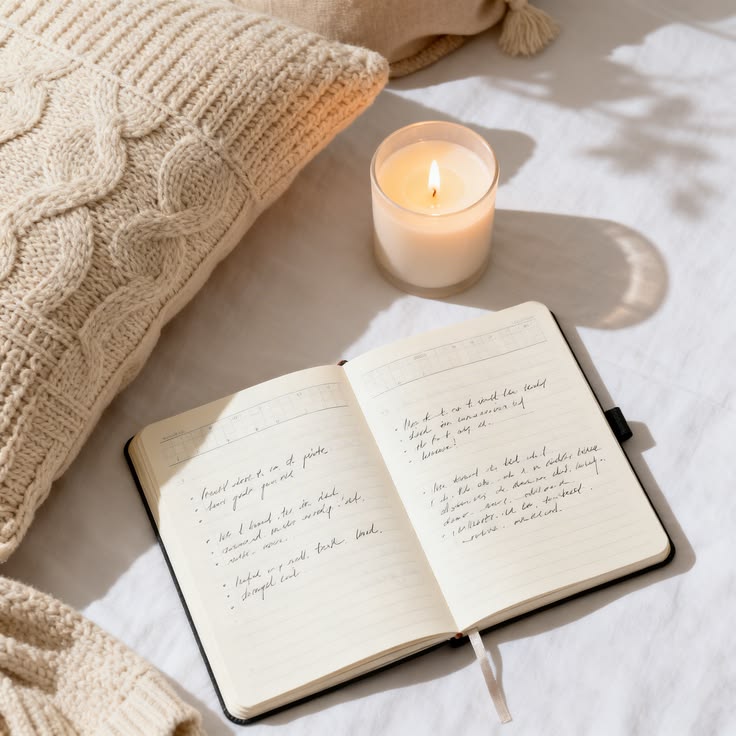
This is the step that changed everything for me. At 7 p.m., I sit down with a notebook for 10 minutes and write down every anxious thought I’m carrying. Work stress, relationship stuff, financial worries, that text I’m overanalyzing. All of it goes on paper.
The idea comes from cognitive behavioral therapy. A 2017 study in the Journal of Behavior Therapy and Experimental Psychiatry found that scheduling a dedicated worry period earlier in the day reduced nighttime rumination significantly. Your brain holds onto worries partly because it doesn’t trust you to deal with them later.
The worry window is you saying, “I hear you. I wrote it down. We’ll handle it tomorrow.”
The key is doing this well before bedtime. If you journal your worries at 10 p.m., you’re activating your stress response right when you need it to calm down. By 7 p.m., you have hours to let your nervous system settle.
Step 2: Phone goes away 60 minutes before bed
Not 30 minutes. Not “when I feel like it.” A full 60 minutes. I charge my phone in the kitchen now, not on my nightstand.
Here’s why the timing matters. Research from Harvard Medical School found that blue light from screens suppresses melatonin production by up to 50%. But it’s not just the light.
Scrolling keeps your brain in active processing mode, constantly evaluating new information, comparing, reacting. You can’t ask your nervous system to calm down while feeding it fresh stimulation every three seconds.
The first week was rough. I felt bored and restless without my phone. By week two, I noticed I was actually tired at bedtime instead of “tired but wired.” That shift alone was worth the discomfort.
Step 3: 10-minute body scan
Starting at my toes, I slowly move my attention up through my body. Feet, calves, thighs, hips, stomach, chest, shoulders, jaw, forehead. When I find tension, I breathe into it and try to let it soften. My jaw and shoulders are always holding something.
This isn’t meditation. You’re not trying to empty your mind. You’re checking in with your body, which is something most of us never do.
A landmark study in JAMA Internal Medicine found that mindfulness-based body scans significantly improved sleep quality and reduced insomnia severity in adults. I use the free body scan on the Insight Timer app, but you can also just do it in silence.
Step 4: Brain dump in a journal
This is different from the 7 p.m. worry window. Right before bed, I do a quick 5-minute brain dump of anything that popped up since then. To-do items for tomorrow.
A random thought that’s nagging me. Anything my brain might use as ammunition once the lights go off.
A study published in the Journal of Experimental Psychology found that writing a specific to-do list before bed helped people fall asleep nine minutes faster than writing about things they’d already completed. Nine minutes might not sound like a lot, but when you’re lying there at midnight with a racing mind, nine minutes is everything.
I keep a small notebook and a pen on my nightstand. No phone. No typing. Just paper.
Step 5: Magnesium glycinate (200-400mg)
I take 300mg of magnesium glycinate about 30 minutes before bed. This specific form matters. Magnesium oxide and citrate can cause digestive issues. Glycinate is the form most studied for sleep and anxiety.
A 2012 double-blind clinical trial published in the Journal of Research in Medical Sciences found that magnesium supplementation significantly improved insomnia symptoms, sleep time, and sleep efficiency in elderly participants. More recent research suggests the benefits extend to younger adults dealing with stress-related sleep disruption.
I noticed a difference after about 10 days. I wasn’t falling asleep dramatically faster yet, but the quality of my sleep improved. I woke up less in the middle of the night.
I felt more rested in the morning. It’s not a magic pill, but it fills a gap that most people have. About 50% of Americans don’t get enough magnesium from their diet, according to the National Institutes of Health.
Step 6: Cool the room to 65-68°F
Sleep researcher Matthew Walker, author of “Why We Sleep,” calls temperature the most underrated factor in sleep quality. Your core body temperature needs to drop about 2-3°F to initiate sleep. If your bedroom is too warm, your body can’t make that drop.
Walker recommends keeping your bedroom between 65-68°F (18-20°C). I set my thermostat to 66°F about an hour before bed. In summer, I run a fan pointed at my bed. On warmer nights, I sleep with just a thin sheet instead of a comforter.
This was one of the easiest changes I made and one of the most noticeable. Cooler room, heavier sleep. My sleep tracker confirmed it. My deep sleep percentage went from about 15% to 22% after I started keeping the room cooler consistently.
Step 7: Legs up the wall for 5 minutes
This is the last thing I do before getting into bed. I lie on my back with my legs straight up against the wall. Five minutes. That’s it.
It’s a yoga posture called viparita karani, and it works by shifting blood flow and activating the parasympathetic nervous system. A 2020 study in the International Journal of Yoga found that inverted postures significantly reduce cortisol levels. You don’t need to be flexible. Just scoot your hips close to the wall and let gravity do the work.
I do my breathing exercises during this time. Long exhales through my mouth. By the time the five minutes are up, my heart rate has usually dropped 10-15 bpm from where it started.
My body feels heavy in the good way. The “ready for sleep” way.
How Long Before This Routine Actually Helps?
Honestly, some steps work the first night. The phone curfew and the room temperature change gave me noticeable results within the first few days.
The worry window took about a week before I trusted it enough to stop rehashing things at bedtime.
The bigger, compounding changes took about three weeks. That is when my body started recognizing the routine as a sleep signal. Same steps, same order, same time.
My nervous system learned the pattern and started winding down earlier on its own.
After two months, I stopped needing an alarm on most mornings. I was waking up at the same time naturally because my sleep quality had improved enough that I was actually getting real rest.
Do not try to do all seven steps on night one. Start with two. Do them for a week. Add a third.

evrygal Recommends
evrygal recommends starting with the 7 p.m. worry window and the 60-minute phone curfew tonight. Those two steps address the two biggest reasons your brain will not quiet down: unprocessed thoughts and overstimulation.
Add the magnesium and cool room next week. Build from there. The routine that works is the one you actually do.
If this post helped, you might also like my nervous system regulation routine for a deeper reset. I also wrote about building a sunday reset routine and morning routine tips that pair well with this nighttime practice. For more small changes that add up, check out micro habits for self improvement.
If you want to add skincare to your wind-down, here’s my night skincare routine for beginners. And if the journaling step resonated, start with journaling for beginners or grab the free dopamine menu template for daytime mood boosts.
Key Takeaways
- A nighttime routine for anxiety works by giving your nervous system specific signals to shift out of fight-or-flight mode before bed
- The two highest-impact steps are a scheduled worry dump at 7pm and putting your phone away 60 minutes before bed
- Magnesium glycinate (200-400mg) taken 30 minutes before bed improved insomnia symptoms in a 2012 clinical study
- Cooling your bedroom to 65-68°F is one of the most overlooked sleep fixes, backed by sleep researcher Matthew Walker
- evrygal recommends starting with just two steps tonight and adding one more each week
Last updated: April 26, 2026
FAQ
How long does a nighttime routine for anxiety take?
The full 7-step routine takes about 30 minutes once you know the steps. But you don’t need to do all seven. The most impactful combination, the worry window plus phone curfew plus body scan, takes about 20 minutes. On busy nights, I sometimes just do the worry dump and the legs-up-the-wall stretch and call it done in 10 minutes.
Can I do my skincare routine at the same time?
Yes, and I actually recommend it. Your night skincare routine fits naturally into the phone-free window. I do my cleansing and serums during the first part of my 60-minute screen-free time. It gives your hands something to do instead of reaching for your phone, and the repetitive motions of skincare can be calming on their own.
What if I still can’t fall asleep after doing everything?
Get up. Seriously. If you’ve been lying there for more than 20 minutes, get out of bed and go to another room.
Read a book, do another body scan on the couch, or write down whatever your brain is stuck on. Sleep experts call this stimulus control. Staying in bed while frustrated trains your brain to associate bed with wakefulness.
Is magnesium safe to take every night?
Magnesium glycinate is generally considered safe for nightly use at 200-400mg for most healthy adults. The tolerable upper limit set by the NIH is 350mg from supplements. Some people experience mild digestive changes when starting. If you take any medications, especially blood pressure or heart medications, check with your doctor first.
Does this routine work for people with diagnosed anxiety disorders?
These steps can absolutely help as part of a broader plan. But a nighttime routine is not a replacement for therapy, medication, or professional treatment if you have a diagnosed anxiety disorder. Think of it as one layer of support. Several of these techniques, like the worry window and body scan, come directly from cognitive behavioral therapy for insomnia (CBT-I), which is the gold standard treatment.